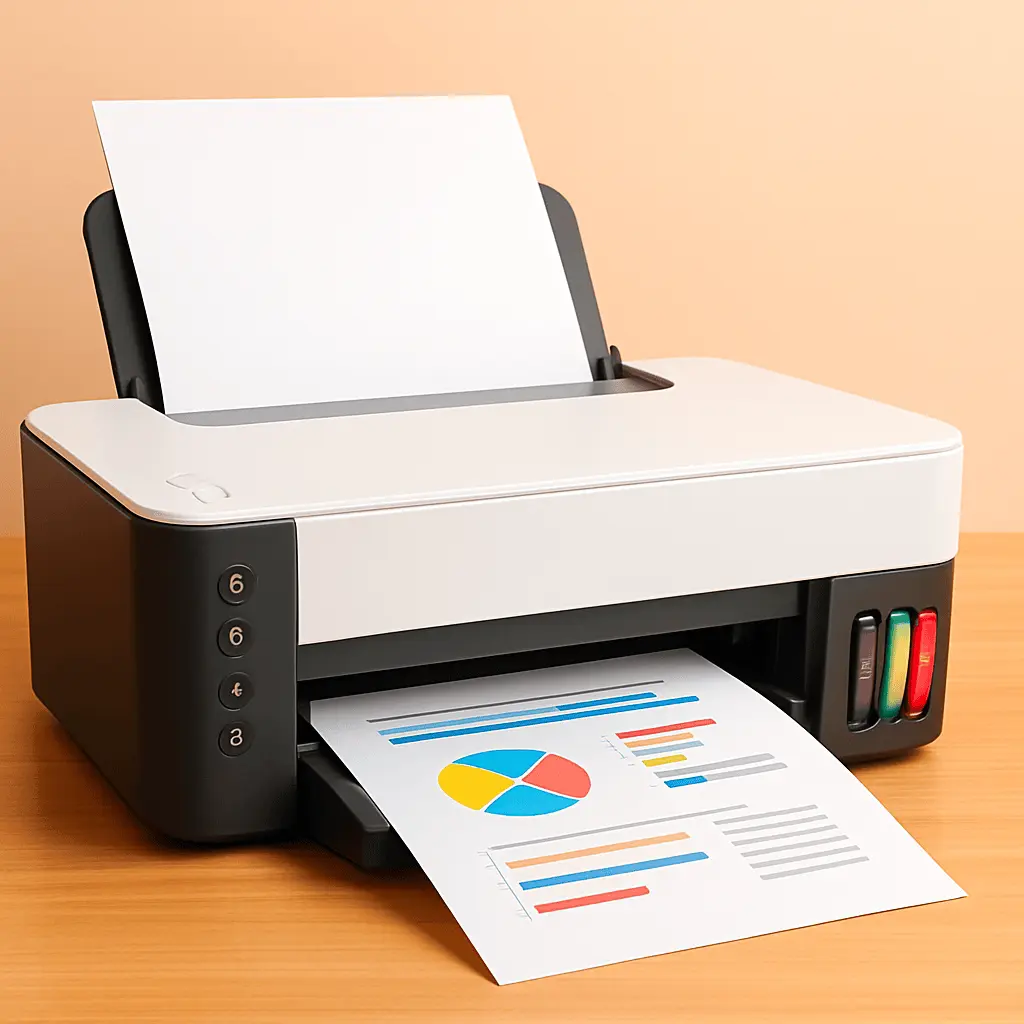
Matrix printers are impact printers that create characters and images by striking an inked ribbon with a matrix of pins or wires. They are typically used for printing multi-part forms, continuous stationery, labels, and receipts where carbon copies or durability are required. These devices remain in use in environments that prioritize low running cost per page, reliable operation in dusty or industrial settings, and the ability to produce pressure-printed duplicates. Matrix printers vary in size and speed and are selected when form continuity, multipart output, or specific paper handling is necessary.
Types of Matrix printers
Common types of matrix printers are distinguished by their print head design, form factor, and functionality.
- Dot matrix printers — use a grid of pins to form characters and simple graphics; available in 9-pin and 24-pin configurations.
- Line matrix printers — print a full horizontal line at a time, suitable for high-volume continuous printing.
- Serial (carriage-based) matrix printers — smaller units where the print head moves across the page; used for lower-volume or specialized tasks.
- Industrial matrix printers — ruggedized models built for harsh environments, heavy-duty paper handling, and continuous operation.
What are Matrix printers used for?
Matrix printers serve specific operational needs where impact printing provides advantages.
- Printing multi-part or carbon-copy forms such as invoices, delivery notes, and receipts.
- Continuous-form printing for logs, reports, and long-run documents on fanfold paper.
- Label and tag printing where heat-sensitive or adhesive materials are not suitable for non-impact printers.
- Environments requiring robust operation in dusty, temperature-variable, or factory settings.
Key Differences between Matrix printers
When comparing matrix printers, consider performance, print quality, and media handling features.
- Print resolution and pin configuration — higher pin counts (e.g., 24-pin) deliver finer text and graphics than lower counts (e.g., 9-pin).
- Speed — line matrix printers offer much higher throughput than serial dot matrix models.
- Paper handling — differences include single-sheet, continuous, multipart, and perforated paper support, as well as tractor-feed mechanisms.
- Durability and duty cycle — industrial models provide higher duty cycles and longer service intervals than office-grade units.
- Connectivity and control — models vary in interface options (USB, parallel, serial, Ethernet) and support for printer control languages and drivers.
How to Choose Matrix printers?
Select a matrix printer by matching technical features to your operational needs and total cost of ownership.
- Identify the primary use — multipart forms, continuous reports, labels, or industrial tagging — and choose a suitable type (dot, line, or industrial).
- Consider pin count and print resolution based on required text clarity and graphics detail.
- Assess paper handling requirements: fanfold vs single-sheet, multipart support, tractor-feed compatibility, and paper width.
- Estimate volume and duty cycle to select a model with adequate speed and longevity; check MTBF and recommended monthly pages.
- Verify connectivity options and driver compatibility with existing systems and software environments.
- Account for consumables and maintenance costs, including ribbons, print heads, and service intervals, to evaluate long-term operating expenses.
Why is it worth buying dot matrix printers at AiO.lv?
Order online at AiO.lv at a good price, with delivery across Latvia and to other EU countries. We deliver to Riga, Daugavpils, Liepāja, Jūrmala, Ventspils and other cities. We offer products from leading manufacturers.
- Official warranty and proven quality.
- Convenient payment methods, including instalments and credit.
- Fast, reliable delivery across Latvia and to other EU countries.
FAQ
Where can you find a dot matrix printers with cheap prices?
You can buy cheaper at the AiO.lv online store. We offer competitive prices and regular discounts, so you always have the chance to find a great deal.
What is the delivery time for dot matrix printers?
If you place your order today, delivery will take between 1 and 5 business days depending on the chosen method.
How long is the warranty period for dot matrix printers?
Our store provides an official manufacturer’s warranty ranging from 12 to 36 months, depending on the model and brand. If needed, you can always contact our customer service department or the manufacturer’s authorized service center for support.
Are dot matrix printers purchasable with leasing?
Yes, if the selected product costs more than €50. You can learn more about installment purchase options and the terms of application on the
Payment page.
Can dot matrix printers be purchased for a company (with VAT)?
Yes. AiO.lv works with legal entities in Latvia and throughout Europe. All product prices are shown with VAT included. In certain cases, a 0% VAT rate may apply — for example, when purchasing from other EU countries with a valid VAT number. We issue an invoice immediately after the order is placed, support BIS electronic invoices, and automatically generate all required accounting documents. To complete a purchase for a company, simply select the company profile during checkout.