Save time and money with our discounts!

{{ totalProductsCount }}
In cart {{totalProductsCount}} item(s)
In cart {{totalProductsCount}} item(s)
Total:
{{sum | formatAmount}}
Your cart is empty
Markdown Home Automation
Open box

somfy
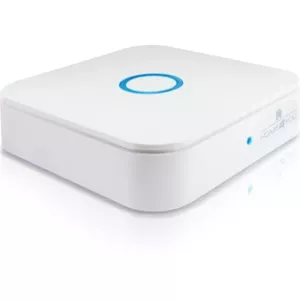
Program timer Somfy Chronis Smoove IB+ Pure Open Frame — programmable wall timer for motorized blinds and shutters
Delivery: 04.11.2026
39.49 €
Fast delivery available
Demo
Aqara
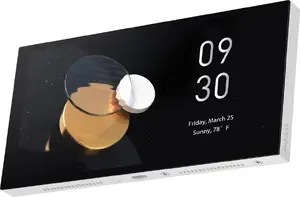
AQARA Panel Hub S1 Plus (MP-K03D) - WiFi touch panel with Zigbee hub function
Delivery: 04.11.2026
201.99 €
Home automation refers to systems and devices that enable automated control of household functions such as lighting, heating, ventilation, air conditioning, security, and appliances. These products integrate sensors, controllers, communication protocols and user interfaces to schedule, monitor and manage home equipment either locally or remotely. Home automation solutions are used in single-family homes, apartments and small residential complexes to improve convenience, efficiency and operational oversight. They are selected for scenarios that require centralized control, energy management, remote access, or integration with voice assistants and smart ecosystems. Common deployments include automated lighting scenes, thermostat schedules, security monitoring and appliance control, often combined through hubs, apps or cloud services. Choice of components depends on compatibility, connectivity, desired automation complexity and standards such as Wi‑Fi, Zigbee, Z‑Wave, Bluetooth or wired protocols.
Types of Home Automation
Home automation systems vary by function and architecture.
- Lighting control systems: smart bulbs, switches, dimmers and scene controllers for scheduled or sensor-based lighting.
- Climate and HVAC control: smart thermostats, zoned controllers and sensors for temperature and humidity management.
- Security and access: cameras, door/window sensors, smart locks, motion detectors and alarm panels.
- Appliance and energy management: smart plugs, energy monitors, load controllers and timed outlets.
- Home entertainment and AV control: smart TVs, universal remotes, speakers and multiroom audio systems.
- Integrated hubs and platforms: controllers, home gateways and voice assistant interfaces that coordinate devices.
What are Home Automation used for?
Home automation products serve practical operational purposes in residential settings.
- Scheduling and remote control: automate routines and control devices via mobile apps or web interfaces.
- Energy efficiency: optimize heating, cooling and lighting to reduce energy consumption and manage loads.
- Security and monitoring: provide continuous or event-based surveillance, alerts and access control logs.
- Comfort and convenience: create scenes and routines that adjust environment settings automatically.
- Health and safety: integrate sensors for smoke, CO, water leaks and automated shutoffs.
Key Differences between Home Automation
Different home automation products and systems are distinguished by technology, scope and integration capabilities.
- Connectivity: wired systems vs. wireless protocols (Wi‑Fi, Zigbee, Z‑Wave, Thread, Bluetooth) affect reliability and range.
- Open vs. closed ecosystems: open standards allow mixed-vendor integration; closed systems rely on a single vendor or cloud service.
- Local vs. cloud control: local-only solutions operate without internet dependency; cloud-based systems enable remote access and third-party services.
- Scalability: single-device solutions differ from whole-home platforms designed for many devices and automation rules.
- User interface and control: mobile apps, web portals, physical panels or voice assistants offer different interaction models.
How to Choose Home Automation?
Choose home automation products based on needs, compatibility and technical constraints.
- Define requirements: list functions you want (lighting, climate, security, energy monitoring) and desired automation scenarios.
- Check compatibility: verify device protocols and platform support to ensure interoperability with existing devices and hubs.
- Consider connectivity and reliability: prefer wired or mesh-capable wireless protocols for critical functions like security.
- Evaluate control options: decide between local control for privacy and cloud services for remote access and convenience.
- Plan for scalability and future changes: choose systems that allow adding devices and updating automation rules without major rewiring.
- Review power and installation needs: confirm power sources, mounting requirements and whether professional installation is needed.
Which markdown home automation are the most popular and affordable in 2026?
The full list of popular models at affordable prices is available on this page. In 2026, the following models show high demand and an excellent price-to-quality ratio:
- MACLEAN MCE623W Infrared PIR Motion Sensor for 7.49€
- PIR Motion Sensor Infrared Maclean MCE623 B for 7.49€
- Wireless smoke detector QOLTEC model 52653 with 85 dB battery alarm for 9.99€
- Power supply unit Ajax AJ-DC6V-PCB2 6V for Hub 2 Hub 2 Plus for 19.99€
- Smart WiFi switch Tellur SS1N — 1 port, 1800W, 10A for 25.49€
Why is it worth buying markdown home automation at AiO.lv?
At the AiO.lv online store, you can place an order at a great price with delivery across Latvia — to Riga, Daugavpils, Liepaja, Jurmala, Ventspils, and other cities, as well as throughout Europe. We offer products from leading manufacturers: Philips, LOGILINK, OEM, TP-LINK, Bosch, TECHNISAT, AVM, Hikvision, SATEL, H-TRONIC, UBIQUITI, EATON, Amazon, Delta, PROXIMA, QOLTEC, ART, Smart, Honeywell, DAHUA. When you shop with us, you get:
- official warranty and guaranteed quality;
- convenient payment options (including installment and credit);
- fast and reliable delivery across Latvia and to any EU country.
FAQ
Where can you find a markdown home automation with cheap prices?
You can buy cheaper at the AiO.lv online store. We offer competitive prices and regular discounts, so you always have the chance to find a great deal.
What is the delivery time for markdown home automation?
If you place your order today, delivery will take between 1 and 5 business days depending on the chosen method.
How long is the warranty period for markdown home automation?
Our store provides an official manufacturer’s warranty ranging from 12 to 36 months, depending on the model and brand. If needed, you can always contact our customer service department or the manufacturer’s authorized service center for support.
Are markdown home automation purchasable with leasing?
Yes, if the selected product costs more than €50. You can learn more about installment purchase options and the terms of application on the Payment page.
Can markdown home automation be purchased for a company (with VAT)?
Yes. AiO.lv works with legal entities in Latvia and throughout Europe. All product prices are shown with VAT included. In certain cases, a 0% VAT rate may apply — for example, when purchasing from other EU countries with a valid VAT number. We issue an invoice immediately after the order is placed, support BIS electronic invoices, and automatically generate all required accounting documents. To complete a purchase for a company, simply select the company profile during checkout.


