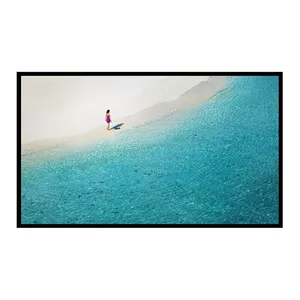
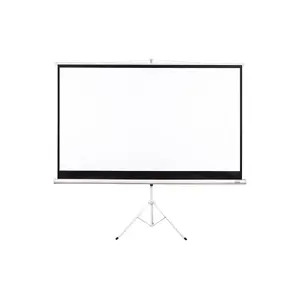
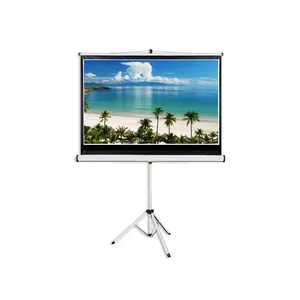
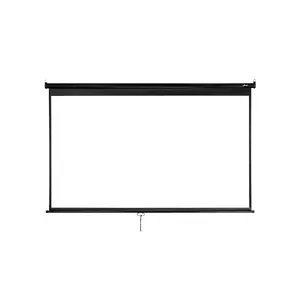
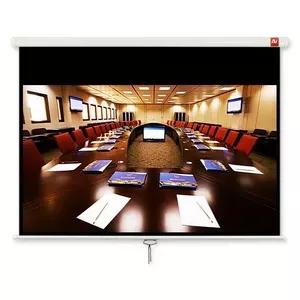
Projection screens are dedicated surfaces designed to display images and video projected from a projector. These products range from portable manual screens to fixed-frame and motorized models and are selected based on room size, projector type, and viewing requirements. Projection screens improve image clarity, contrast, and color reproduction compared with projecting onto a bare wall, and they are used in homes, classrooms, meeting rooms, cinemas, and public presentation spaces. Materials and screen coatings vary to match projector brightness, viewing angle, and ambient light conditions, while different mounting and format options accommodate flat, curved, and concealed installations. Choosing an appropriate screen helps optimize the projected image for resolution, gain, and viewing comfort.
Types of Projection Screens
The category includes a range of screen constructions and mounting styles:
- Fixed-frame screens — tensioned fabric on a rigid frame for flat, high-quality images suitable for dedicated home theaters and auditoriums.
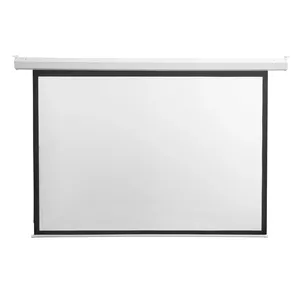
- Motorized screens — electric retractable screens that roll into a housing, convenient for multi-use rooms and remote operation.
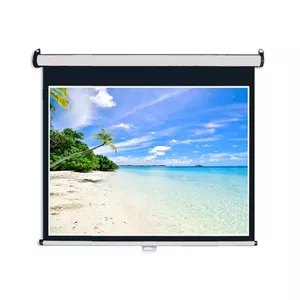
- Manual pull-down screens — retractable screens operated by hand, offering a cost-effective and space-saving solution.
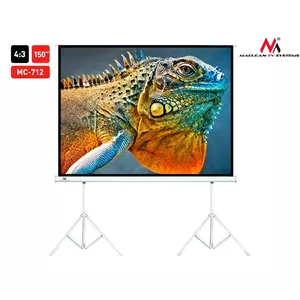
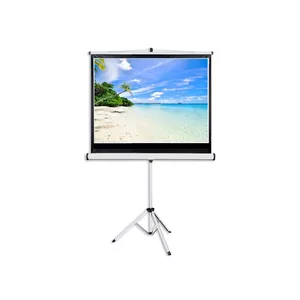
- Portable and tripod screens — lightweight, foldable screens for mobile presentations and temporary setups.
- Inflatable and pop-up screens — temporary projection surfaces for outdoor or event use where quick setup is needed.
- Specialty screens — acoustically transparent, ambient-light-rejecting (ALR), and curved screens for specific audiovisual requirements.
What are Projection Screens used for?
Projection screens serve as the intended display surface for projectors and are used wherever a large projected image is needed. Typical uses include:
- Home theater viewing — to reproduce movies and TV content with improved image uniformity and contrast.
- Business presentations — in meeting rooms and conference halls for slides, data visualization, and videoconferencing.
- Education and training — in classrooms and lecture halls to present instructional material and multimedia content.
- Public venues and events — for live events, advertising, and large-format video at concerts, exhibitions, and outdoor screenings.
- Cinema and screening rooms — in commercial and private cinemas where color accuracy and uniform brightness are required.
Key Differences between Projection Screens
Differences among projection screens affect image quality, installation, and suitability for specific environments. Key factors include:
- Screen material and gain — material composition and gain value influence brightness, contrast, and viewing angle.
- Surface type — matte white, high-contrast grey, ALR, and acoustically transparent surfaces serve different ambient light and audio needs.
- Aspect ratio and size — available in common aspect ratios (4:3, 16:9, 16:10, and cinema formats) and a range of diagonal sizes to match projector resolution and room proportions.
- Mounting and tensioning — fixed frames provide a consistently flat surface; tensioned retractable screens reduce wrinkles and improve flatness.
- Portability and control — portable and manual screens prioritize mobility and low cost; motorized screens add convenience and integration with control systems.
How to Choose Projection Screens?
Selecting a projection screen requires matching technical characteristics to the intended environment and projector. Consider these aspects:
- Room size and viewing distance — choose a screen size and aspect ratio that provide comfortable viewing angles and match seating layout.
- Projector type and brightness — use screen gain and surface type appropriate for the projector's lumen output to achieve the desired image brightness and contrast.
- Ambient light conditions — in bright rooms select high-gain or ALR screens; in controlled lighting environments, matte or grey high-contrast screens may be preferable.
- Installation and space — decide between fixed, retractable, or portable mounting based on permanence, ceiling/wall constraints, and aesthetic requirements.
- Audio and special needs — choose acoustically transparent screens for speakers behind the surface, and specialty materials for curved or large-format applications.
- Budget and maintenance — balance material quality, mechanical features (motorized vs manual), and long-term durability when making a selection.
Why is it worth buying projection screens at AiO.lv?
Order online at AiO.lv at a good price, with delivery across Latvia and to other EU countries. We deliver to Riga, Daugavpils, Liepāja, Jūrmala, Ventspils and other cities. We offer products from leading manufacturers.
- Official warranty and proven quality.
- Convenient payment methods, including instalments and credit.
- Fast, reliable delivery across Latvia and to other EU countries.
FAQ
Where can you find a projection screens with cheap prices?
You can buy cheaper at the AiO.lv online store. We offer competitive prices and regular discounts, so you always have the chance to find a great deal.
What is the delivery time for projection screens?
If you place your order today, delivery will take between 1 and 5 business days depending on the chosen method.
How long is the warranty period for projection screens?
Our store provides an official manufacturer’s warranty ranging from 12 to 36 months, depending on the model and brand. If needed, you can always contact our customer service department or the manufacturer’s authorized service center for support.
Are projection screens purchasable with leasing?
Yes, if the selected product costs more than €50. You can learn more about installment purchase options and the terms of application on the
Payment page.
Can projection screens be purchased for a company (with VAT)?
Yes. AiO.lv works with legal entities in Latvia and throughout Europe. All product prices are shown with VAT included. In certain cases, a 0% VAT rate may apply — for example, when purchasing from other EU countries with a valid VAT number. We issue an invoice immediately after the order is placed, support BIS electronic invoices, and automatically generate all required accounting documents. To complete a purchase for a company, simply select the company profile during checkout.