Save time and money with our discounts!

{{ totalProductsCount }}
In cart {{totalProductsCount}} item(s)
In cart {{totalProductsCount}} item(s)
Total:
{{sum | formatAmount}}
Your cart is empty
Scanners - New arrivals
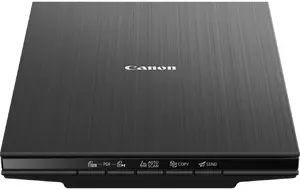
Scanners are electronic devices that capture images, text, or objects and convert them into digital files for storage, editing, or sharing. They are used in offices, homes, libraries, archives, healthcare, and industrial settings to digitize documents, photos, barcodes, receipts, and physical items. Scanners vary by capture method, speed, and output format, and are chosen according to the size and type of material to be scanned as well as workflow and software requirements. Many scanners connect to computers, networks, or mobile devices via USB, Wi‑Fi, or Ethernet and offer features such as optical character recognition (OCR), duplex scanning, and color management. Proper selection balances resolution, document feed type, speed, and compatibility with operating systems and document management tools. Routine maintenance, driver updates, and correct handling of originals help preserve image quality and prolong device life.
Types of Scanners
Common scanner types differ by design and intended use.
- Flatbed scanners: stationary glass platen for single sheets, books, photos and fragile originals.
- Sheetfed scanners: automatic document feeders (ADF) for processing multiple pages quickly.
- Duplex scanners: capture both sides of a sheet in one pass for two‑sided documents.
- Portable and mobile scanners: compact units for on‑the‑go digitizing, often battery‑powered.
- Photo and film scanners: high‑resolution devices or dedicated film holders for slides and negatives.
- Large‑format scanners: for maps, posters, architectural drawings and wide media.
- Barcode and document scanners: handheld or fixed scanners for barcodes, receipts and point‑of‑sale tasks.
- 3D scanners: capture the shape and texture of physical objects for modeling and inspection.
What are Scanners used for?
Scanners serve multiple practical purposes across different environments.
- Document digitization: convert paper files into searchable, storable digital formats.
- Archiving and preservation: capture high‑quality images of historical documents and photos.
- Data entry and automation: use OCR to extract text for indexing and workflow automation.
- Graphic and photo reproduction: digitize images for editing, printing or online use.
- Inventory and retail: scan barcodes and receipts for sales processing and stock control.
- 3D modeling and inspection: create digital models for design, quality control, or reverse engineering.
- Healthcare and legal: digitize records, prescriptions and forms to integrate with digital systems.
Key Differences between Scanners
Important distinguishing features affect performance and suitability.
- Resolution (dpi): higher dpi yields more detail for photos and archival scans, lower dpi suffices for text.
- Color depth: affects accuracy and tonal range for images and graphics.
- Scan speed (ppm or ipm): measured in pages per minute or images per minute for throughput needs.
- Feeder type: flatbed for delicate originals, ADF for bulk document processing, or manual feed for single items.
- Connectivity: USB, Wi‑Fi, Ethernet or mobile apps determine integration options with devices and networks.
- Software features: OCR, file format support (PDF, TIFF, JPEG), image correction and integration with document management systems.
- Media compatibility: supported sizes, weights, and special media like film, slides or thick originals.
How to Choose Scanners?
Selecting a scanner involves matching technical specifications to your use case and workflows.
- Identify primary use: text documents, photos, film or 3D objects to determine required type and resolution.
- Consider volume and speed: choose sheetfed/ADF or duplex models for high volumes; flatbed for occasional or delicate items.
- Check resolution and color depth: prioritize higher dpi and color range for photo or archival scanning.
- Verify compatibility: ensure drivers and software support your operating system and document management tools.
- Evaluate connectivity and mobility: decide between wired networked devices, Wi‑Fi models or portable scanners for field work.
- Review software features: look for reliable OCR, searchable PDF creation, image correction and export options.
- Account for maintenance and consumables: consider ease of cleaning, replacement parts, and support availability.
Which scanners - new arrivals are the most popular and affordable in 2026?
The full list of popular models at affordable prices is available on this page. In 2026, the following models show high demand and an excellent price-to-quality ratio:
- Flatbed Scanner Canon CanoScan LiDE 400 USB for 110.99€
Why is it worth buying scanners - new arrivals at AiO.lv?
At the AiO.lv online store, you can place an order at a great price with delivery across Latvia — to Riga, Daugavpils, Liepaja, Jurmala, Ventspils, and other cities, as well as throughout Europe. We offer products from leading manufacturers: Brother, Canon, Epson, FUJITSU, HP, Lexmark, Ricoh, Avision, Ipevo, Kodak, Microtek, UMAX, I.R.I.S., AgfaPhoto, MEDIA-TECH, REFLECTA, AGFA, ELMO, TELONE, AVerMedia. When you shop with us, you get:
- official warranty and guaranteed quality;
- convenient payment options (including installment and credit);
- fast and reliable delivery across Latvia and to any EU country.
FAQ
Where can you find a scanners - new arrivals with cheap prices?
You can buy cheaper at the AiO.lv online store. We offer competitive prices and regular discounts, so you always have the chance to find a great deal.
What is the delivery time for scanners - new arrivals?
If you place your order today, delivery will take between 1 and 5 business days depending on the chosen method.
How long is the warranty period for scanners - new arrivals?
Our store provides an official manufacturer’s warranty ranging from 12 to 36 months, depending on the model and brand. If needed, you can always contact our customer service department or the manufacturer’s authorized service center for support.
Are scanners - new arrivals purchasable with leasing?
Yes, if the selected product costs more than €50. You can learn more about installment purchase options and the terms of application on the Payment page.
Can scanners - new arrivals be purchased for a company (with VAT)?
Yes. AiO.lv works with legal entities in Latvia and throughout Europe. All product prices are shown with VAT included. In certain cases, a 0% VAT rate may apply — for example, when purchasing from other EU countries with a valid VAT number. We issue an invoice immediately after the order is placed, support BIS electronic invoices, and automatically generate all required accounting documents. To complete a purchase for a company, simply select the company profile during checkout.


