A curated selection of maximum value offers!

{{ totalProductsCount }}
In cart {{totalProductsCount}} item(s)
In cart {{totalProductsCount}} item(s)
Total:
{{sum | formatAmount}}
Your cart is empty
Solid State Drives (SSD) with delivery today
Get it Today
2-Power
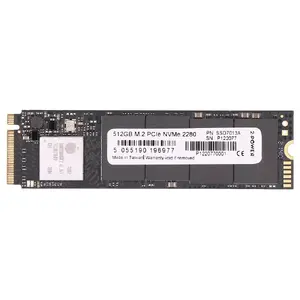
2-Power 500GB SSD M.2 NVMe TLC PCIe SSD capacity 500 GB form factor M.2
Delivery: Today
89.99 €
Solid State Drives (SSD) are data storage devices that use flash memory to store information without moving parts. They serve as primary or secondary storage in computers, laptops, servers, and some embedded systems, offering faster access times and lower latency compared with mechanical hard drives. SSDs are chosen for tasks requiring quick boot times, fast application loading, and improved system responsiveness, as well as for use in environments that demand greater shock resistance and lower power consumption. They come in a range of physical formats, interface standards, and memory types, which affect compatibility, performance, endurance, and cost. When selecting an SSD, users consider capacity, speed, form factor, interface, and write endurance to match device requirements and workload patterns.
Types of SSD
Common SSD types differ by form factor, interface, and NAND technology. Typical form factors include 2.5-inch SATA drives, M.2 modules, and PCIe add-in cards. Interfaces include SATA, PCIe with NVMe protocol, and older mSATA variants. NAND flash types often used are SLC, MLC, TLC, and QLC, with variations in performance and endurance. There are also enterprise-focused SSDs with advanced controllers and power-loss protection, and external SSDs with USB or Thunderbolt interfaces for portable storage.
- 2.5-inch SATA: standard replacement for HDDs in many laptops and desktops.
- M.2 NVMe: compact module offering higher bandwidth and lower latency over PCIe lanes.
- PCIe add-in card: high-performance solution for desktops and servers requiring maximum throughput.
- External SSDs: portable storage using USB-C, USB 3.x, or Thunderbolt connectivity.
- Enterprise SSDs: designed for datacenter workloads with higher endurance and reliability features.
What are SSD used for?
SSDs are used wherever faster data access and lower latency improve overall system performance. Common uses include acting as the system drive for operating systems, hosting frequently used applications and games, and storing working datasets for content creation, video editing, and software development. In servers and data centers, SSDs are used for databases, virtual machines, caching layers, and I/O-intensive workloads. Portable SSDs serve for fast file transfer and on‑the‑go access to large media files. They are also used in embedded systems and industrial equipment where durability and low power draw are important.
- System and boot drives to reduce startup and load times.
- Application and game storage to improve launch and load performance.
- Content creation and editing to handle large files and real-time rendering.
- Server storage for databases, virtualization, and high IOPS workloads.
- Portable backups and media transfer for mobility and speed.
Key Differences between SSD
Key differences among SSDs include interface and protocol, form factor, NAND type, controller quality, capacity, performance metrics, and endurance ratings. Interface and protocol (SATA vs PCIe/NVMe) largely determine maximum throughput and latency. NAND flash type (SLC/MLC/TLC/QLC) affects performance, write endurance, and cost per gigabyte. Controllers and firmware influence sustained performance, error correction, and features such as encryption or power-loss protection. Endurance is often expressed as TBW (terabytes written) or drive writes per day (DWPD), which indicates suitability for different workloads. Warranty length and manufacturer support also vary between consumer and enterprise models.
- Interface/protocol: SATA (lower bandwidth) vs PCIe/NVMe (higher bandwidth and lower latency).
- NAND type: SLC/MLC/TLC/QLC — trade-offs between speed, durability, and cost.
- Form factor: 2.5-inch, M.2, and PCIe add-in card affect compatibility and thermal behavior.
- Endurance and TBW: higher endurance for write-intensive or enterprise use cases.
- Controller/firmware: affects sustained performance, reliability features, and power management.
How to Choose SSD?
Choosing an SSD requires matching device compatibility, intended use, and budget. First, verify the physical form factor and interface supported by the device or motherboard (SATA, M.2 with SATA or NVMe, or PCIe slot). Determine required capacity based on operating system, applications, and data needs. Consider performance needs: NVMe PCIe drives provide higher read/write speeds for demanding tasks, while SATA SSDs are sufficient for general productivity and older systems. Check endurance ratings (TBW or DWPD) for write-heavy workloads, and review features such as hardware encryption, power-loss protection, and thermal management. Finally, compare warranty terms and reputable manufacturer specifications to balance cost, performance, and reliability for your use case.
- Confirm compatibility: form factor and supported interface on your system.
- Choose capacity based on OS, applications, and storage needs.
- Select interface and performance level (SATA vs NVMe) according to workload.
- Check endurance (TBW/DWPD) for write-intensive usage.
- Consider additional features: encryption, power-loss protection, warranty length.
Which solid state drives (ssd) with delivery today are the most popular and affordable in 2026?
The full list of popular models at affordable prices is available on this page. In 2026, the following models show high demand and an excellent price-to-quality ratio:
- SSD disk Verbatim 128GB 2.5" SATA Vi550 S3 for 34.99€
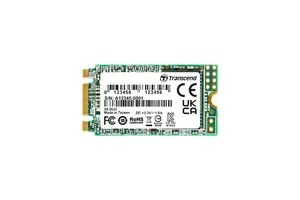
- SSD disk Transcend 250 GB M.2 SATA III 425S for 59.99€
- 2-Power 500GB SSD M.2 NVMe TLC PCIe SSD capacity 500 GB form factor M.2 for 89.99€
- AFOX ME300 M.2 NVMe PCI Express 3.0 Solid State Drive 512 GB QLC 3200 MB/s Read Speed Server Workstation for 94.49€
- PNY Technologies CS1030 Solid State Drive 512GB M.2 2280 PCI Express 3.0 x4 NVMe 3D NAND Read Speed 2000 MB/s Write Speed 1100 MB/s for 99.49€
Why is it worth buying solid state drives (ssd) with delivery today at AiO.lv?
At the AiO.lv online store, you can place an order at a great price with delivery across Latvia — to Riga, Daugavpils, Liepaja, Jurmala, Ventspils, and other cities, as well as throughout Europe. We offer products from leading manufacturers: APACER, ADATA, Cisco, CORSAIR, Dell, FUJITSU, HITACHI, HP, IBM, INTENSO, INTEL, KINGSTON, Lenovo, Panasonic, PNY, SANDISK, SEAGATE, SYNOLOGY, Samsung, Toshiba. When you shop with us, you get:
- official warranty and guaranteed quality;
- convenient payment options (including installment and credit);
- fast and reliable delivery across Latvia and to any EU country.
FAQ
Where can you find a solid state drives (ssd) with delivery today with cheap prices?
You can buy cheaper at the AiO.lv online store. We offer competitive prices and regular discounts, so you always have the chance to find a great deal.
What is the delivery time for solid state drives (ssd) with delivery today?
If you place your order today, delivery will take between 1 and 5 business days depending on the chosen method.
How long is the warranty period for solid state drives (ssd) with delivery today?
Our store provides an official manufacturer’s warranty ranging from 12 to 36 months, depending on the model and brand. If needed, you can always contact our customer service department or the manufacturer’s authorized service center for support.
Are solid state drives (ssd) with delivery today purchasable with leasing?
Yes, if the selected product costs more than €50. You can learn more about installment purchase options and the terms of application on the Payment page.
Can solid state drives (ssd) with delivery today be purchased for a company (with VAT)?
Yes. AiO.lv works with legal entities in Latvia and throughout Europe. All product prices are shown with VAT included. In certain cases, a 0% VAT rate may apply — for example, when purchasing from other EU countries with a valid VAT number. We issue an invoice immediately after the order is placed, support BIS electronic invoices, and automatically generate all required accounting documents. To complete a purchase for a company, simply select the company profile during checkout.

14-Day Return Policy
We are confident in our quality, but if the purchase doesn’t fit — you have 14 days to return the product with peace of mind.

Fast Delivery
Get your orders as quickly as possible — right to your door, parcel lockers, or pickup points across Latvia and the EU.

Secure Payment
Pay the way you prefer: cash, VISA, MasterCard, Apple Pay, Google Pay, bank transfer, or 0% installment plan.

Quality Since 2008
AiO.lv has been on the market for over 18 years and has earned trust — with more than 6000 genuine positive reviews on Google.