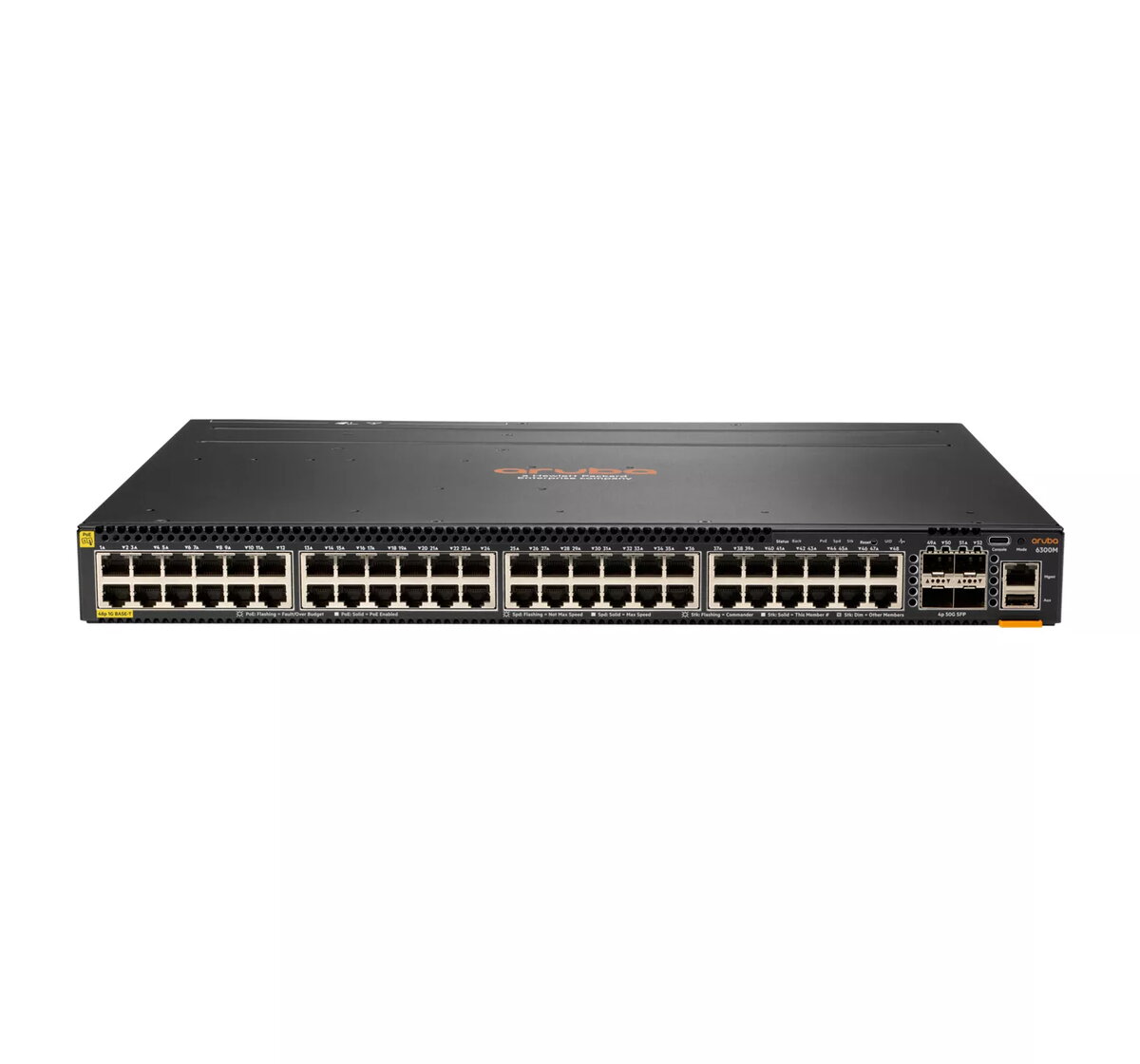
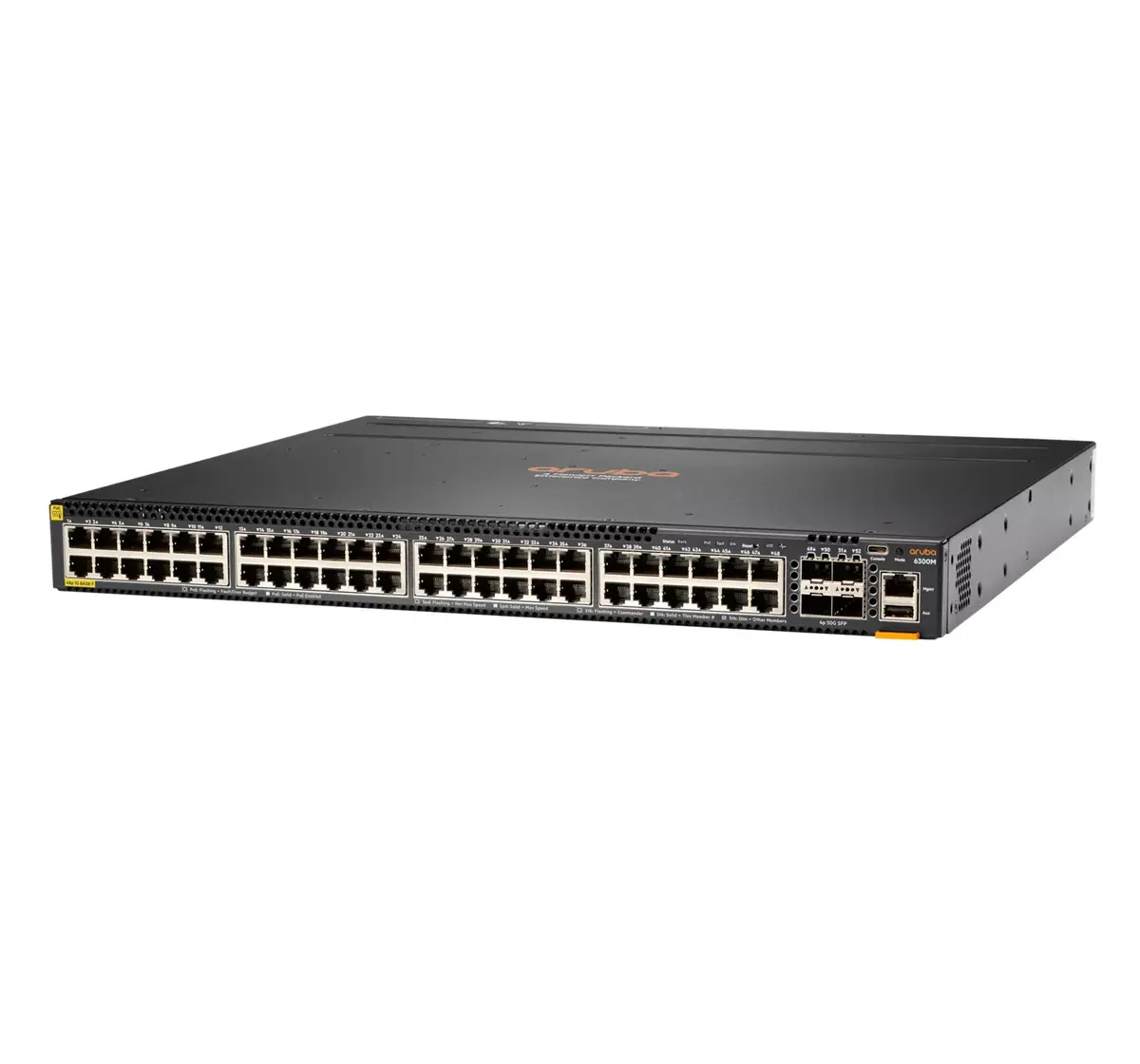
-
Processor frequency:
The clock rate is the fundamental rate in cycles per second (measured in hertz) at which a computer performs its most basic operations such as adding two numbers. There are more factors, like internal memory size, that influence a computer's actual response time.
-
1800 MHz
-
Internal memory:
The amount of memory, usually measured in bytes (e.g. MB, GB), which is installed in the system's hardware.
-
8192 MB
-
Processor model:
The model number for the processor in a computer.
-
ARM Cortex-A72
-
Weight:
Weight of the product without packaging (net weight). If possible, the net weight is given including standard accessories and supplies. Please note that sometimes the manufacturer leaves out the weight of accessories and/or supplies.
-
5.72 kg
-
Rack mounting:
The type of mounting that can position devices in a shelving system (rack).
-
Yes
-
Flash memory:
-
32 MB
-
MAC address table:
The MAC address is the 'Media Access Control Address'. It is a unique address given to a network interface controller (NIC) in a device. A MAC address table shows the addresses in a table format.
-
29490 entries
-
Memory type:
Type of memory in the device e.g. DDR3, SRAM (Static RAM).
-
DDR4-SDRAM
-
Operating relative humidity (H-H):
-
15 - 95
-
Storage temperature (T-T):
The minimum and maximum temperatures at which the product can be safely stored.
-
-40 - 70
-
Form factor:
The shape or design of the product.
-
1U
-
Operating temperature (T-T):
The minimum and maximum temperatures at which the product can be safely operated.
-
0 - 45
-
Height:
The measurement of the product from head to foot or from base to top.
-
44 mm
-
Routing protocols:
-
OSPF, IP, BGP4, BGP
-
Width:
The measurement or extent of something from side to side.
-
442 mm
-
Depth:
The distance from the front to the back of something.
-
385 mm
-
Product colour:
The colour e.g. red, blue, green, black, white.
-
Grey
-
Switching capacity:
The data transfer capacity of the switch per second.
-
496 Gbit/s
-
Networking standards:
The way in which the network is working, e.g. IEEE 802.11a, IEEE 802.11b, IEEE 802.11g.
-
IEEE 802.1p, IEEE 802.3at, IEEE 802.3af, IEEE 802.3ae, IEEE 802.3ad, IEEE 802.1x, IEEE 802.1w, IEEE 802.1v, IEEE 802.1s, IEEE 802.3bt, IEEE 802.1ak, IEEE 802.1ab, IEEE 802.1Q, IEEE 802.1D, IEEE 802.1AX, IEEE 802.3z, IEEE 802.3x
-
Flow control support:
-
Yes
-
Power over Ethernet (PoE):
The device supports Power over Ethernet (PoE), which is one of several standardized or ad-hoc systems which pass electrical power along with data on Ethernet cabling. This allows a single cable to provide both data connection and electrical power to devices such as wireless access points or IP cameras.
-
Yes
-
Switch layer:
A network switch is a computer networking device that links networking segments. A switch has different layers, such as layer 2 (a network bridge, operating at the data link layer, interconnecting a small number of devices) and layer 4 (can act as a firewall, amongst other things).
-
L3
-
Quality of Service (QoS) support:
-
Yes
-
Port mirroring:
-
Yes
-
Link aggregation:
-
Yes
-
Stackable:
Devices can be placed on top of each other.
-
Yes
-
Jumbo frames support:
-
Yes
-
Multicast support:
-
Yes
-
Access Control List (ACL):
-
Yes
-
Rate limiting:
-
Yes
-
Switch type:
What switch device has, managed or unmanaged.
-
Managed
-
SSH/SSL support:
-
Yes
-
IGMP snooping:
-
Yes
-
Auto MDI/MDI-X:
A Medium Dependent Interface (MDI) describes the interface (both physical and electrical) in a computer network from a physical layer implementation to the physical medium used to carry the transmission. Ethernet over twisted pair also defines a medium dependent interface crossover (MDIX) interface. Auto-MDIX ports on newer network interfaces detect if the connection would require a crossover, and automatically chooses the MDI or MDIX configuration to properly match the other end of the link.
-
Yes
-
Spanning tree protocol:
-
Yes
-
VLAN support:
A Virtual Local Area Network (VLAN) consists of a group of computers and switches that can be physically distributed over different networks and buildings, but form one LAN on a logical level.
-
Yes
-
10G support:
The product can use Oracle 10G, which is a database management system introduced in 2003.
-
Yes
-
Transmission distance (max):
-
10 km
-
Built-in processor:
Whether or not a processor is built into the device.
-
Yes
-
AC input frequency:
-
50 - 60
-
AC input voltage:
The voltage of the AC electricity that is inputted into the product.
-
100 - 240
-
Power supply included:
There is a power supply with this product.
-
Yes
-
Basic switching RJ-45 Ethernet ports type:
The type/category of basic switching RJ-45 Ethernet ports (sockets).
-
Gigabit Ethernet (10/100/1000)
-
Basic switching RJ-45 Ethernet ports quantity:
The number of basic switching RJ-45 Ethernet ports (sockets).
-
48
-
Total Power over Ethernet (PoE) budget:
-
1440 W
-
Packet buffer memory:
-
8 MB
-
Latency (1 Gbps):
-
2.28 µs
-
Latency (10 Gbps):
-
1.46 µs
-
Throughput:
-
369 Mpps
-
Physical stacking (units):
-
10
-
Harmonized System (HS) code:
-
85176990
-
SFP module slots quantity:
-
4
-
DHCP features:
-
DHCP server