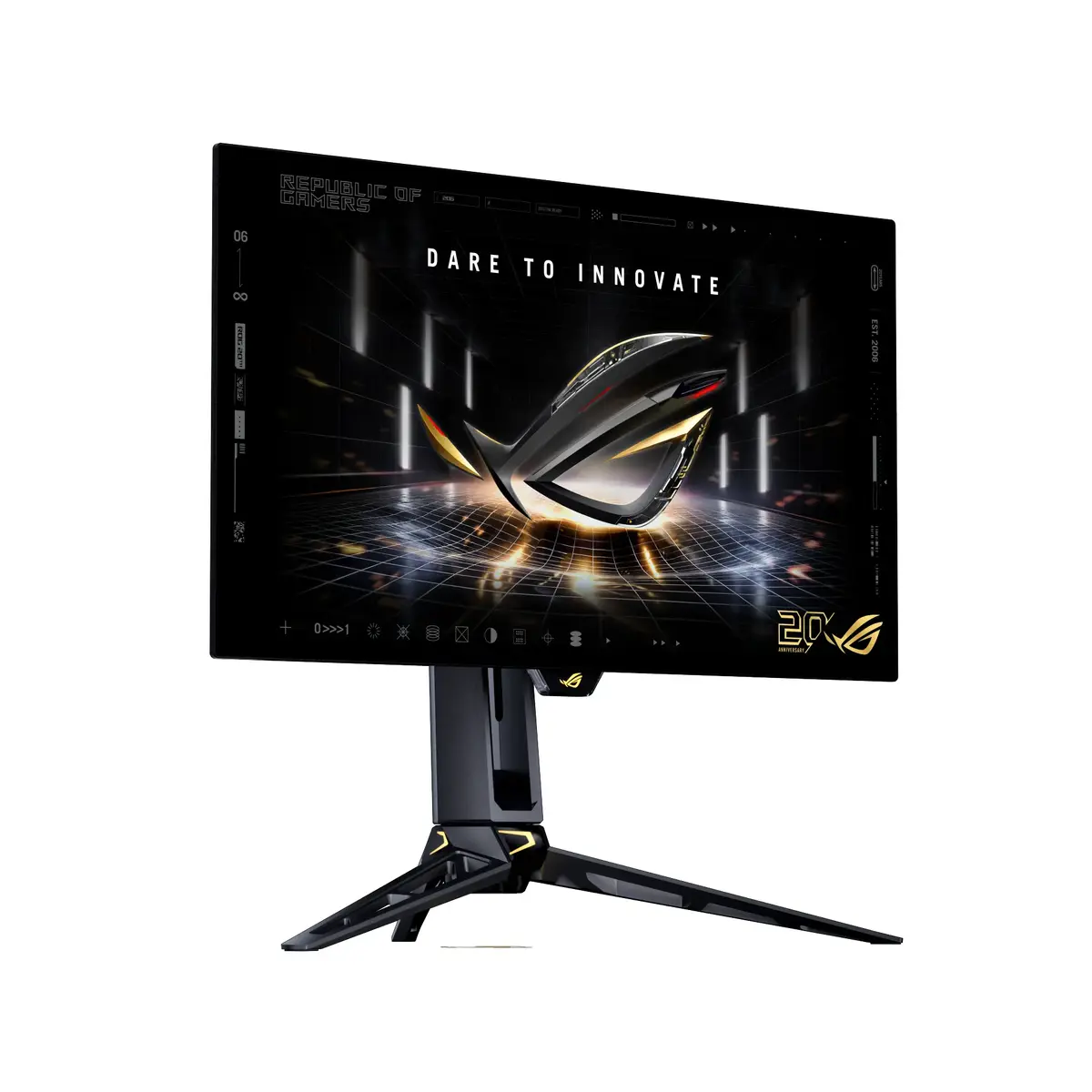
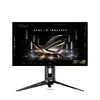
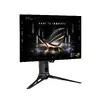
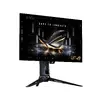
-
Pixel pitch:
This is the parameter of a picture tube, which specifies the shortest distance between two dots of the same colour. The principle is: the smaller the dot pitch, the better sharpness of image.
-
0.229 x 0.229
-
Contrast ratio (typical):
The difference in light intensity between the brightest white and the darkest black.
-
1500000:1
-
Viewing angle, horizontal:
Maximum horizontal angle at which a display can be viewed with acceptable visual performance.
-
178 °
-
Viewing angle, vertical:
Maximum vertical angle at which a display can be viewed with acceptable visual performance.
-
178 °
-
Viewable size, horizontal:
The viewable size is often somewhat smaller than the actual size of a monitor, because there is a border around the image.
-
586.75 mm
-
Viewable size, vertical:
-
330.05 mm
-
Power consumption (typical):
Amount of power consumed by this model, often expressed in watts (W). Typical values that manufacturers give are power consumption when off, standby/suspended mode, typical use, maximum usage.
-
55 W
-
Package weight:
Weight of the packaged product.
-
11600 g
-
Display diagonal:
Size of the display for this product, measured diagonally, usually in inches.
-
26.5 "
-
Cable lock slot:
Holes on the edge of devices through which a cable lock can be passed, so the device can be locked to a desk etc.
-
Yes
-
Response time:
The response time is the time difference between the moment that a source (for example a video card) sends a signal and that equipment (for example a monitor) receives or display the signal. (Used abbreviations: R/F = Rise and Fall.)
-
0.02 ms
-
Display resolution:
The number of distinct pixels in each dimension that can be displayed. It is usually quoted as width × height, with the units in pixels: for example, "1024 × 768" means the width is 1024 pixels and the height is 768 pixels. The higher the number of pixels, the sharper the image.
-
2560 x 1440
-
Wall mountable:
The product can be mounted on (attached to ) a wall.
-
Yes
-
Product colour:
The colour e.g. red, blue, green, black, white.
-
Black
-
Height adjustment:
The part of the device that can be adjusted to change the height.
-
Yes
-
Swivel angle range:
-
-30 - 30
-
Power consumption (off):
-
0.3 W
-
Power consumption (PowerSave):
-
0.5 W
-
Tilt angle range:
-
-5 - 20
-
Headphone outputs:
Number of sockets /ports where headphones are connected.
-
1
-
Built-in speaker(s):
The device contains speaker(s) to produce sound.
-
No
-
Pivot:
-
Yes
-
Digital horizontal frequency:
-
30 - 850
-
Digital vertical frequency:
-
48 - 540
-
Game mode:
-
Yes
-
HDMI ports quantity:
The number of sockets (ports) for HDMI connections. HDMI (High-Definition Multimedia Interface) is a compact audio/video interface for transferring uncompressed video data and compressed/uncompressed digital audio data from a HDMI-compliant device ("the source device") to a compatible computer monitor, video projector, digital television, or digital audio device. HDMI is a digital replacement for existing analog video standards.
-
2
-
Panel mounting interface:
The product can be used wih VESA mounting interfaces.
-
100 x 100
-
Width (with stand):
-
605.6 mm
-
Display diagonal (metric):
This is the size of the display screen, measured diagonally.
-
67 cm
-
Package type:
The type of product package e.g. box.
-
Box
-
Touchscreen:
A screen of a laptop, smartphone, etc., that responds to touch so you can control the interface using your fingers.
-
No
-
HDMI version:
-
2.1
-
HDMI:
HDMI (High-Definition Multimedia Interface) is a compact audio/video interface for transferring uncompressed video data and compressed/uncompressed digital audio data from a HDMI-compliant device ("the source device") to a compatible computer monitor, video projector, digital television, or digital audio device. HDMI is a digital replacement for existing analog video standards.
-
Yes
-
HDCP:
High-bandwidth Digital Content Protection (HDCP) is a form of digital copy protection to prevent copying of digital audio and video content as it travels across connections.
-
Yes
-
DisplayPorts quantity:
Number of DisplayPorts. A DisplayPort is a digital display interface developed by the Video Electronics Standards Association (VESA). The interface is primarily used to connect a video source to a display device such as a computer monitor, though it can also be used to carry audio, USB, and other forms of data.
-
1
-
LED backlight:
A backlight is a form of illumination used in liquid crystal displays (LCDs). One type of backlight is made by LEDs, which can be either white or RGB (red green blue). White LEDs are used most often in notebooks and desktop screens, and in virtually all mobile LCD screens. RGB LEDs for backlighting are found in high-end color proofing displays such as HP DreamColor LP2480zx monitor or selected HP EliteBook notebooks, as well as newer consumer grade displays such as Dell's Studio series laptops which have an optional RGB LED display.
-
Yes
-
Swivelling:
-
Yes
-
Maximum refresh rate:
-
540 Hz
-
Pivot angle:
-
-90 - 90
-
Built-in camera:
The product has an integrated camera.
-
No
-
Tilt adjustment:
The tilt, which means the angle at which the device is pointing (up or down), can be changed.
-
Yes
-
AC input frequency:
-
50/60
-
AC input voltage:
The voltage of the AC electricity that is inputted into the product.
-
100 - 240
-
Market positioning:
Under which category can the device be positioned in the market, e.g. camera phone.
-
Gaming
-
Display technology:
The technology used in the display e.g. plasma, LED.
-
OLED
-
HDCP version:
-
2.3
-
Feet colour:
The colour of the feet, which are the projecting part on which a device/piece of furniture, or each of its legs, stands.
-
Black
-
DisplayPort version:
-
2.1
-
Native aspect ratio:
The aspect ratio is the ratio of the width of an image to its height. The native aspect ratio is the one which the projector/display is particularly designed for. Images shown in native aspect ratio will utilize the entire resolution of the display and achieve maximum brightness. Images shown in other than native aspect ratio will always have less resolution and less brightness than images shown in native aspect ratio.
-
16:9
-
HD type:
Type of supported High Definition (e.g. Full HD, 4K Ultra HD).
-
Wide Quad HD
-
Headphone out:
The socket for connecting headphones to the device.
-
Yes
-
Weight (without stand):
-
4540 g
-
Width (without stand):
-
605.6 mm
-
Cable lock slot type:
-
Kensington
-
Panel type:
-
WOLED
-
VESA mounting:
-
Yes
-
Display surface:
-
Gloss
-
Screen shape:
-
Flat
-
Weight (with stand):
-
7040 g
-
NVIDIA G-SYNC:
-
Yes
-
Built-in USB hub:
Whether or not the device features a USB hub to connect more than one other device via USB.
-
Yes
-
USB hub version:
-
3.2 Gen 1 (3.1 Gen 1)
-
USB Type-A downstream ports quantity:
-
3
-
Display number of colours:
-
1.073 billion colours
-
Adjustable height (max):
-
110 mm
-
Brand specific technologies:
-
ASUS OLED Care
-
sRGB coverage (typical):
-
135 %
-
AMD FreeSync:
The product includes AMD Freesync Technology for the dynamic synchronization of the graphic card and the monitor in order to avoid screen tearing.
-
Yes
-
High Dynamic Range (HDR) supported:
-
Yes
-
Display brightness (peak):
-
1500 cd/m²
-
Flicker-free technology:
-
Yes
-
Low Blue Light technology:
-
Yes
-
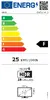
Energy efficiency scale:
Range of energy efficiency levels classifying devices from most to least energy-efficient.
-
A to G
-
DCI-P3 coverage:
-
99.5 %
-
High Dynamic Range (HDR) technology:
-
High Dynamic Range 10 (HDR10)
-
NVIDIA G-SYNC type:
-
G-SYNC Compatible
-
AMD FreeSync type:
-
FreeSync Premium Pro
-
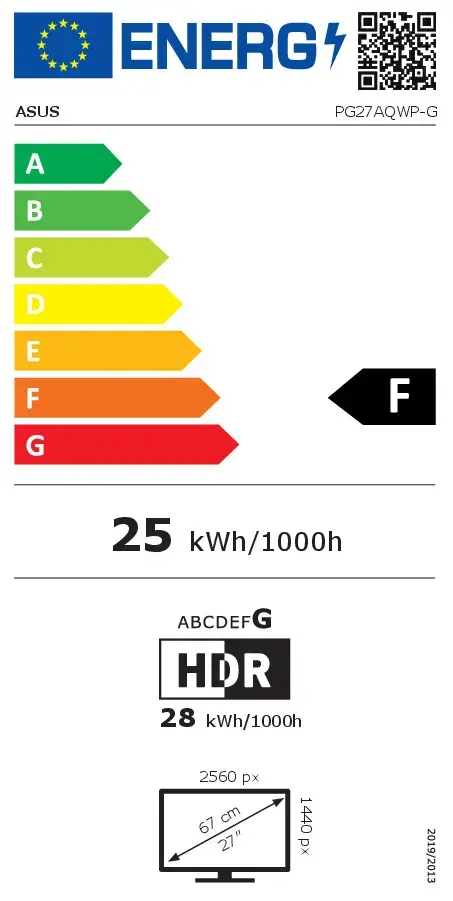
Energy efficiency class (SDR):
Energy efficiency class is a standard classification that is used all over Europe and which is understandable at first sight. Products can be efficiently compared according to classes, starting from A (the most energy efficient class), and ending with G (the most energy-intensive class). The classification of energy efficiency is based on annual energy consumption which is being calculated on the basis of several different parameters.
-
F
-
Energy efficiency class (HDR):
Energy efficiency class is a standard classification that is used all over Europe and which is understandable at first sight. Products can be efficiently compared according to classes, starting from A (the most energy efficient class), and ending with G (the most energy-intensive class). The classification of energy efficiency is based on annual energy consumption which is being calculated on the basis of several different parameters.
-
G
-
Energy consumption (SDR) per 1000 hours:
Power consumption in switched-on state expressed in W.
-
25 kWh
-
Energy consumption (HDR) per 1000 hours:
Power consumption in switched-on state expressed in W.
-
28 kWh
-
Motion blur reduction:
-
Yes
-
Colour gamut standard:
-
DCI-P3, sRGB
-
Response time measurement type:
-
GTG (Gray to Gray)