
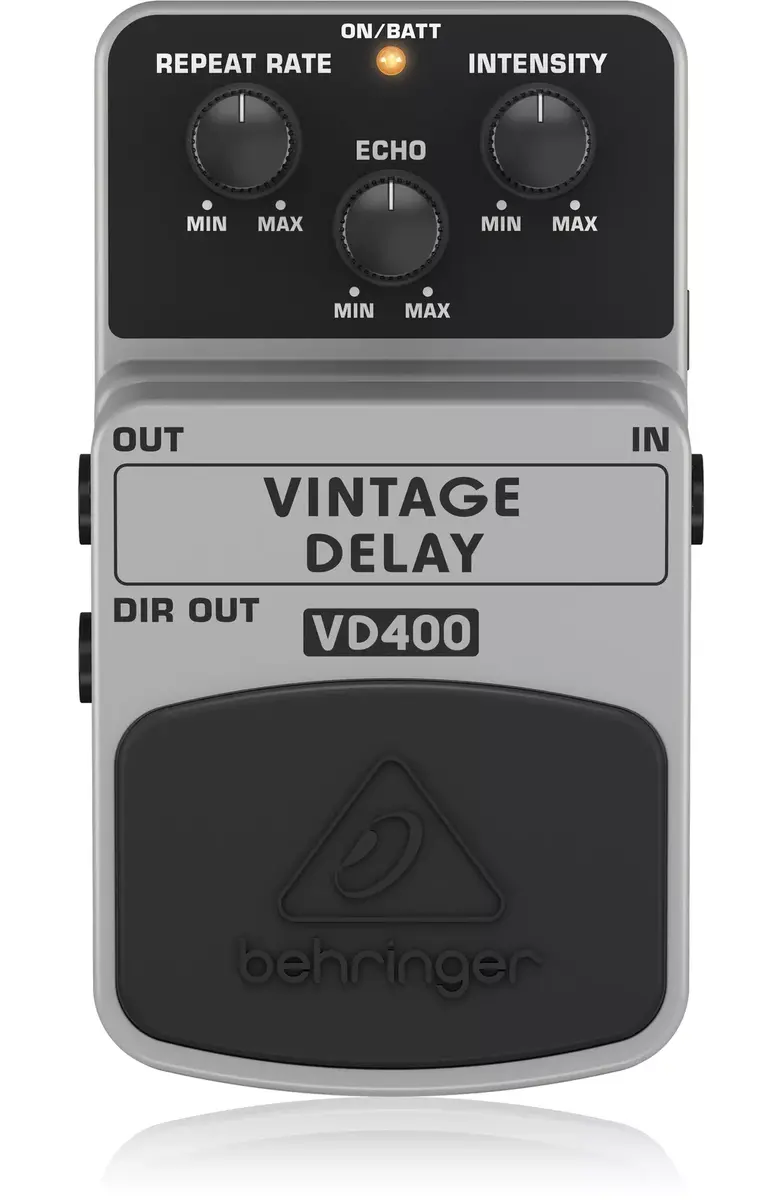
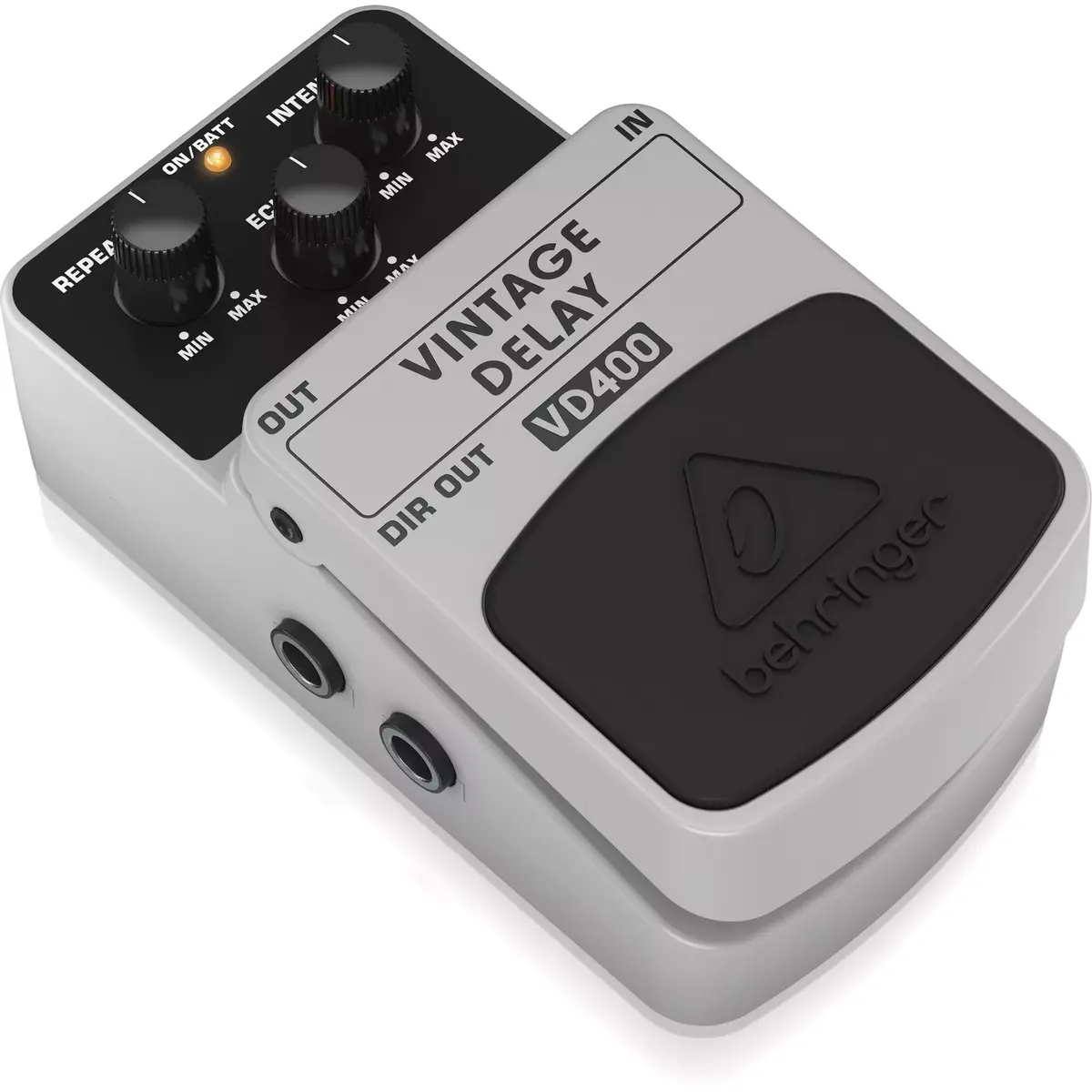
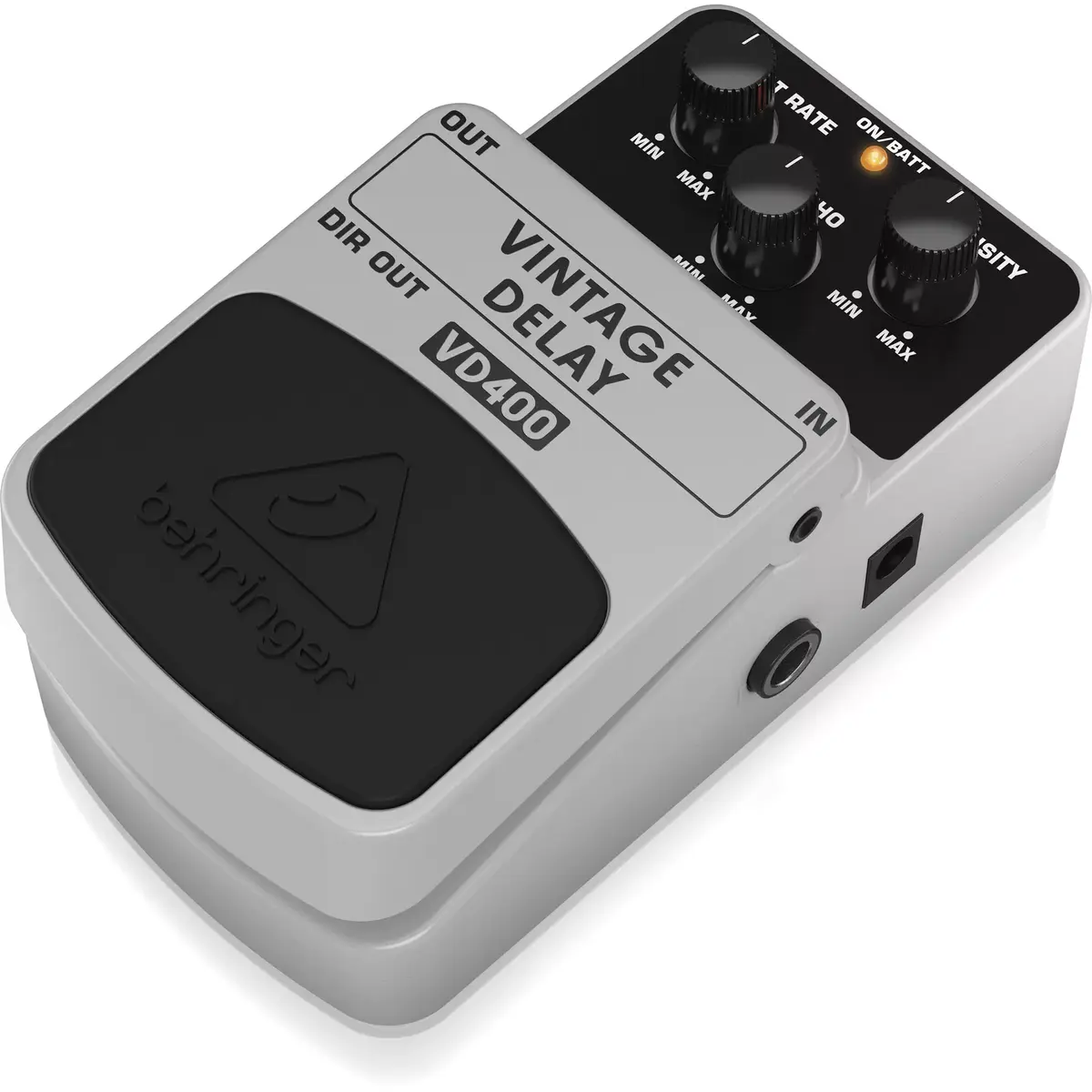
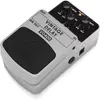
The Behringer VD400 Effects Pedal Vintage Delay is compared against several alternative Behringer guitar pedals, including the delay model Behringer BM-14M Analog Delay, distortion and overdrive pedals Behringer HM300 Heavy Metal Distortion and Behringer VT999 Tube Overdrive, the bass overdrive pedal Behringer BDI21 Bass Overdrive and Distortion, and the noise reduction pedal Behringer NR300 Effects pedal. All of these devices are produced by the same brand for musicians, but they serve completely different sound purposes. The main difference lies in the type of audio effect created: the Behringer VD400 Effects Pedal Vintage Delay specializes in classic analog echo and delay, whereas the alternative devices focus on extreme distortion, tube-style overdrive, bass signal modeling, or noise suppression.
⚙️ The table below compares the device type, musical purpose, target instruments, and key control elements of each pedal.
| Comparison parameter | Behringer VD400 Effects Pedal Vintage Delay | Behringer BM-14M Analog Delay | Behringer HM300 Heavy Metal Distortion | Behringer NR300 Effects pedal | Behringer VT999 Tube Overdrive | Behringer BDI21 Bass Overdrive and Distortion | Practical conclusion |
|---|
| Effect type | Analog delay | Analog delay | Heavy distortion | Noise reduction | Tube-simulated overdrive | Bass overdrive and distortion with amp modeling | The VD400 and BM-14M create spatial echo, whereas the other pedals alter the signal structure with distortion or clean up noise. |
| Purpose | Delivering classic vintage delay and echo sounds | Providing warm vintage-style echoes and repeats | Delivering extreme ultra-high gain crunch and heavy distortion tones | Reducing unwanted noise and hum | Emulating tube-driven overdrive tone for blues and rock | Delivering rich vintage tube sounds and amp modeling for bass guitar | Each pedal fulfills a unique role in a musician's signal chain and does not replace other devices. |
| Instruments | Electric guitar and bass | Electric guitar | Electric guitar | Guitar and bass | Electric guitar | Bass guitar | Most pedals are universal for guitars, while the BDI21 model is specifically designed for bass guitars. |
| Controls | Repeat, echo, and intensity controls | Not detailed | Distortion, high and low EQ, and level controls | Not detailed | Gain and character controls | 2-band EQ and blend control | The variety of controls determines the precision of shaping a specific sound effect. |
◎ The table below evaluates how well each pedal suits various use cases and musician needs.
| Use case | Recommended product | Why |
|---|
| Creating space, echo, and dimensional sound for guitar or bass | Behringer VD400 Effects Pedal Vintage Delay | Provides authentic analog delay effects with dedicated echo and repeat controls. |
| Obtaining warm vintage analog repeats | Behringer BM-14M Analog Delay | A dedicated compact stompbox for classic analog echo. |
| Playing heavy metal music with thick crushing distortion | Behringer HM300 Heavy Metal Distortion | Designed for extreme high gain and aggressive Scandinavian-style tone textures. |
| Eliminating background noise and hum during live gigs | Behringer NR300 Effects pedal | Effectively cleans the audio signal from unwanted hum during performances and recordings. |
| Playing blues and rock with warm midrange saturation | Behringer VT999 Tube Overdrive | Emulates tube-driven overdrive tone suitable for expressive leads and rhythm playing. |
| Shaping bass guitar tone with amp modeling and DI features | Behringer BDI21 Bass Overdrive and Distortion | Offers analog overdrive and amp modeling tailored specifically for bass guitarists. |
The Behringer VD400 Effects Pedal Vintage Delay differs fundamentally from the HM300, NR300, VT999, and BDI21 because it is built for time-based delay and echo rather than distortion or noise filtering. Compared with the alternative BM-14M model, it addresses similar analog echo tasks while offering its own control scheme. This pedal is best suited for guitarists and bassists who need classic analog space in their sound for live performances and studio sessions, whereas other models should be chosen when a player specifically needs to alter distortion characteristics or clean up a noisy signal.