


Rotary Carbide Burr 12 mm Beta Tools 426MD/CP12 for metal shaping and deburring
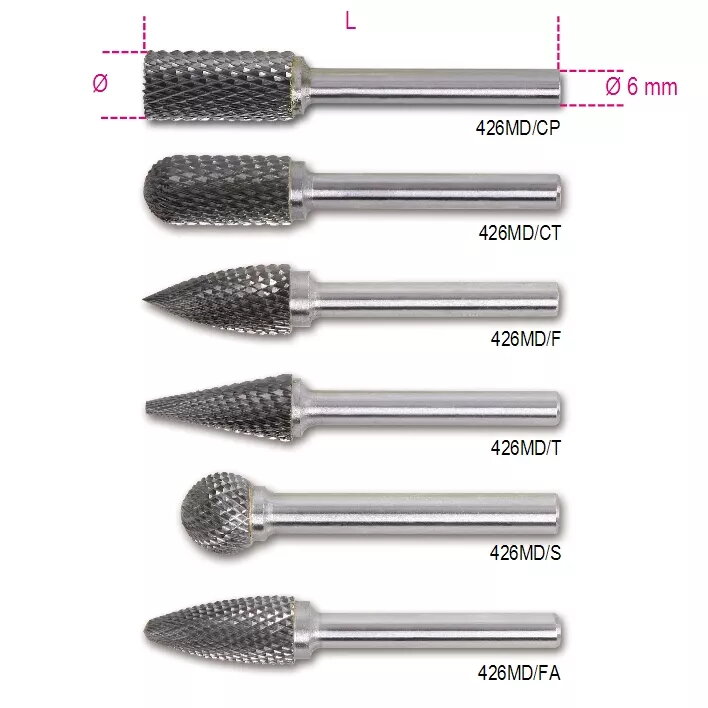
Short description

Cheapest delivery:
Unisend LV

Esto — pay in 6 equal parts
Product information
Description
Beta Tools rotary carbide burr 426MD/CP12 features a 12 mm head diameter optimized for shaping, deburring and finishing metal, hard alloys and welds. The burr is constructed with a sintered carbide cutting head that provides high wear resistance and consistent cutting performance when used with die grinders and rotary tools. Its compact head size and fluted cutting geometry make it suitable for detailed material removal and surface blending in confined areas commonly encountered in automotive, metal fabrication and maintenance work.
Advantages
The sintered carbide head ensures long tool life and steady cutting speed across a range of ferrous and non-ferrous metals. Precise flute geometry reduces vibration and delivers controlled chip removal for smoother finishes. The 12 mm diameter balances accessibility and cutting area, allowing both rough shaping and fine finishing without frequent tool changes. Compatible with standard rotary tool shanks, this burr offers reliable performance under continuous use.
Suitable for
- Removing burrs and weld spatter on steel and stainless steel
- Shaping and profiling hard alloys and castings
- Deburring machined edges and preparing surfaces for welding or painting
- Detail work in automotive body repair and metal fabrication
Key specifications
- Head diameter: 12 mm
- Material of cutting head: sintered carbide
- Intended use: shaping, deburring, finishing
- Compatible tools: die grinders and rotary tools with matching shank
- Cutting geometry: multi-flute design for chip control
How to use
Mount the burr securely in a die grinder or rotary tool according to the tool manufacturer’s instructions. Start at moderate speed to assess cutting behaviour, then increase speed as appropriate for the workpiece material and the desired removal rate. Apply light to moderate pressure; let the carbide cutting edges perform material removal to avoid premature wear. Use steady, controlled passes and keep the burr moving to prevent localized overheating or gouging. Regularly inspect the cutting edges and replace the burr when wear degrades performance.
Usage recommendations
For best results, use appropriate personal protective equipment including eye and hearing protection, and a dust mask when working with fine metal particles. Clean and lubricate workpieces where applicable to improve cutting life. Select a rotational speed suited to the metal type: lower speeds for stainless and hardened steels, higher speeds for softer non-ferrous metals. Store the burr in a dry, secure case to protect the carbide edges between uses.


