
JBL speakers and headphones for pure and deep sound!
In cart {{totalProductsCount}} item(s)
Your cart is empty
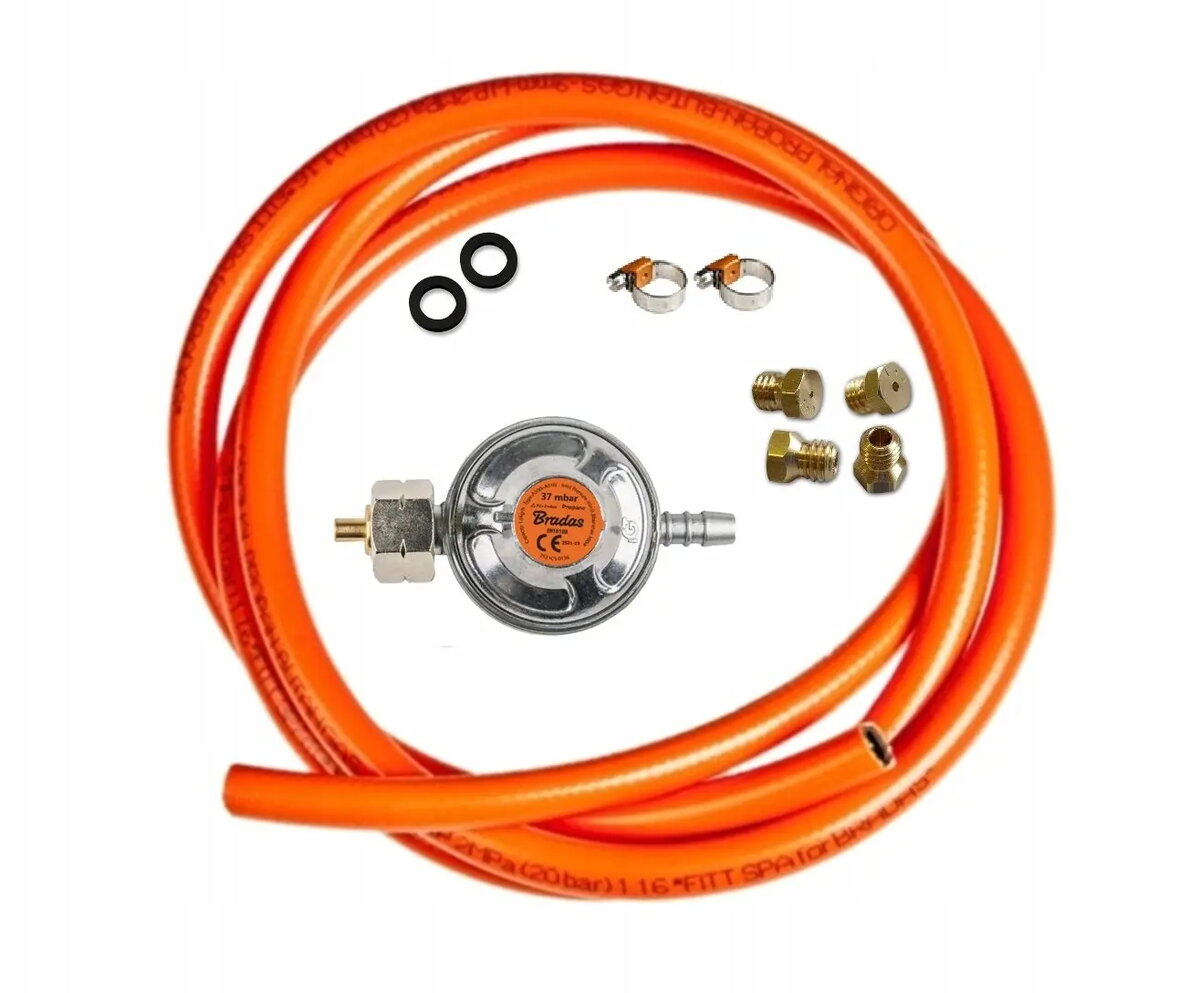
Gas Pressure Regulator BRADAS RG C31-37 with EFV 37 mbar for 9–10 mm Hose Connection
Gas pressure regulator BRADAS RG C31-37 with EFV 37 mbar for 9–10 mm hose connection is a compact regulator designed for supplying a stable 37 mbar gas pressure to portable gas appliances. Built for use with LPG cylinders and equipment that accept a 9–10 mm hose, this regulator integrates an excess flow valve (EFV) that automatically shuts off or restricts gas flow in the event of a sudden hose disconnection or a major leak, improving operational safety for domestic and outdoor applications.
The BRADAS RG C31-37 provides consistent pressure control at 37 mbar suitable for many camping stoves and small gas-powered appliances. The integrated EFV enhances safety by limiting gas flow during unexpected disconnections. Its 9–10 mm hose connection is compatible with common flexible gas hoses, allowing straightforward installation without additional adaptors on compatible systems. The construction is compact and lightweight, intended for portable and outdoor use.
Before installation, ensure the appliance and hose are compatible with a 37 mbar regulator and suitable for LPG. Turn off the gas cylinder valve, connect the regulator to the cylinder outlet and attach a secure 9–10 mm hose to the regulator outlet, using approved clamps or fittings as required. Open the cylinder valve slowly and check all connections for leaks using a suitable leak-detection solution; never test for leaks with an open flame. If the EFV activates due to a sudden disconnection or excessive flow, turn off the gas supply, inspect the hose and fittings, and reset or replace components as appropriate before reuse.
Install and maintain the regulator in accordance with local gas safety regulations and manufacturer guidance. Use the regulator only with appliances designed for 37 mbar supply pressure and certified for LPG. Replace the regulator or hose if there are signs of wear, damage, or persistent leaking. Periodic inspection by a qualified technician is recommended for stationary installations.
{{highlightedFeature.featureTitle}}:
{{getProductFeatureValueById(product, highlightedFeature.featureId)}}
{{ productComparisonGenerationError }}