
Hurry and order now – up to 50% off!
In cart {{totalProductsCount}} item(s)
Your cart is empty
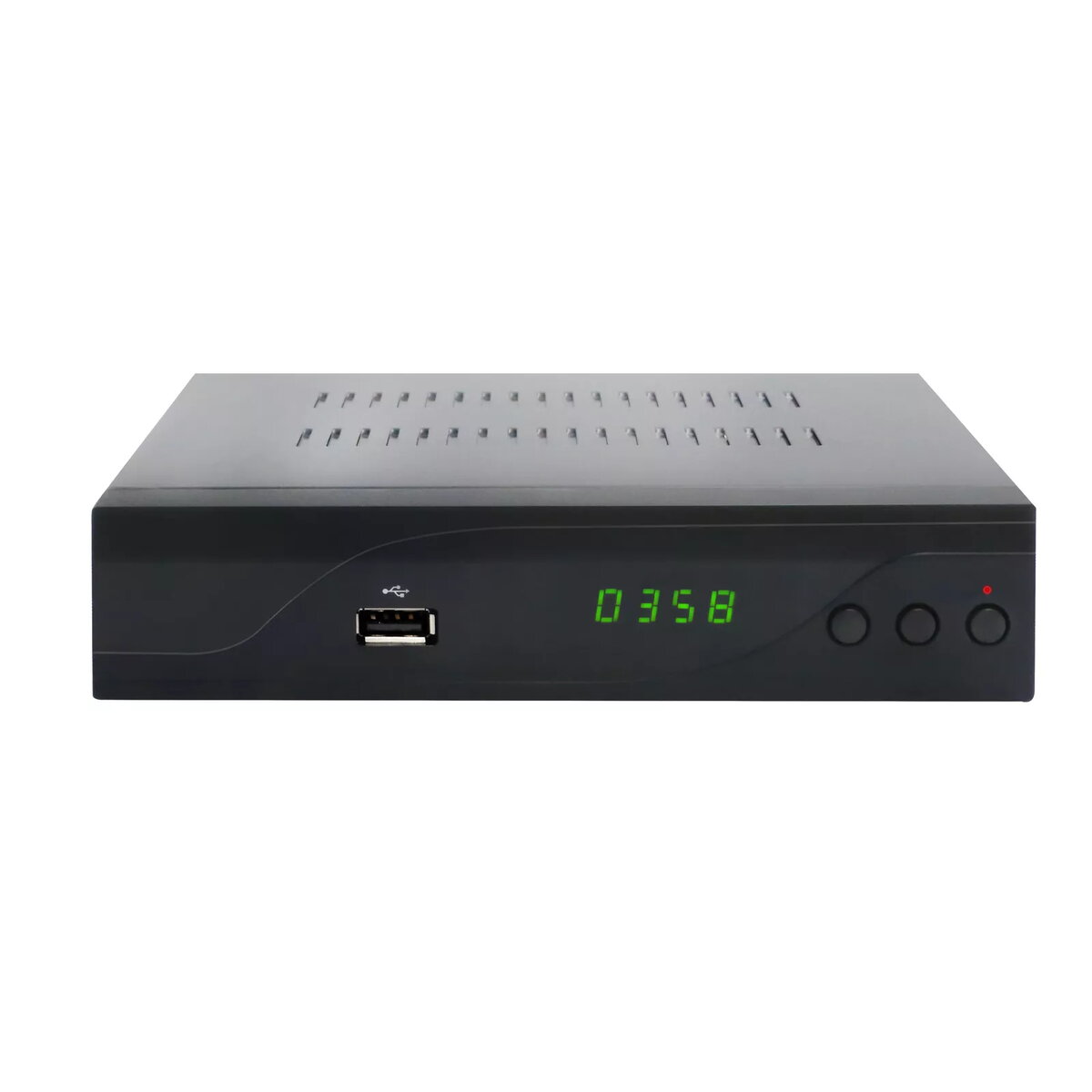
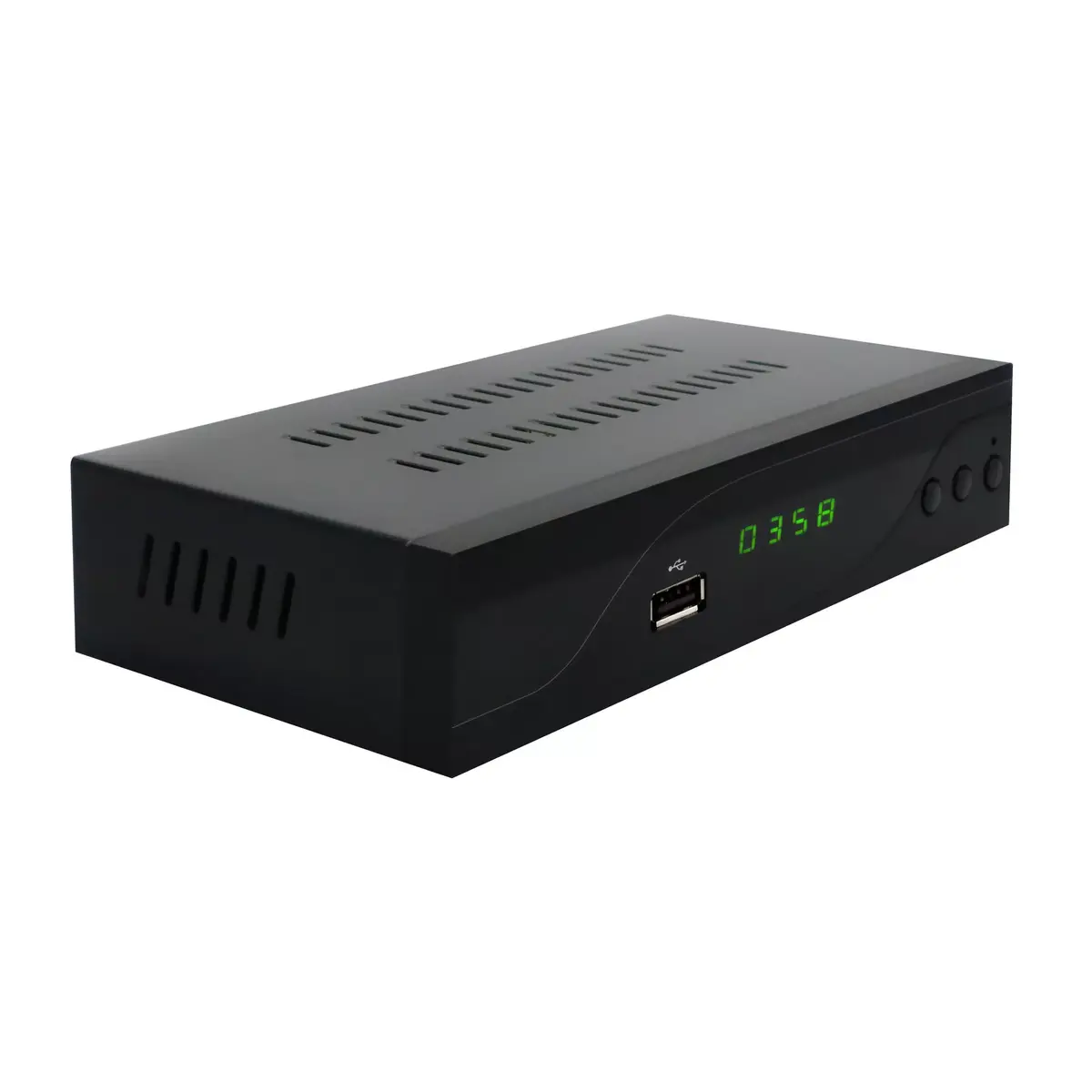
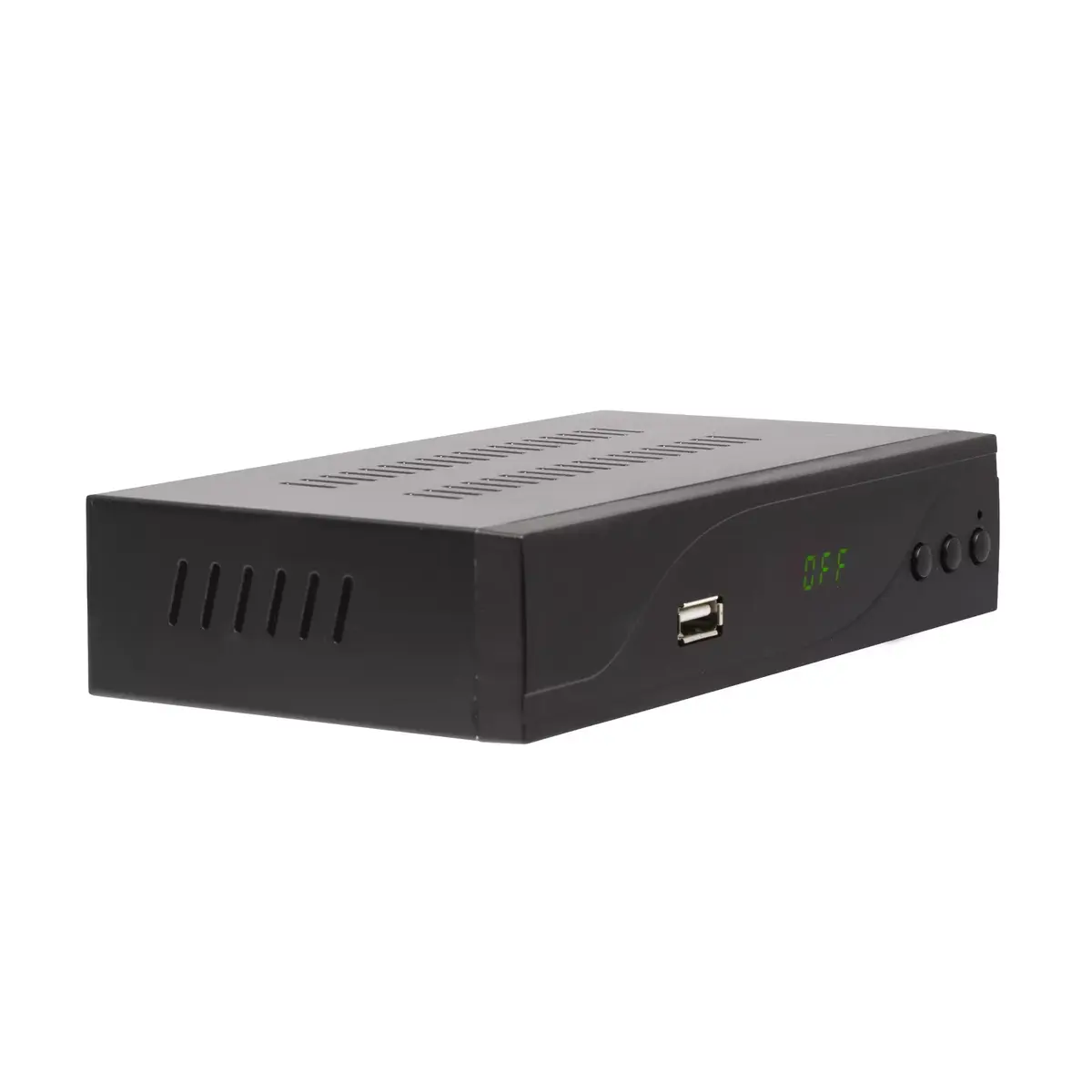
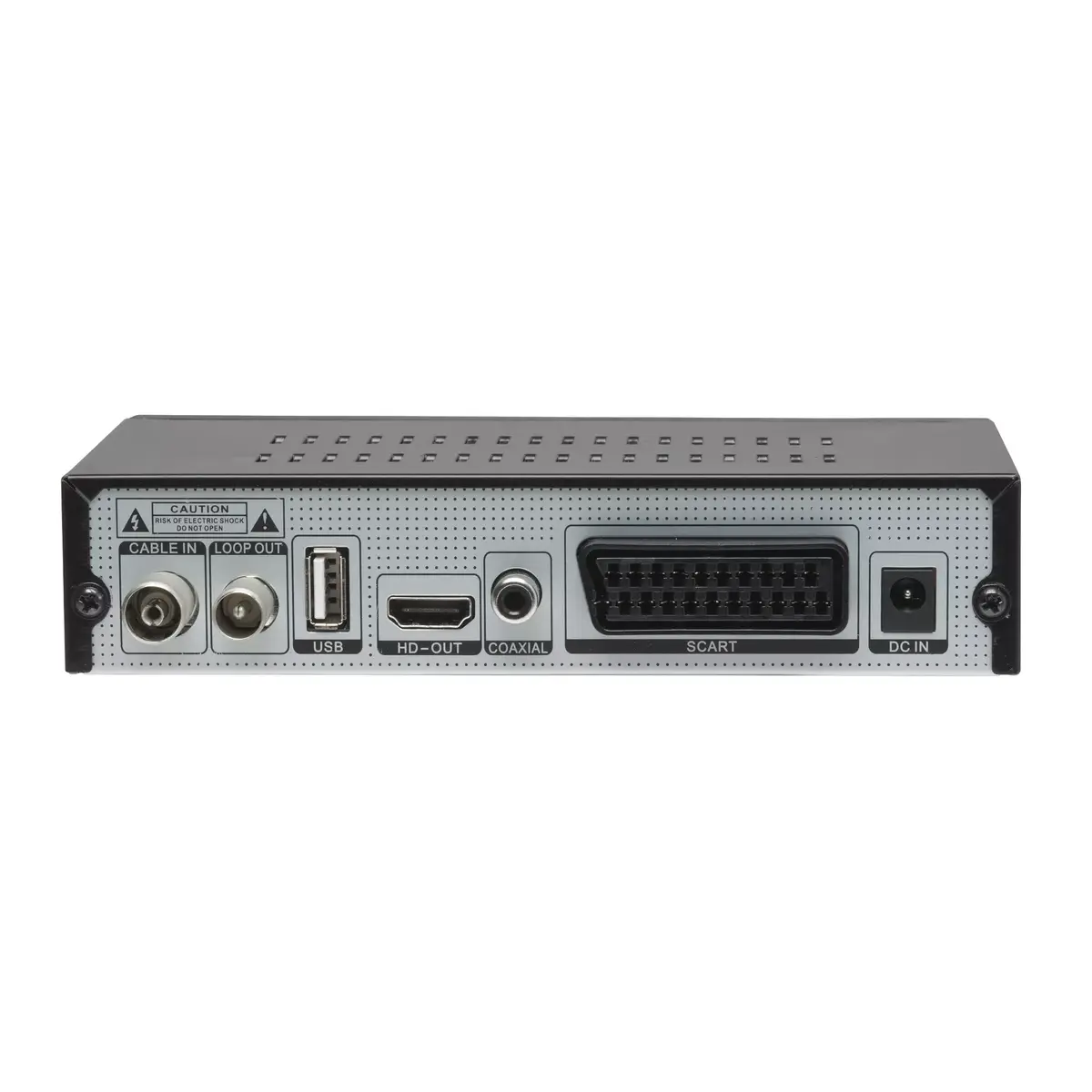
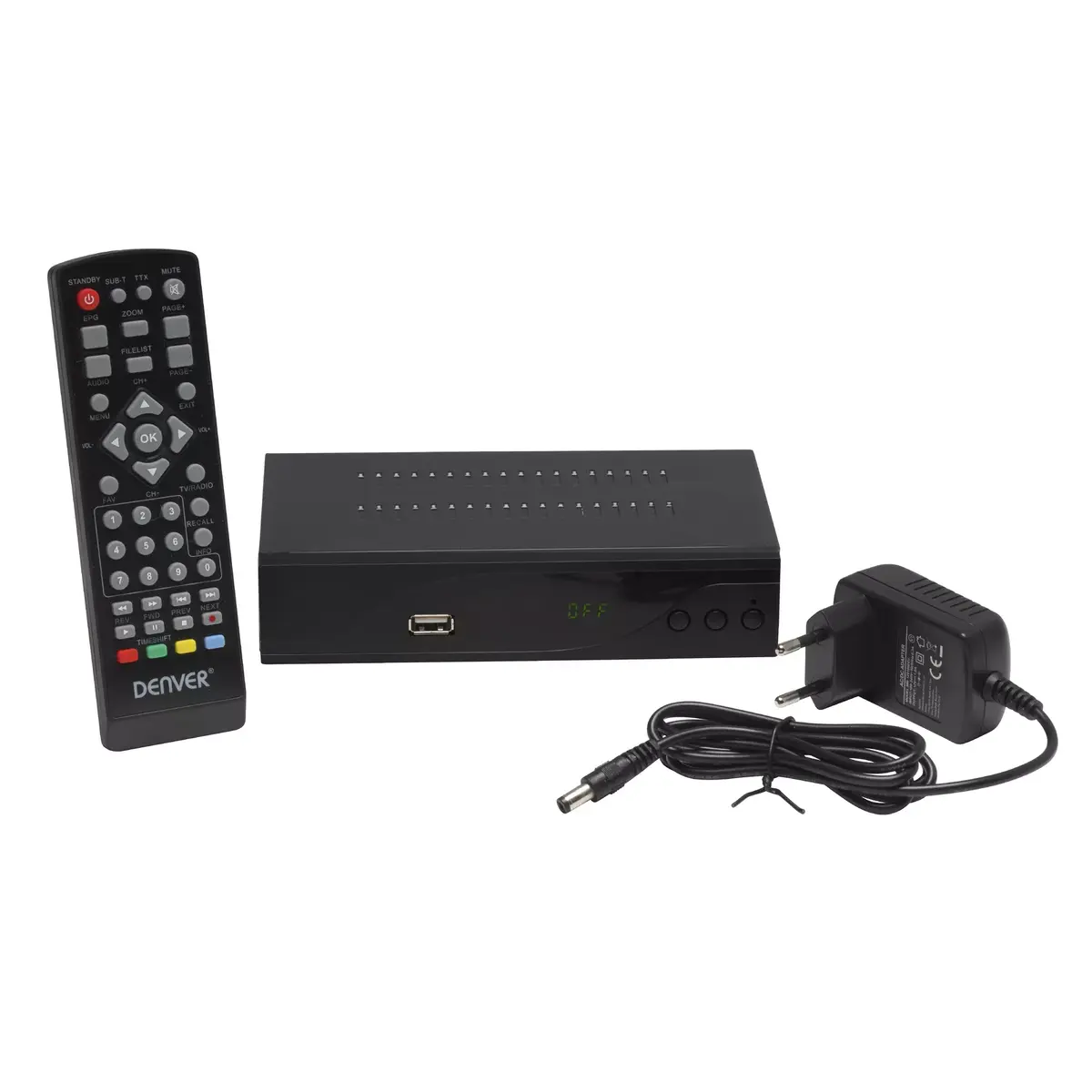
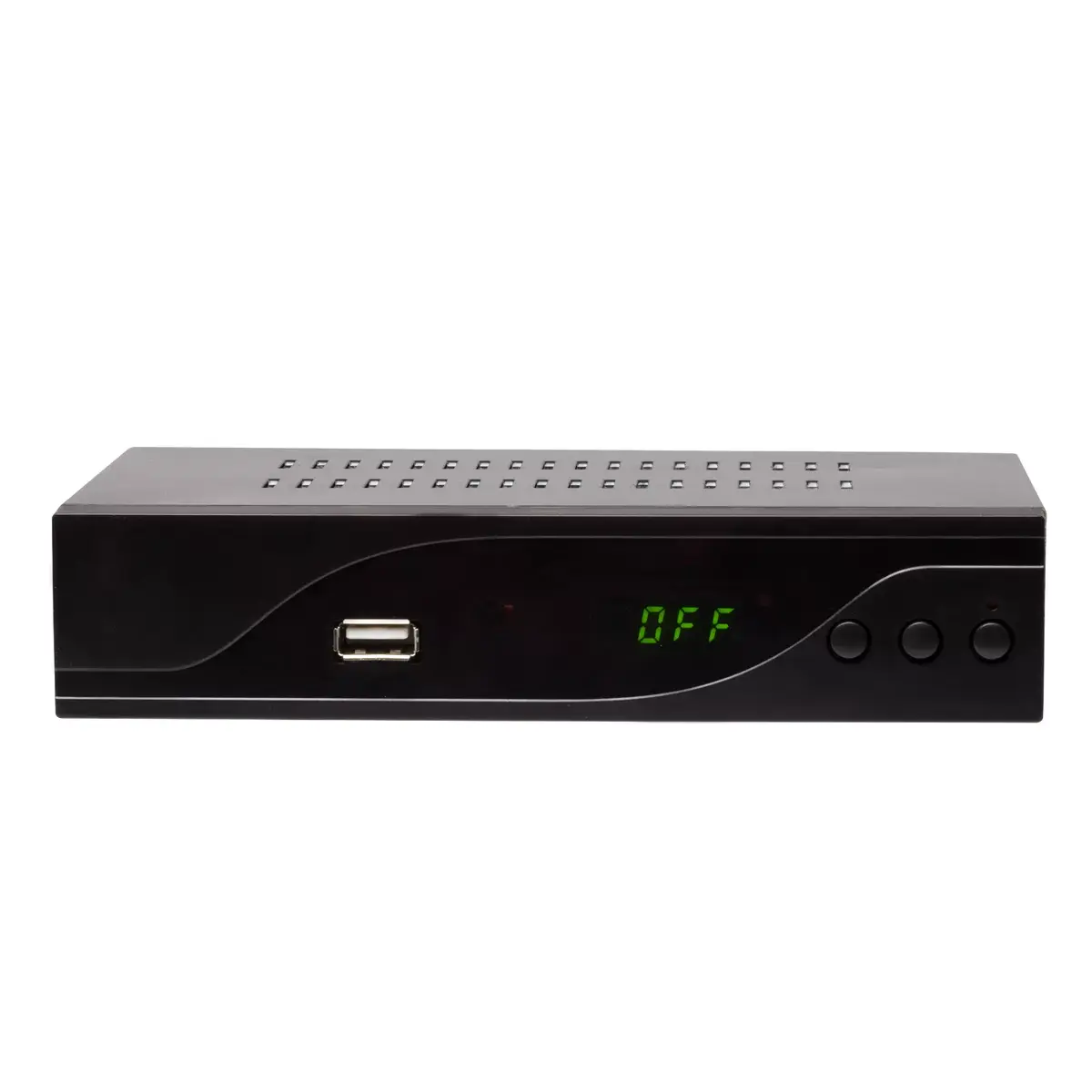
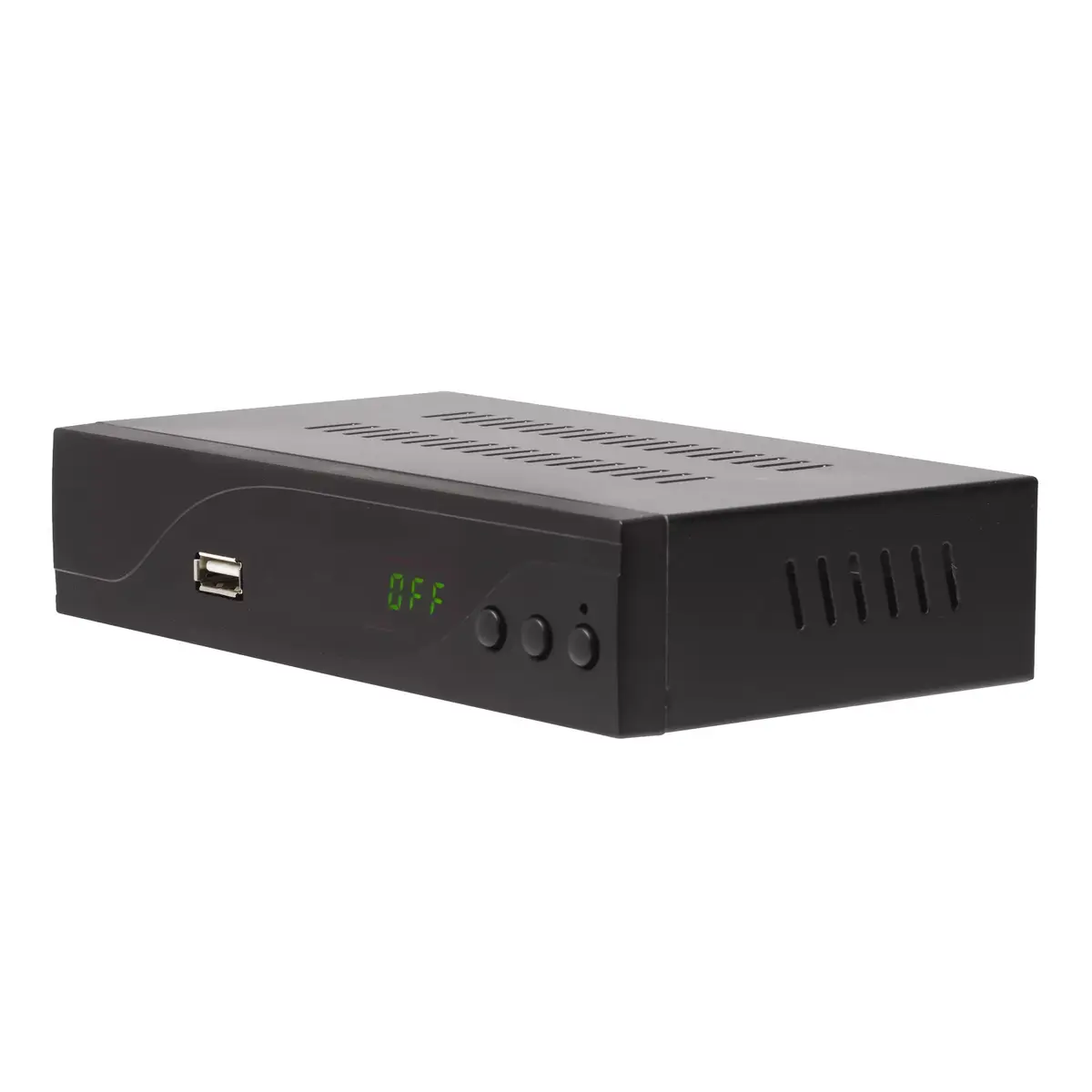
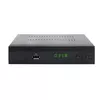
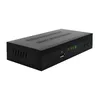
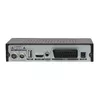
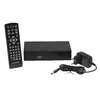
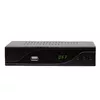
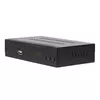
TV set-top box DENVER DVBC-120 — DVB‑C cable tuner, Full HD, MPEG‑4, JPEG, LED display, 110–240V
DENVER DVBC-120 is a compact cable TV set-top box with a DVB‑C tuner that decodes digital cable broadcasts and outputs Full HD video to compatible televisions. The device supports MPEG‑4 video playback and JPEG images, offers a front LED display for basic status and channel information, and runs on a wide-range 110–240 V, 50–60 Hz power supply. It is intended for users who need a straightforward cable tuner without network connectivity or smart card functions.
The DENVER DVBC-120 provides dependable reception and full HD output in a simple, black enclosure. Its MPEG‑4 support enables efficient decoding of modern digital channels while JPEG compatibility allows viewing still images from USB sources. The front LED display gives quick feedback on channel number or time, and the broad voltage range ensures compatibility with different mains supplies.
This model does not include Wi‑Fi or Ethernet LAN, so it is not suitable where internet streaming, firmware updates via network, or IP‑based services are required. It also lacks an integrated card reader and therefore cannot be used for decryption services that require subscription smart cards.
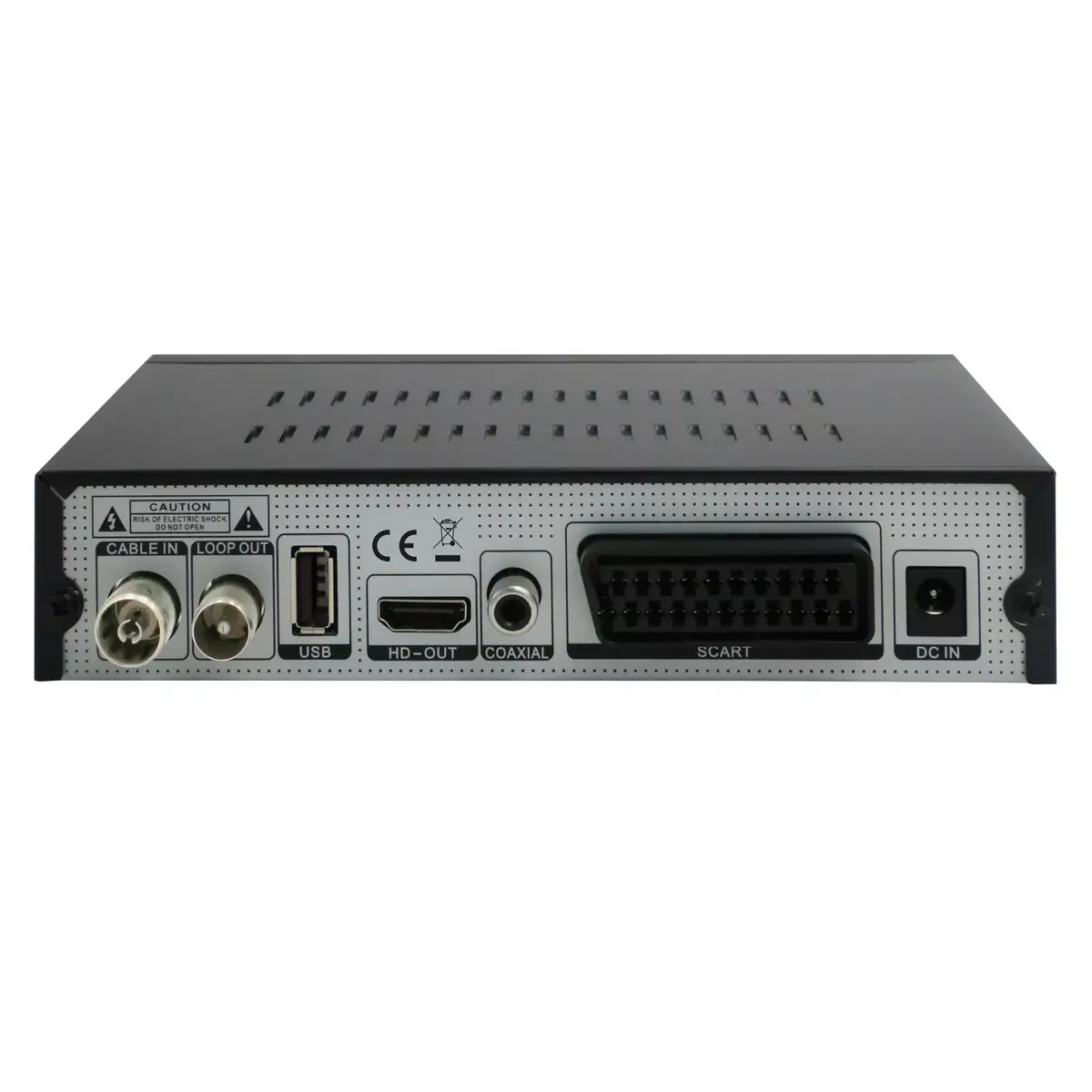
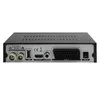
Connect the coaxial cable from the cable provider to the DVB‑C antenna input on the DENVER DVBC-120, then connect the video output (HDMI or appropriate analogue output) to your TV. Power the unit from a mains outlet within the 110–240 V range. Use the on‑screen menu to scan for channels and adjust settings. For playback of supported media files, insert a USB storage device into the USB port (if available) and use the media browser on the set‑top box to select MPEG‑4 videos or JPEG images. Navigate channels and menus using the supplied remote control and consult the user manual for specific button functions and setup options.
Place the set‑top box in a well‑ventilated location and connect it to the TV using the highest quality supported cable (preferably HDMI) to achieve the best Full HD picture. Regularly scan for channels if your provider updates frequency allocations, and use USB storage for offline playback of MPEG‑4 videos and JPEG galleries where network features are not needed.
{{highlightedFeature.featureTitle}}:
{{getProductFeatureValueById(product, highlightedFeature.featureId)}}
{{ productComparisonGenerationError }}