
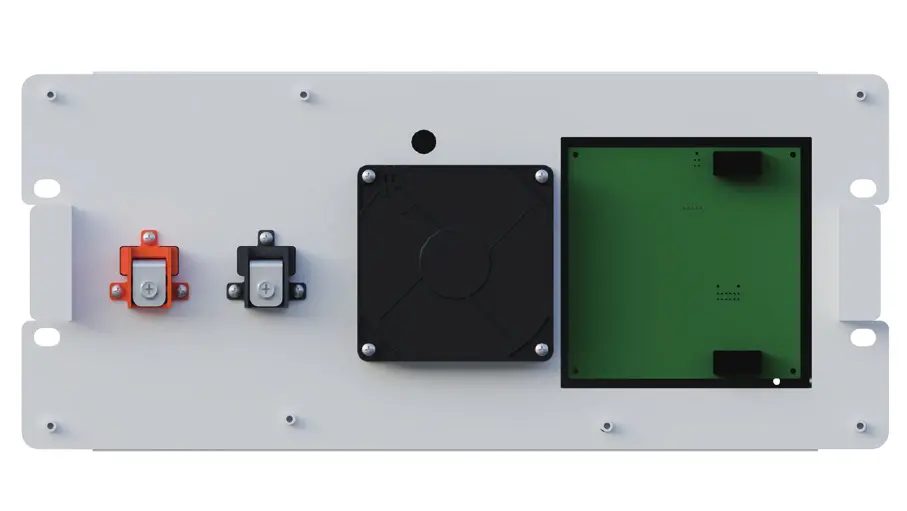
In this overview, the main product Deye ESS HV BOS-B PRO Battery Storage Module 16.08 kWh High Voltage Accumulator is compared against other high-voltage battery modules and control units from the same manufacturer: Deye ESS HV BOS-G PRO Battery Module 5.12 kWh High Voltage Accumulator, Deye ESS HV BOS-G PRO PDU High Voltage Battery Control Box Power Distribution Unit, Deye ESS HV BOS-B PDU 2 A High Voltage Battery Control Unit, Battery storage module Deye BOS-A-Pack 7.68 kWh — ESS HV BOS-A, embedded accumulator, 7.68 kWh, 66 kg net, and Deye ESS HV GB-L Pro High Voltage Battery Module 4 kWh Lithium Accumulator. All of these items are designed for photovoltaic systems, backup power, and efficient energy management in residential or commercial settings. The primary differences lie in storage capacity, physical device type (battery modules versus control power distribution units), and product series (BOS-B, BOS-G, BOS-A, GB-L), which are tailored for varying system scales and installation requirements.
⚙️ Specifications comparison covers the device type, battery capacity, product series, and intended role within photovoltaic and backup power systems.
| Comparison parameter | Deye ESS HV BOS-B PRO 16.08 kWh | Deye ESS HV BOS-G PRO 5.12 kWh | Deye ESS HV BOS-G PRO PDU | Deye ESS HV BOS-B PDU 2 A | Deye BOS-A-Pack 7.68 kWh | Deye ESS HV GB-L Pro 4 kWh | Practical significance |
|---|
| Device type | Battery storage module | Battery storage module | Control unit / PDU | Control unit / PDU | Battery storage module | Battery storage module | Determines the role in the setup: storage modules hold energy, while power distribution units manage connectivity and safety. |
| Capacity | 16.08 kWh | 5.12 kWh | Not applicable | Not applicable | 7.68 kWh | 4 kWh | Different module capacities allow precise sizing of the energy storage to match daily site requirements. |
| Series | BOS-B PRO | BOS-G PRO | BOS-G PRO | BOS-B | BOS-A | GB-L Pro | Belonging to different product lines dictates compatibility between modules and their respective control units. |
| Purpose | Energy storage for PV and backup systems | Energy storage in renewable setups | Power management for BOS-G | Power management for BOS-B | Residential and commercial energy storage | Integration into solar setups | All items support renewable energy frameworks but perform distinct functional roles in the network architecture. |
◎ Suitability analysis evaluates user needs, usage scenarios, and buyer profiles to help select the most appropriate component for your energy system.
| Use case | Recommended product | Why |
|---|
| Large-scale energy storage for residential or commercial sites | Deye ESS HV BOS-B PRO Battery Storage Module 16.08 kWh | Offers a large 16.08 kWh capacity, providing substantial energy reserves for autonomy and efficient load shifting. |
| Gradual capacity expansion for mid-sized systems | Deye ESS HV BOS-G PRO 5.12 kWh or Deye BOS-A-Pack 7.68 kWh | Smaller capacity modules allow flexible system design for moderate energy reserve requirements. |
| Power management and safety for BOS-G series | Deye ESS HV BOS-G PRO PDU | An essential control unit required to manage power flow and connectivity within BOS-G battery configurations. |
| High-voltage network management for BOS-B line | Deye ESS HV BOS-B PDU 2 A | A specialized power distribution unit ensuring proper integration and safe operation for BOS-B modules. |
| Compact solar setups with long-term reliability needs | Deye ESS HV GB-L Pro 4 kWh | Provides dependable baseline energy storage with stable performance for smaller home solar configurations. |
Recommendation: The Deye ESS HV BOS-B PRO Battery Storage Module 16.08 kWh High Voltage Accumulator features the highest capacity among the compared storage options and is best suited for users requiring a substantial energy reserve for large residential or commercial projects. If you need smaller storage capacities or specialized control units (PDUs) for other Deye battery series, you should select the corresponding alternative modules and controllers based on your engineering system's compatibility.