-
Contrast ratio (typical):
The difference in light intensity between the brightest white and the darkest black.
-
1000:1
-
Horizontal scan range:
-
30 - 82
-
Viewing angle, horizontal:
Maximum horizontal angle at which a display can be viewed with acceptable visual performance.
-
178 °
-
Viewing angle, vertical:
Maximum vertical angle at which a display can be viewed with acceptable visual performance.
-
178 °
-
Aspect ratio:
The aspect ratio is the ratio of the width of a shape to its height. For example, 4:3 is common for standard displays and 16:9 is the ratio for Widescreen TV.
-
16:9
-
Vertical scan range:
-
50 - 75
-
Certification:
-
UL, FCC A, cUL, IC, CB, CE A, C-Tick A, NOM CoC, CCC
-
Display viewable area (HxV):
-
1209.6 x 680.4
-
Power consumption (typical):
Amount of power consumed by this model, often expressed in watts (W). Typical values that manufacturers give are power consumption when off, standby/suspended mode, typical use, maximum usage.
-
13.8 W
-
Mean time between failures (MTBF):
Statistical model used to indicate product/mechanism reliability; expressed in hours and percentage of duty cycle. This number (in hours) does not indicate the mean time before failure for a single unit/mechanism.
-
50000 h
-
Operating relative humidity (H-H):
-
20 - 80
-
Storage temperature (T-T):
The minimum and maximum temperatures at which the product can be safely stored.
-
-20 - 60
-
Package weight:
Weight of the packaged product.
-
6300 g
-
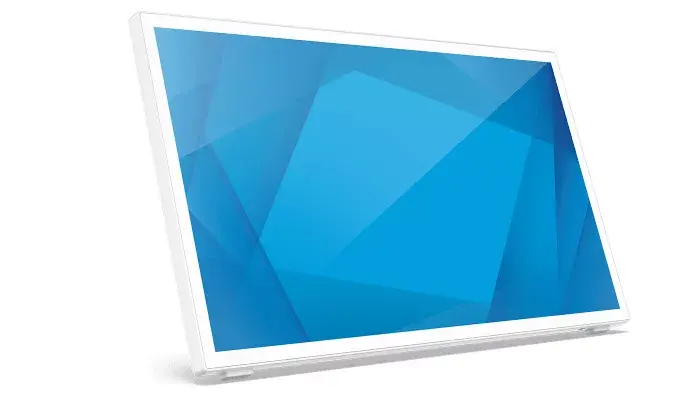
Display diagonal:
Size of the display for this product, measured diagonally, usually in inches.
-
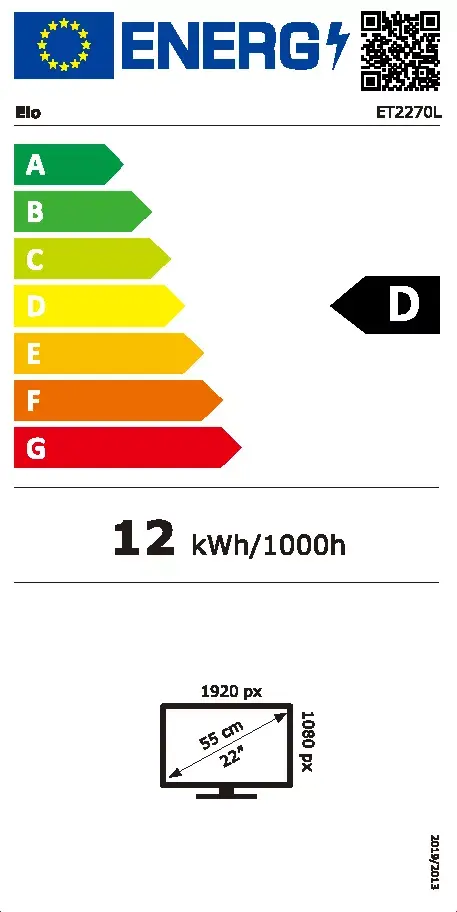
21.5 "
-
Built-in microphone:
Microphone that is found inside the product.
-
No
-
Operating temperature (T-T):
The minimum and maximum temperatures at which the product can be safely operated.
-
0 - 40
-
Storage relative humidity (H-H):
-
10 - 95
-
Display brightness:
Brightness is the amount of radiating light emitted from the screen. The brightness rating is measured in candellas per square meter, commonly known as 'nits'.
-
405 cd/m²
-
Response time:
The response time is the time difference between the moment that a source (for example a video card) sends a signal and that equipment (for example a monitor) receives or display the signal. (Used abbreviations: R/F = Rise and Fall.)
-
14 ms
-
Display resolution:
The number of distinct pixels in each dimension that can be displayed. It is usually quoted as width × height, with the units in pixels: for example, "1024 × 768" means the width is 1024 pixels and the height is 768 pixels. The higher the number of pixels, the sharper the image.
-
1920 x 1080
-
Wall mountable:
The product can be mounted on (attached to ) a wall.
-
Yes
-
Product colour:
The colour e.g. red, blue, green, black, white.
-
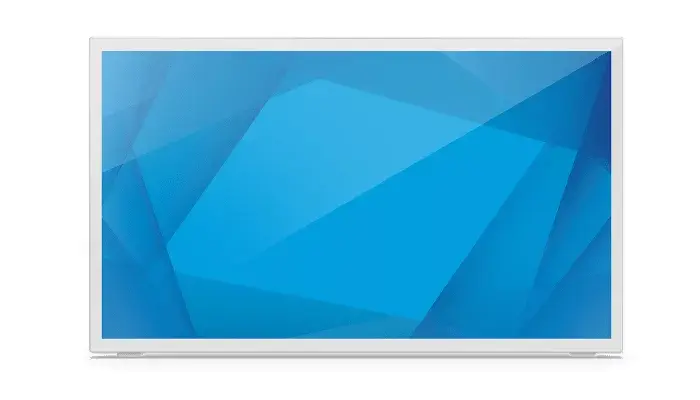
White
-
Audio input:
The type of audio input that the device requires, and the connection needed.
-
Yes
-
Audio output:
The type of audio output that the device produces, and the connector(s).
-
Yes
-
Cables included:
-
AC, USB, HDMI
-
RMS rated power:
RMS (Root mean square) is a measure of the continuous power required by a device, in particular audio amplifiers and loudspeakers.
-
20 W
-
Power consumption (off):
-
0.16 W
-
Power consumption (standby):
The amount of electricity that is consumed when the product is on standby.
-
0.5 W
-
Headphone outputs:
Number of sockets /ports where headphones are connected.
-
1
-
VGA (D-Sub) ports quantity:
Number of VGA (D-Sub) ports (connecting interfaces) in the device. The VGA (D-Sub) connector is a 15 pin connector between a computer and a monitor. It was first introduced in 1987 by IBM.
-
1
-
Built-in speaker(s):
The device contains speaker(s) to produce sound.
-
Yes
-
HDMI ports quantity:
The number of sockets (ports) for HDMI connections. HDMI (High-Definition Multimedia Interface) is a compact audio/video interface for transferring uncompressed video data and compressed/uncompressed digital audio data from a HDMI-compliant device ("the source device") to a compatible computer monitor, video projector, digital television, or digital audio device. HDMI is a digital replacement for existing analog video standards.
-
1
-
Package depth:
The distance from the front to the back of the packaging.
-
395 mm
-
Package height:
The distance from the top to the bottom of the packaging.
-
136 mm
-
Package width:
The distance from one side of the packaging to the other.
-
589 mm
-
Quick start guide:
Instructions, either online, as a computer program or in paper form, to allow you to set up and start using the product quickly.
-
Yes
-
Panel mounting interface:
The product can be used wih VESA mounting interfaces.
-
100 x 100
-
Touchscreen:
A screen of a laptop, smartphone, etc., that responds to touch so you can control the interface using your fingers.
-
Yes
-
HDMI:
HDMI (High-Definition Multimedia Interface) is a compact audio/video interface for transferring uncompressed video data and compressed/uncompressed digital audio data from a HDMI-compliant device ("the source device") to a compatible computer monitor, video projector, digital television, or digital audio device. HDMI is a digital replacement for existing analog video standards.
-
Yes
-
HDCP:
High-bandwidth Digital Content Protection (HDCP) is a form of digital copy protection to prevent copying of digital audio and video content as it travels across connections.
-
Yes
-
DisplayPorts quantity:
Number of DisplayPorts. A DisplayPort is a digital display interface developed by the Video Electronics Standards Association (VESA). The interface is primarily used to connect a video source to a display device such as a computer monitor, though it can also be used to carry audio, USB, and other forms of data.
-
1
-
Maximum refresh rate:
-
60 Hz
-
Touch technology:
Technology of touch sensetive screen e.g. dual-touch.
-
Multi-touch
-
Touchscreen technology:
-
Capacitive
-
Built-in camera:
The product has an integrated camera.
-
No
-
Number of simultaneous touchpoints (Windows 7):
-
10
-
OmniTapps Multitouch compatibility:
The device can use OmniTapps Multitouch, which is a software suite which allows you to create websites which are multi-touch environments.
-
No
-
AC input frequency:
-
50/60
-
AC input voltage:
The voltage of the AC electricity that is inputted into the product.
-
100 - 240
-
Display technology:
The technology used in the display e.g. plasma, LED.
-
LCD
-
Number of speakers:
The quantity of speakers included in/with the product.
-
2
-
Anti-glare screen:
Always gives an optimal view, even in direct sunlight.
-
Yes
-
Number of simultaneous touchpoints:
-
10
-
Native aspect ratio:
The aspect ratio is the ratio of the width of an image to its height. The native aspect ratio is the one which the projector/display is particularly designed for. Images shown in native aspect ratio will utilize the entire resolution of the display and achieve maximum brightness. Images shown in other than native aspect ratio will always have less resolution and less brightness than images shown in native aspect ratio.
-
16:9
-
HD type:
Type of supported High Definition (e.g. Full HD, 4K Ultra HD).
-
4K Ultra HD
-
Weight (without stand):
-
4100 g
-
Height (without stand):
-
302.4 mm
-
Width (without stand):
-
504.7 mm
-
Depth (without stand):
-
41.3 mm
-
Panel type:
-
TFT
-
VESA mounting:
-
Yes
-
Screen shape:
-
Flat
-
NVIDIA G-SYNC:
-
No
-
Built-in USB hub:
Whether or not the device features a USB hub to connect more than one other device via USB.
-
Yes
-
USB upstream port type:
-
USB Type-B
-
Harmonized System (HS) code:
-
85285210
-
Display number of colours:
-
1.67 billion colours
-
AMD FreeSync:
The product includes AMD Freesync Technology for the dynamic synchronization of the graphic card and the monitor in order to avoid screen tearing.
-
No
-
Flicker-free technology:
-
Yes
-
Low Blue Light technology:
-
Yes
-
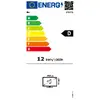
Energy efficiency scale:
Range of energy efficiency levels classifying devices from most to least energy-efficient.
-
A to G
-
Sustainability certificates:
-
ENERGY STAR
-
Energy efficiency class (SDR):
Energy efficiency class is a standard classification that is used all over Europe and which is understandable at first sight. Products can be efficiently compared according to classes, starting from A (the most energy efficient class), and ending with G (the most energy-intensive class). The classification of energy efficiency is based on annual energy consumption which is being calculated on the basis of several different parameters.
-
D
-
Energy efficiency class (HDR):
Energy efficiency class is a standard classification that is used all over Europe and which is understandable at first sight. Products can be efficiently compared according to classes, starting from A (the most energy efficient class), and ending with G (the most energy-intensive class). The classification of energy efficiency is based on annual energy consumption which is being calculated on the basis of several different parameters.
-
Not available
-
Energy consumption (SDR) per 1000 hours:
Power consumption in switched-on state expressed in W.
-
12 kWh
-
European Product Registry for Energy Labelling (EPREL) code:
-
1361162
-
Compliance certificates:
Indicates which regulatory, safety, and environmental standards the product complies with, as verified by recognized authorities or certification bodies.
-
RoHS