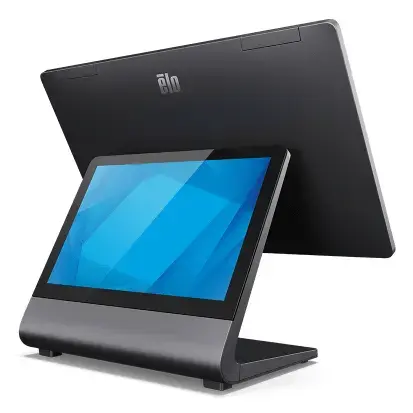
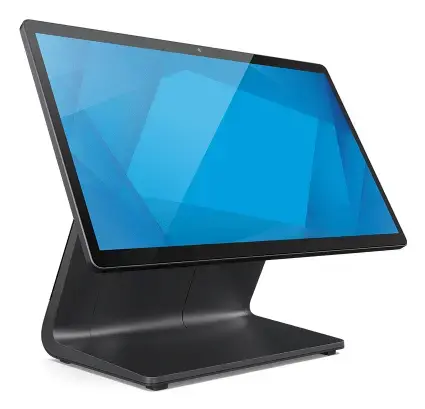
-
Contrast ratio (typical):
The difference in light intensity between the brightest white and the darkest black.
-
1000:1
-
Viewing angle, horizontal:
Maximum horizontal angle at which a display can be viewed with acceptable visual performance.
-
170 °
-
Viewing angle, vertical:
Maximum vertical angle at which a display can be viewed with acceptable visual performance.
-
170 °
-
Aspect ratio:
The aspect ratio is the ratio of the width of a shape to its height. For example, 4:3 is common for standard displays and 16:9 is the ratio for Widescreen TV.
-
16:9
-
Weight:
Weight of the product without packaging (net weight). If possible, the net weight is given including standard accessories and supplies. Please note that sometimes the manufacturer leaves out the weight of accessories and/or supplies.
-
4 kg
-
Certification:
-
UL/cUL, FCC, CE, CB, NOM, RCM, VCCI, Argentina S-Mark, CCC, SRRC, ANATEL, UKCA
-
Internal memory type:
The type of internal memory such as RAM, GDDR5.
-
DDR4-SDRAM
-
Wi-Fi standards:
The type of wireless local area network (LAN). It can be ad-hoc, where units in a network communicate peer-to-peer, or Infrastructure, where units communicate with each other via an access point A LAN interconnects computers in a small area e.g. home, school or office.
-
Wi-Fi 6 (802.11ax), Wi-Fi 5 (802.11ac), Wi-Fi 4 (802.11n), 802.11g, 802.11b, 802.11a
-
Power consumption (typical):
Amount of power consumed by this model, often expressed in watts (W). Typical values that manufacturers give are power consumption when off, standby/suspended mode, typical use, maximum usage.
-
32 W
-
Graphics card:
-
UHD Graphics
-
Chassis type:
The type of rigid framework onto which is the hosuing for device components.
-
Kiosk
-
Storage temperature (T-T):
The minimum and maximum temperatures at which the product can be safely stored.
-
-20 - 60
-
Package weight:
Weight of the packaged product.
-
6400 g
-
Display diagonal:
Size of the display for this product, measured diagonally, usually in inches.
-
15.6 "
-
Graphics card manufacturer:
-
Intel
-
Processor manufacturer:
The manufacturer that produced the processor.
-
Intel
-
Operating temperature (T-T):
The minimum and maximum temperatures at which the product can be safely operated.
-
0 - 35
-
Power supply:
The way in which the product is powered e.g. rechargeable battery, mains electricity connected via a plug and cable.
-
150 W
-
Ethernet LAN:
An Ethernet LAN (Local Area Network) interface is present, for a wired conection via a cable.
-
Yes
-
Storage relative humidity (H-H):
-
0 - 95
-
Display brightness:
Brightness is the amount of radiating light emitted from the screen. The brightness rating is measured in candellas per square meter, commonly known as 'nits'.
-
255 cd/m²
-
Relative humidity:
-
10 - 90
-
Maximum internal memory:
The maximum internal memory which is available in the product.
-
32 GB
-
Height:
The measurement of the product from head to foot or from base to top.
-
298.7 mm
-
Response time:
The response time is the time difference between the moment that a source (for example a video card) sends a signal and that equipment (for example a monitor) receives or display the signal. (Used abbreviations: R/F = Rise and Fall.)
-
25 ms
-
Display resolution:
The number of distinct pixels in each dimension that can be displayed. It is usually quoted as width × height, with the units in pixels: for example, "1024 × 768" means the width is 1024 pixels and the height is 768 pixels. The higher the number of pixels, the sharper the image.
-
1920 x 1080
-
Width:
The measurement or extent of something from side to side.
-
362.8 mm
-
Depth:
The distance from the front to the back of something.
-
180.4 mm
-
Product colour:
The colour e.g. red, blue, green, black, white.
-
Grey
-
Bluetooth:
Bluetooth is a low-power radio technology developed to replace the cables and wires currently used to link or connect electronic devices such as personal computers, printers, and a wide variety of handheld devices including mobile phones. Because it uses radio-wave connectivity, a Bluetooth-enabled device has a constant, established connection to whatever browser it uses. This saves the user the trouble of logging on to check for emails or news updates, for example.
-
Yes
-
USB 2.0 ports quantity:
Number of USB 2.0 ports (connecting interfaces) in the device. USB 2.0 was released in April 2000 (now called "Hi-Speed"), adding higher maximum signaling rate of 480 Mbit/s (effective throughput up to 35 MB/s or 280 Mbit/s), USB 2.0 ports are usually black.
-
1
-
Ethernet LAN (RJ-45) ports:
Number of Ethernet LAN (RJ-45) ports (connecting interfaces) in the device. Ethernet LAN (RJ-45) ports allow a computer to connect to the ethernet.
-
1
-
DC-in jack:
The socket/plug where the DC electricity supply connects to the device.
-
Yes
-
Built-in speaker(s):
The device contains speaker(s) to produce sound.
-
Yes
-
Memory clock speed:
The frequency at which the memory (e.g. RAM) runs.
-
3200 MHz
-
Operating system installed:
Type of operating system on a device e.g. IOS on Apple devices, Android for mobile devices.
-
Windows 10
-
Wi-Fi:
Popular technology that allows an electronic device to exchange data or connect to the internet wirelessly using radio waves.
-
Yes
-
Total storage capacity:
The total amount of data that can be stored on the device.
-
256 GB
-
Effective viewing area:
-
344 x 194
-
Package depth:
The distance from the front to the back of the packaging.
-
270 mm
-
Package height:
The distance from the top to the bottom of the packaging.
-
399 mm
-
Package width:
The distance from one side of the packaging to the other.
-
460 mm
-
Quick start guide:
Instructions, either online, as a computer program or in paper form, to allow you to set up and start using the product quickly.
-
Yes
-
Second display:
The device has an additional (second) screen.
-
Yes
-
Touchscreen:
A screen of a laptop, smartphone, etc., that responds to touch so you can control the interface using your fingers.
-
Yes
-
DisplayPorts quantity:
Number of DisplayPorts. A DisplayPort is a digital display interface developed by the Video Electronics Standards Association (VESA). The interface is primarily used to connect a video source to a display device such as a computer monitor, though it can also be used to carry audio, USB, and other forms of data.
-
1
-
Second display diagonal:
-
10.1 "
-
RJ-12 ports quantity:
-
1
-
Touchscreen technology:
-
Projected capacitive system
-
AC input frequency:
-
50-60
-
AC input voltage:
The voltage of the AC electricity that is inputted into the product.
-
100-240
-
Display type:
Type of display (screen) e.g. LCD.
-
LCD
-
Memory slots type:
A memory slot, also known as a memory socket or RAM slot, is what allows computer memory (RAM) to be inserted into the computer. Depending on the motherboard, there will usually be 2 to 4 memory slots (sometimes more on high-end motherboards). The most common types of RAM are SDRAM and DDR for desktop computers and SODIMM for laptop computers, each having various types and speeds.
-
SO-DIMM
-
Number of speakers:
The quantity of speakers included in/with the product.
-
2
-
Internal memory:
A computer's memory which is directly accessible to the CPU.
-
8 GB
-
Storage media:
Used for the storage of data e.g. HDD (hard disk drive), SSD (solid-state drive).
-
SSD
-
Number of memory slots:
-
1
-
Quantity per pack:
-
1 pc(s)
-
USB 3.2 Gen 1 (3.1 Gen 1) Type-C ports quantity:
Number of USB 3.0 (3.1 Gen 1) ports with Type-C connector. USB 3.0 (3.1 Gen 1) is USB interface version which supports transfer rate up to 5 Gbit/s (SuperSpeed). USB Type-C connector has symmetrical design architecture and compatible with Thunderbolt 3 interface.
-
1
-
Display number of colours:
-
16.2 million colours
-
NVMe:
NVM Express (NVMe) or Non-Volatile Memory Host Controller Interface Specification (NVMHCIS) is an open logical device interface specification for accessing non-volatile storage media attached via a PCI Express (PCIe) bus. NVM Express, as a logical device interface, has been designed to capitalize on the low latency and internal parallelism of solid-state storage devices.
-
Yes