
Hurry and order now – up to 50% off!

{{ totalProductsCount }}
In cart {{totalProductsCount}} item(s)
In cart {{totalProductsCount}} item(s)
Total:
{{sum | formatAmount}}
Your cart is empty
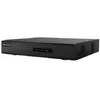 Network Video Recorder Hikvision DS-7104NI-Q1/4P/M(D) 4 Channels 1920x1080
Product specification Network Video Recorder Hikvision DS-7104NI-Q1/4P/M(D) 4 Channels 1920x1080
Manufacturer:
Hikvision
Category:
DVR & NVR Video Recording Systems
Description
The Hikvision DS-7104NI-Q1/4P/M(D) is a network video recorder with 4 channels and a maximum resolution of 1920x1080 pixels. It supports various resolutions and has a maximum storage capacity of 6 TB. The device features Ethernet LAN data rates of 10/100 Mbit/s and supports multiple network protocols. Its compact design and efficient power consumption make it suitable for surveillance applications.
The Hikvision DS-7104NI-Q1/4P/M(D) is a compact network video recorder (NVR) designed for small surveillance installations. It supports up to 4 IP camera channels with a maximum preview and playback resolution of 1920x1080 pixels. The recorder accepts multiple video resolutions, offers onboard PoE through its Ethernet ports for simplified camera connection, and supports a single internal SATA hard drive with a maximum aggregate storage capacity of 6 TB. Ethernet LAN operates at 10/100 Mbit/s and the device is compatible with common network protocols for remote access and integration into existing IP security systems.
Advantages
The DS-7104NI-Q1/4P/M(D) combines a small form factor and low power consumption with straightforward network connectivity, including multiple RJ-45 ports and PoE functionality. It provides two USB 2.0 ports for backup and mouse control and supports SATA interfaces for reliable local storage. Its black housing and 1 kg weight make it easy to mount or place in space-constrained environments. The recorder’s support for standard network protocols and resolutions simplifies setup and ongoing operation in typical CCTV and IP camera deployments.
Suitable for
- Small retail shops and kiosks requiring 24/7 IP camera recording.
- Home and apartment surveillance with up to four cameras.
- Small offices and reception areas where compact NVRs are preferred.
- Remote sites needing PoE-enabled camera connections to reduce cabling complexity.
Key specifications
- Channels: 4 IP camera channels.
- Maximum resolution: 1920 x 1080 pixels (preview and playback).
- Storage: Single internal SATA drive supported, maximum capacity 6 TB.
- HDD interface: SATA, SATA II, SATA III compatible.
- Network: Ethernet LAN 10/100 Mbit/s; multiple network protocols supported.
- Ethernet ports: 5 RJ-45 connectors with PoE support for connected cameras.
- USB: 2 × USB 2.0 ports for data backup and peripheral connection.
- Color: Black.
- Weight: approximately 1 kg.
How to use
Install the DS-7104NI-Q1/4P/M(D) on a stable surface or in a small equipment cabinet and connect power according to the manufacturer’s instructions. Connect up to four IP cameras via the PoE-enabled RJ-45 ports or through a network switch, and configure camera addresses and stream settings through the recorder’s web interface or client software. Insert a compatible SATA hard drive (up to 6 TB) for local recording, set recording modes (continuous, scheduled, or motion-triggered), and configure remote access credentials for viewing live or archived footage on a PC or mobile device.
Usage recommendations
For reliable long-term recording, use a surveillance-grade SATA hard drive and configure scheduled maintenance such as periodic checks of disk health and firmware updates. Limit the resolution and frame rate according to available storage and network bandwidth to ensure continuous recording. When using PoE cameras, verify power budgets and cable quality to maintain stable camera performance.
Specifications
Hard drive
- HDD interface:
- SATA III, SATA, SATA II
- Number of HDDs supported:
- 1
Storage
- Maximum storage capacity:
- 6 TB
Ports & interfaces
- Networking standards:
- IEEE 802.3af, IEEE 802.3at
- USB 2.0 ports quantity:
- 2
- DC-in jack:
- Yes
- Power over Ethernet (PoE):
- Yes
- HDMI ports quantity:
- 1
- VGA (D-Sub) output ports:
- 1
- Power over Ethernet (PoE) ports quantity:
- 4
- HDMI output:
- Yes
- Video input channels:
- 4 channels
Network
- Supported network protocols:
- TCP/IP, DHCP, Hik-Connect, DNS, DDNS, NTP, SADP, SMTP, UPnP
- Ethernet LAN (RJ-45) ports:
- 5
- Wi-Fi:
- No
- Ethernet LAN data rates:
- 100, 10
Performance
- Certification:
- FCC 15 B, ANSI C63.4-2014 CE EN50130-4, EN 61000-3-2,EN 61000-3-3
- Maximum resolution:
- 1920 x 1080
- Product colour:
- Black
- Video codecs:
- H.265+/H.265/ H.264+/H.264
- Supported resolutions:
- 1920 × 1080, 1600 × 1200, 1280 × 1024, 1280 × 720, 1024 × 768
- Input bandwidth:
- 40 Mbit/s
- Output bandwidth:
- 60 Mbit/s
Power
- Power consumption (typical): Power consumption in switched-on state expressed in W.
- 10 W
- Output voltage:
- 48
- Output current:
- 1 A
- Total Power over Ethernet (PoE) budget:
- 36 W
Weight & dimensions
- Weight:
- 1 kg
- Height:
- 48 mm
- Width:
- 265 mm
- Depth:
- 225 mm
Operational conditions
- Operating relative humidity (H-H):
- 10 - 90
- Operating temperature (T-T):
- -10 - 55


