Dreame vacuums for fast and efficient cleaning!

{{ totalProductsCount }}
In cart {{totalProductsCount}} item(s)
In cart {{totalProductsCount}} item(s)
Total:
{{sum | formatAmount}}
Your cart is empty
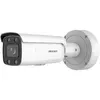 IP security camera Hikvision DS-2CD3647G2-LZS 2688 x 1520 pixels
Product specification IP security camera Hikvision DS-2CD3647G2-LZS 2688 x 1520 pixels
Manufacturer:
Hikvision
Category:
Surveillance Cameras
Description
The Hikvision DS-2CD3647G2-LZS is a versatile bullet IP security camera designed for both indoor and outdoor use. With a resolution of 2688 x 1520 pixels, it provides high-quality video footage. The camera supports wired connectivity and can be mounted on ceilings or walls. It features a 360° rotation angle, a tilt range of 0 - 90°, and a pan range of 0 - 355°. The CMOS sensor ensures clear images, while the focal length range of 3.6 - 9 mm allows for flexible monitoring distances of up to 124 m.
Ultra Series (SmartIP)
Combining low-light surveillance and high-definition recognition, Hikvision Ultra Series can easily meet the requirements of enterprise projects with surprisingly high performance.
Combining low-light surveillance and high-definition recognition, Hikvision Ultra Series can easily meet the requirements of enterprise projects with surprisingly high performance.
Specifications
Performance
- Type:
- IP security camera
- Certification:
- FCC SDoC (47 CFR Part 15, Subpart B); CE-EMC (EN 55032: 2015, EN 61000-3-2: 2014, EN 61000-3-3: 2013, EN 50130-4: 2011 +A1: 2014); RCM (AS/NZS CISPR 32: 2015); IC VoC (ICES-003: Issue 6, 2016); KC (KN 32: 2015, KN 35: 2015); UL (UL 60950-1); CB (IEC 60950-1:2005 + Am 1:2009 + Am 2:2013, IEC 62368-1:2014); CE-LVD (EN 60950-1:2005 + Am 1:2009 + Am 2:2013, IEC 62368-1:2014); LOA (IEC/EN 60950-1); CE-RoHS (2011/65/EU); WEEE (2012/19/EU); Reach (Regulation (EC) No 1907/2006); IP67 (IEC 60529-2013), IK10 (IEC 62262:2002).
- Connectivity technology:
- Wired
- Dynamic range:
- 130 dB
- Languages support:
- Multi
- Placement supported:
- Indoor & outdoor
- Number of languages:
- 33
- Wide Dynamic Range (WDR):
- Yes
- Day/night mode:
- Yes
- Alarm input/output:
- Yes
Camera
- Camera shutter speed:
- 1/3 - 1/100000
- Minimum illumination:
- 0 lx
- Tilt angle range:
- 0 - 90
- Angle of rotation:
- 360 °
- Pan range:
- 0 - 355
Image sensor
- Sensor type:
- CMOS
- Optical sensor size:
- 25.4 / 1.8
- Progressive scan:
- Yes
- Number of sensors:
- 1
Lens system
- Zoom capability:
- Yes
- Focal length range:
- 3.6 - 9
- Maximum aperture number:
- 1
- Fixed focus:
- Yes
- Detect distance (wide):
- 69 m
- Detect distance (tele):
- 124 m
- Observe distance (wide):
- 27.4 m
- Observe distance (tele):
- 49.3 m
- Recognize distance (wide):
- 13.8 m
- Recognize distance (tele):
- 24.8 m
- Identify distance (wide):
- 6.9 m
- Identify distance (tele):
- 12.4 m
Video
- Maximum resolution:
- 2688 x 1520
- Video compression formats:
- H.264, H.264+, H.265, H.265+, M-JPEG
- Bit rate:
- 32 Kbps - 8 Mbps
- Frame rate:
- 30 fps
- Supported graphics resolutions:
- 640 x 360, 640 x 480 (VGA), 1280 x 720 (HD 720), 1920 x 1080 (HD 1080), 2688 x 1520
- Total megapixels:
- 4 MP
- Image quality adjustment:
- Brightness, Contrast, DNR, Saturation, Sharpness
- Back Light Compensation (BLC):
- Yes
- Privacy masking:
- Yes
- Highlight Compensation (HLC):
- Yes
- Bit rate control:
- Constant Bit Rate (CBR)/Variable Bit Rate (VBR)
- Region of Interest (ROI) encoding:
- Yes
Audio
- Audio output channels:
- 1
- Audio formats supported:
- AAC, G.711 A-law, G.711 μ-law, G.722.1, G.726, MP2L2, MP3, PCM
- Audio input channels:
- 1
- Sample rate:
- 48 kHz
- Bit rate range:
- 8 - 320
Network
- Supported network protocols:
- TCP/IP, ICMP, HTTP, HTTPS, FTP, DHCP, DNS, DDNS, RTP, RTSP, NTP, UPnP, SMTP, IGMP, 802.1X, QoS, IPv4, IPv6, UDP, Bonjour, SSL/TLS, PPPoE, SNMP, ARP
- Ethernet LAN:
- Yes
- Number of users:
- 32 user(s)
- Bluetooth:
- No
- Wi-Fi:
- No
- Ethernet interface type:
- Fast Ethernet
- Number of simultaneous live view channels:
- 6 channels
Storage
- Compatible memory cards:
- MicroSD (TransFlash), MicroSDHC, MicroSDXC
- Card reader integrated:
- Yes
- Maximum memory card size:
- 256 GB
- Built-in HDD:
- No
Ports & interfaces
- Ethernet LAN (RJ-45) ports:
- 1
Power
- DC output voltage:
- 12
- DC output current:
- 1.21 A
- Power source type:
- DC, PoE
- Power consumption (max):
- 14.5 W
- Power consumption (Power over Ethernet (PoE)):
- 18 W
Weight & dimensions
- Weight:
- 1.52 kg
- Height:
- 90.9 mm
- Width:
- 327.9 mm
- Depth:
- 97.9 mm
Packaging data
- Package weight:
- 2521 g
- Package depth:
- 190 mm
- Package height:
- 180 mm
- Package width:
- 385 mm
Features
- Number of cameras:
- 1
Night vision
- LED type:
- IR
- Night vision:
- Yes
- Night vision distance:
- 60
Security
- Mirror:
- Yes
- Video motion detection:
- Yes
- Active tampering alarm:
- Yes
- IP address filtering:
- Yes
- HTTPS encryption:
- Yes
- Password protection:
- Yes
- Intelligent Video Surveillance (IVS) system features:
- Crossing line, Face detection, Intrusion, Missing object, Region entrance detection, Region exiting detection, Scene change
- Anti-flicker:
- Yes
- Heartbeat:
- Yes
- Password reset via email:
- Yes
- Pixel counter:
- Yes
- Flash log:
- Yes
- Human and vehicle targets classification:
- Yes
Management features
- Reset button:
- Yes
- Web browser:
- Yes
- Firmware version:
- V5.5.113
- Software reset:
- Yes
Design
- Form factor:
- Bullet
- Product colour:
- White
- Housing material:
- Aluminium
- Mounting type:
- Ceiling/Wall
- International Protection (IP) code: Device protection rating against dust and water according to the international IP standard.
- IP67
Operational conditions
- Operating relative humidity (H-H):
- 0 - 95
- Storage temperature (T-T):
- -30 - 60
- Operating temperature (T-T):
- -30 - 60
- Storage relative humidity (H-H):
- 0 - 95
Reasons to buy
Cutting Costs, Extending Value
The H.265+ high-efficiency codec not only reduces bandwidth requirements but also frees up storage space, improving overall compression performance by up to 83%. H.265+ can support twice the number of security cameras of H.265. Or, with the same hardware setup, H.265+ can double the amount of video recording of H.265. The improvement is even more surprising when compared against H.264.
More Details, Ultimate Clarity
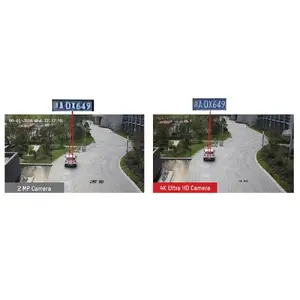
Recently, ultra-high-definition surveillance cameras marked the beginning of the security industry’s own 4K
era. However, 4K technology has yet to be implemented widely, mainly because of its tremendous bandwidth
and data storage requirements. But now, Hikvision’s H.265+ codec optimizes data efficiency and makes 4K
video surveillance possible. Every pixel comes to life with vivid clarity.
era. However, 4K technology has yet to be implemented widely, mainly because of its tremendous bandwidth
and data storage requirements. But now, Hikvision’s H.265+ codec optimizes data efficiency and makes 4K
video surveillance possible. Every pixel comes to life with vivid clarity.
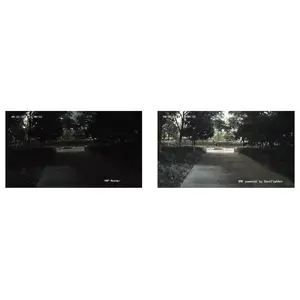
Colorful Imaging, Even in Low Light
Powered-by-DarkFighter Low-light Technology – Featuring powerful lenses with an ultra-large iris,
advanced sensors, and an optimized imaging algorithm, Hikvision’s 3-Series Network Cameras provide
crisp clear images rich in detail for excellent night surveillance.
advanced sensors, and an optimized imaging algorithm, Hikvision’s 3-Series Network Cameras provide
crisp clear images rich in detail for excellent night surveillance.
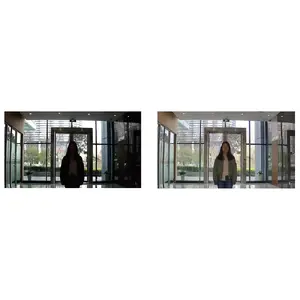
Clear Imaging even with Strong Backlight
Wide Dynamic Range (WDR) technology enables cameras to maintain image fidelity without detail loss when
the subject is captured with harsh backlighting. The 120 dB WDR of the 3-Series Network Cameras ensures
accurate on-screen color and detail even in backlit environments, where conventional cameras would capture
only obscured silhouettes.
the subject is captured with harsh backlighting. The 120 dB WDR of the 3-Series Network Cameras ensures
accurate on-screen color and detail even in backlit environments, where conventional cameras would capture
only obscured silhouettes.
Certified by Common Criteria
The DS-2CD3XX5G0 models of the 3-Series Network Cameras are certified by Common Criteria (CC), which is an international set of guidelines and specifications developed for evaluating information security products, specifically to ensure them to meet an agreedupon security standard for government deployments. Common Criteria is more formally called "Common Criteria for Information Technology Security Evaluation".

Better Image Performance by Auto Iris
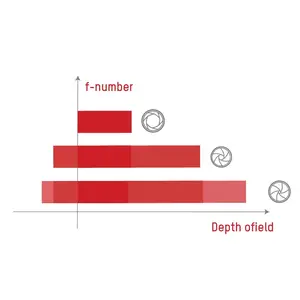
As we all know, both the fixed iris and the auto-iris are commonly used in video surveillance cameras. A fixed
iris in indoor scenes with stable lighting works quite well. However, the auto-iris is more suitable for the outdoors, where lighting conditions change throughout the day. During the brightest hours of daylight, the auto-iris gets smaller and thereby improves the depth of field.
iris in indoor scenes with stable lighting works quite well. However, the auto-iris is more suitable for the outdoors, where lighting conditions change throughout the day. During the brightest hours of daylight, the auto-iris gets smaller and thereby improves the depth of field.