-
Type:
Characteristics of the device.
-
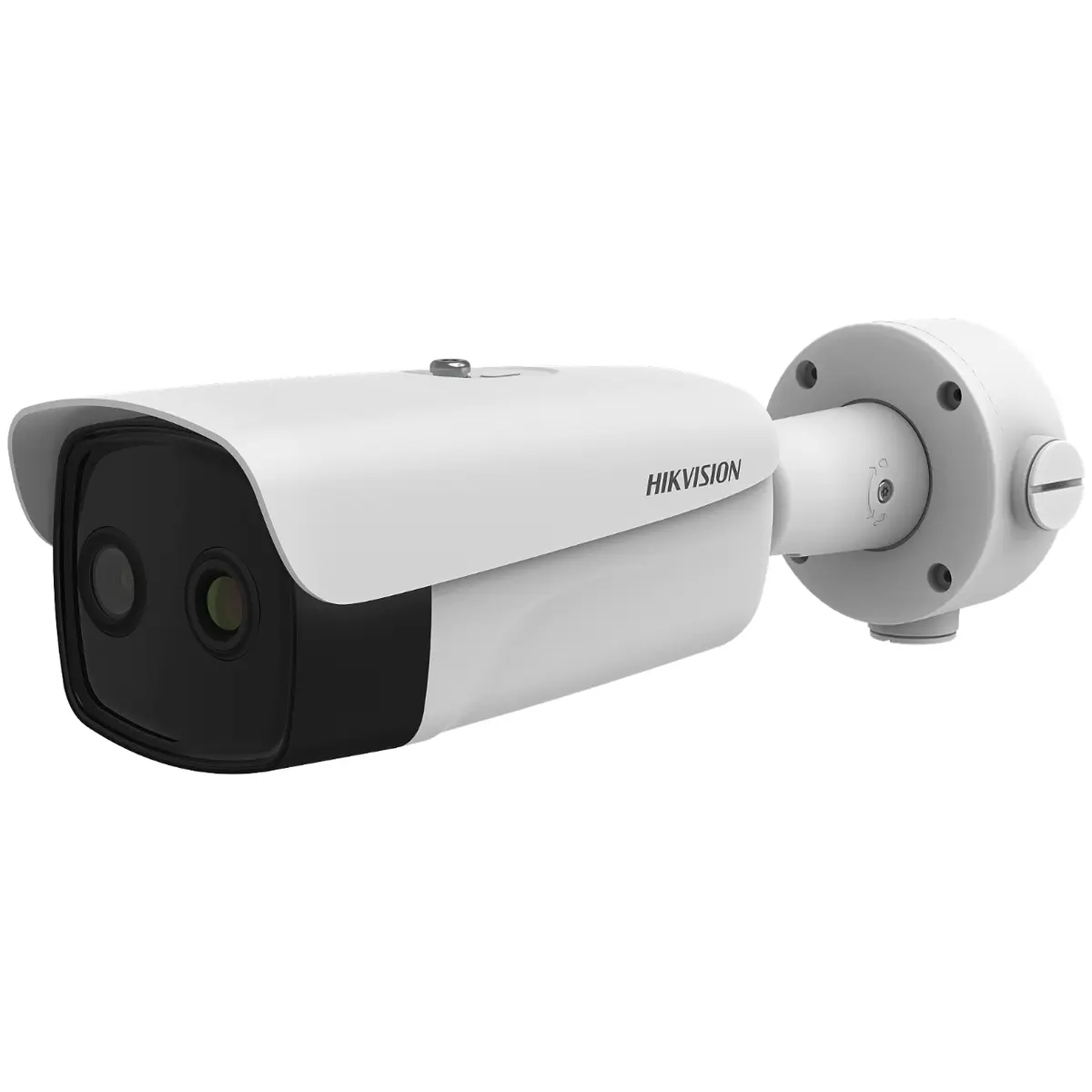
IP security camera
-
Supported network protocols:
Network protocols tested as compatible with this product e.g. FTP,HTML, POP.
-
IPv4/IPv6, HTTP, HTTPS, 802.1x, Qos, FTP, SMTP, UPnP, SNMP, DNS, DDNS, NTP, RTSP, RTCP, RTP, TCP, UDP, IGMP, ICMP, DHCP, PPPoE SRTP, SFTP
-
Operating relative humidity (H-H):
-
0 - 95
-
Form factor:
The shape or design of the product.
-
Bullet
-
Camera shutter speed:
Determines the length of time the shutter lets light pass through the lens to the CCD. Shutter speed and aperture together determine exposure.
-
1 - 1/100000
-
Ethernet LAN:
An Ethernet LAN (Local Area Network) interface is present, for a wired conection via a cable.
-
Yes
-
Minimum illumination:
Also known as light sensitivity, this is the smallest amount of light needed for the camera to produce an image of useable quality.
-
0.0018 lx
-
Connectivity technology:
The technology that enables connectivity of the device, e.g. wired or wireless.
-
Wired
-
Maximum resolution:
The maximum number of pixels that can be displayed in the image. It is usually quoted as width × height,: for example, "1024 × 768" means the width is 1024 pixels and the height is 768 pixels.
-
2688 x 1520
-
Number of users:
The number of people that use or can use this product.
-
32 user(s)
-
Networking standards:
The way in which the network is working, e.g. IEEE 802.11a, IEEE 802.11b, IEEE 802.11g.
-
IEEE 802.3af, IEEE 802.1x
-
Voice codecs:
-
G.722.1, PCM, MP2L2, G.726, G.711u, G.711a
-
LED type:
-
IR
-
Bluetooth:
Bluetooth is a low-power radio technology developed to replace the cables and wires currently used to link or connect electronic devices such as personal computers, printers, and a wide variety of handheld devices including mobile phones. Because it uses radio-wave connectivity, a Bluetooth-enabled device has a constant, established connection to whatever browser it uses. This saves the user the trouble of logging on to check for emails or news updates, for example.
-
No
-
Audio output channels:
An audio output channel is an electric circuit which acts as a path for a signal produced by a device. A device may have several audio output channels.
-
1.0
-
Video compression formats:
-
M-JPEG, H.265, H.264
-
Ethernet LAN (RJ-45) ports:
Number of Ethernet LAN (RJ-45) ports (connecting interfaces) in the device. Ethernet LAN (RJ-45) ports allow a computer to connect to the ethernet.
-
1
-
Microphone in:
The socket where a microphone is connected to the device.
-
Yes
-
Length:
The measurement or extent of something from end to end.
-
376.1 mm
-
Progressive scan:
Also referred to as noninterlaced scanning, this is a way of displaying, storing, or transmitting moving images in which all the lines of each frame are drawn in sequence. This is in contrast to interlaced video used in traditional analog television systems where only the odd lines, then the even lines of each frame (each image called a video field) are drawn alternately.Progressive scan is used for DVDs and HDTV (high defintion television).
-
Yes
-
Wi-Fi:
Popular technology that allows an electronic device to exchange data or connect to the internet wirelessly using radio waves.
-
No
-
Quality of Service (QoS) support:
-
Yes
-
Card reader integrated:
A card reader is a device that enables reading and, in some cases, writing data to and from a memory card.
-
Yes
-
Placement supported:
Where the product can be placed e.g. indoor/outdoor, horizontal/vertical.
-
Outdoor
-
Temperature measurement range:
The minimum and maximum temperatures that can be measured.
-
-20 - 150
-
Maximum aperture number:
-
1.6
-
Night vision:
Night vision is technology which allows you to see in low light conditions.
-
Yes
-
Mounting type:
Type of mounting e.g. wall mounting.
-
Ceiling/Wall
-
DC output voltage:
-
12
-
Number of languages:
-
32
-
Ethernet interface type:
-
Fast Ethernet
-
RS-485 ports:
-
1
-
Power source type:
What the power source is.
-
PoE, DC, AC
-
Total megapixels:
A megapixel (MP or Mpx) is one million pixels, and is a term used not only for the number of pixels in an image, but also to express the number of image sensor elements of digital cameras or the number of display elements of digital displays. For example, a camera that makes a 2048 × 1536 pixel image typically uses a few extra rows and columns of sensor elements and is commonly said to have "3.2 megapixels" or "3.4 megapixels", depending on whether the number reported is the "effective" or the "total" pixel count (as opposed to the 2048 × 1536 = 3,145,728 finished image pixels).
-
4 MP
-
Built-in HDD:
The product has a hard drive built into it.
-
No
-
Night vision distance:
-
40
-
Audio input channels:
A channel is an electric circuit which acts as a path for a signal. Audio input channels allow audio signals to be communicated to the device.
-
10
-
AC input voltage:
The voltage of the AC electricity that is inputted into the product.
-
24
-
Wide Dynamic Range (WDR):
-
Yes
-
Day/night mode:
-
Yes
-
Number of cameras:
The quantity of cameras that product can support.
-
1
-
Power consumption (max):
The maximum amount of power used by the device.
-
9 W
-
Temperature sensor:
-
Yes
-
Number of lenses:
The number of lenses installed in the device.
-
1
-
Power consumption (Power over Ethernet (PoE)):
-
9.5 W
-
Behavior analysis:
-
Region entrance detection, Line crossing detection, Intrusion detection, Region exiting detection
-
Thermal module:
-
Yes
-
Sensor type (thermal module):
-
Vanadium Oxide Uncooled Focal Plane Arrays
-
Thermal sensitivity (NETD):
-
35 mK
-
IFOV (spatial resolution):
-
0.68 mRad
-
Temperature measurement accuracy:
-
8 °C
-
Effective sensor resolution (thermal module):
-
384 x 288
-
Field of view (FOV) angle (thermal module):
-
14.9 x 11.2
-
Fire detection:
-
Yes
-
Number of detectable fire points:
-
10
-
Lens viewing angle, horizontal:
-
25.25
-
Lens viewing angle, vertical:
-
14.44