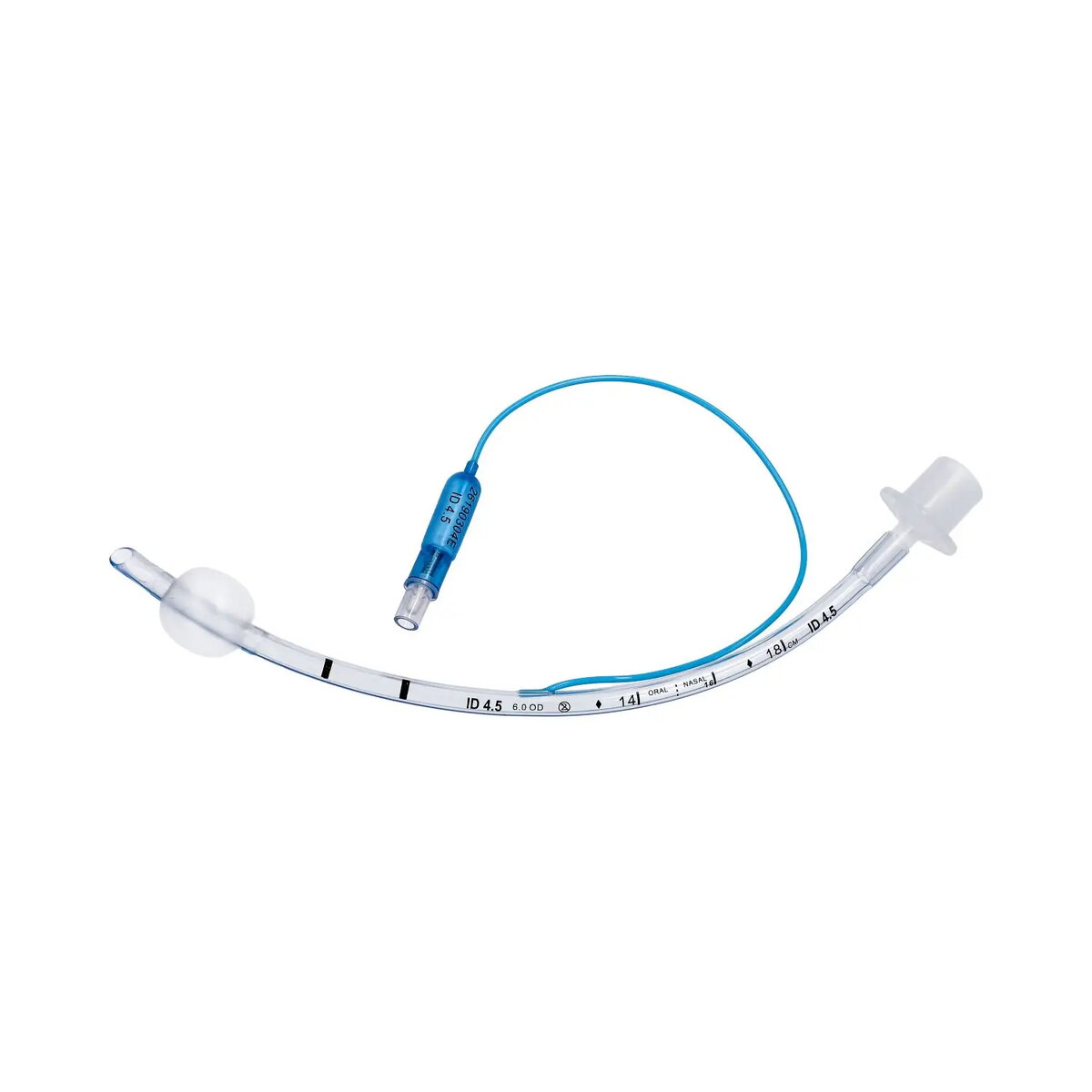
The Kid-man Endotracheal Tube with a 4.5 mm diameter is a high-quality, single-use medical device designed for secure airway management and respiratory support. Constructed from flexible, medical-grade PVC, this tube is engineered to minimize trauma during intubation while maintaining structural integrity. It features a low-pressure, high-volume cuff that provides an effective seal against the tracheal wall, reducing the risk of aspiration and ensuring consistent ventilation. The inclusion of a Murphy eye helps maintain airflow even if the distal tip becomes obstructed, and the integrated X-ray opaque line allows for precise verification of tube placement via imaging.
Advantages
This endotracheal tube offers significant clinical benefits, including a high-volume, low-pressure cuff that distributes pressure evenly to protect delicate tracheal tissue. The flexible PVC material adapts to the patient's anatomy, while the clear depth markings and double depth indicators facilitate accurate positioning. The universal 15 mm connector ensures compatibility with standard anesthesia and ventilation circuits, and the latex-free construction makes it suitable for patients with latex sensitivities. Furthermore, the tube is sterilized with ethylene oxide, ensuring it is ready for immediate use in sterile clinical environments.
Suitable for
- General anesthesia procedures
- Emergency airway management
- Mechanical ventilation support
- Critical care and intensive care unit applications
When it may not be suitable
This device is intended for single use only and should not be reused or re-sterilized. It may not be suitable for patients with specific anatomical abnormalities that require specialized or non-standard tube shapes. Clinical judgment should always be exercised regarding the appropriateness of the 4.5 mm size for the specific patient's airway dimensions.
Key specifications
- Size: 4.5 mm inner diameter
- Material: Flexible, latex-free PVC
- Cuff type: Low-pressure, high-volume
- Connector: 15 mm universal
- Sterilization: Ethylene oxide (EO)
- Features: Murphy eye, X-ray opaque marker, depth graduations every 1 cm
How to use
Before use, inspect the packaging for any signs of damage to ensure sterility. After selecting the appropriate size, check the cuff integrity by inflating it briefly. During the intubation procedure, use the depth markings to guide the tube to the correct position within the trachea. Once in place, inflate the cuff using the pilot balloon to achieve the necessary seal. Secure the tube appropriately and verify placement through auscultation and, if necessary, radiographic imaging. Monitor the cuff pressure regularly during the period of intubation.
What to consider before purchase
- Verify the required tube size for the patient's age and weight
- Ensure compatibility with existing ventilation equipment
- Check the expiration date on the individual paper-foil packaging
- Confirm that the facility has appropriate protocols for single-use medical device disposal
Usage recommendations
Always verify tube placement immediately after insertion using clinical assessment and capnography. Ensure that the cuff pressure is monitored and maintained within safe limits to prevent tracheal mucosal injury.