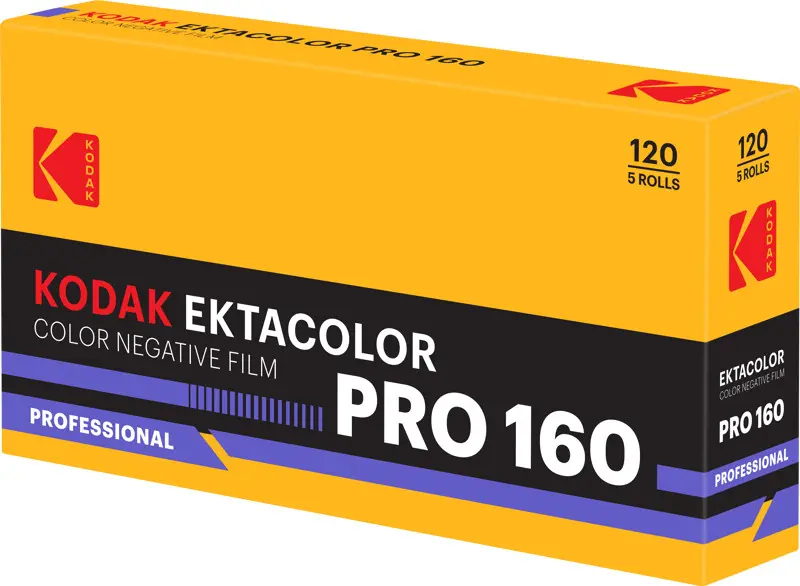
This product page focuses on the professional color negative film Kodak Ektacolor Pro 160 Color Negative Film 120 Medium Format 5-Roll Pack ISO 160. In this overview, it is compared against similar alternative films from Kodak: its 35 mm counterpart Kodak Eastman Ektacolor Pro 160 35 mm, higher-speed options in the same lineup Kodak Eastman Ektacolor Pro 800 (120) and Kodak Ektacolor Pro 400 (35 mm and 120), and the ultra-fine grain landscape film Kodak Ektar 100 (120). All compared films share a professional daylight-balanced design and are optimized for hybrid scanning workflows, but they differ in film format, ISO speed, and color reproduction characteristics.
⚙️ The technical specifications comparison covers film format and packaging, ISO light sensitivity, grain and sharpness levels, as well as the primary photography use cases for each film.
| Parameter | Kodak Ektacolor Pro 160 (120, 5-pack) | Kodak Eastman Ektacolor Pro 160 (35 mm) | Kodak Eastman Ektacolor Pro 800 (120) | Kodak Eastman Ektacolor Pro 400 (35 mm and 120) | Kodak Ektar 100 (120, 5-pack) | Practical Conclusion |
|---|
| Format and Packaging | 120 medium format, 5-roll pack | 35 mm, 36 exposures, 1 roll | 120 medium format, 5-roll pack | Available in 35 mm (36 exposures) and 120 medium format (5-roll pack) | 120 medium format, 5-roll pack | Medium format (120) provides higher resolution and detail than 35 mm due to the larger negative area. |
| Light Sensitivity (ISO) | ISO 160 | ISO 160 | ISO 800 | ISO 400 | ISO 100 | ISO 160 requires more light than ISO 400 or 800, but guarantees minimal grain and smooth tonal rendering. |
| Grain and Sharpness | Ultra-fine grain, smooth highlights | Ultra-fine grain, clean details | Balanced grain for high-speed shooting | Very fine grain, high sharpness | Finest grain among color negative films, exceptional sharpness | Ektar 100 and Ektacolor Pro 160 deliver cleaner scans without digital noise compared to ISO 400 and 800 options. |
| Color Reproduction and Use | Natural skin tones, soft colors (portrait, fashion, commercial) | Natural skin tones, soft colors (portrait, wedding) | Balanced colors for low-light conditions (events, street) | Rich colors, high versatility (travel, lifestyle, sports) | Ultra-vivid colors, maximum detail (nature, landscape) | Ektacolor is tailored for portraits and accurate skin tones, whereas Ektar offers a more saturated and vibrant palette. |
◎ Choosing the right product depends on your lighting conditions, photography genre, required frame format, and the desired artistic look for your scans or prints.
| Use Case | Recommended Product | Why This Choice Is Better |
|---|
| Studio portraits, wedding and commercial photography in medium format | Kodak Ektacolor Pro 160 Color Negative Film 120 Medium Format 5-Roll Pack ISO 160 | The large 120 format and low ISO 160 speed deliver flawless skin tones, soft tonal gradations, and minimal grain for portraiture. |
| Portraits and storytelling with a compact 35 mm camera | Kodak Eastman Ektacolor Pro 160 35 mm | Retains all the benefits of accurate color and soft skin tones of the 160 series in a convenient 35 mm roll format. |
| Available-light photography and evening events | Kodak Eastman Ektacolor Pro 800 ISO 800 120 Medium Format | High ISO 800 speed allows handheld shooting in low light while preserving balanced tones and wide exposure latitude. |
| Versatile travel and street photography in changing conditions | Kodak Ektacolor Pro 400 (35 mm or 120) | ISO 400 speed provides the flexibility to shoot comfortably in bright daylight as well as overcast or shaded situations. |
| Nature, landscapes, and architecture requiring maximum detail | Kodak Ektar 100 Color Negative Film 120 Medium Format | An ISO 100 film with ultra-vivid colors and the finest grain for capturing intricate landscape details. |
Kodak Ektacolor Pro 160 (120) is best suited for medium-format photographers who prioritize flawless natural skin tones and smooth highlight rendering. Compared to higher-speed alternatives (ISO 400 and 800), it requires more light or a tripod, but rewards you with a cleaner, grain-free image. Choose this film for studio portraits, weddings, and fashion photography where delicate color reproduction is more important than low-light capability.