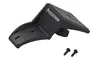
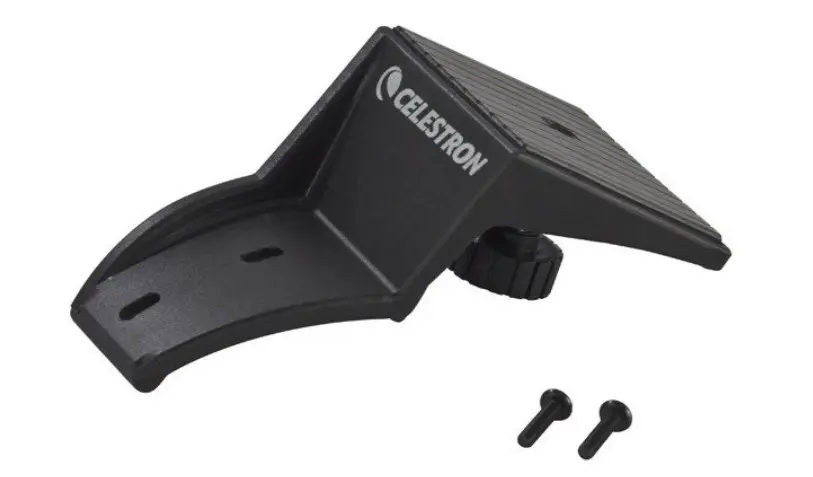
The Celestron Piggyback Camera Mount Adapter is compared against various astronomical accessories, including the DO-GSO 90-degree Right Angle Socket prism, the DO-GSO 2.5x 1.25" Barlow lens and Vixen T-adapter Barlow lens 2x 1.25", the Tele Vue PTR-2200 adapter, and the Baader Planetarium AstroSolar safety solar film. While alternative items focus on viewing comfort, magnification adjustments, Powermate compatibility, or safe solar observation, the Celestron product is built to securely attach a camera directly to the telescope optical tube for wide-field astrophotography.
⚙️ The specifications comparison table below evaluates accessory types, main purposes, and compatibility with optical equipment.
| Parameter | Celestron Piggyback Camera Mount Adapter | DO-GSO 90-Degree Socket | DO-GSO 2.5x 1.25" Barlow lens | Vixen T-adapter Barlow lens 2x | Tele Vue PTR-2200 T-ring | Baader Planetarium AstroSolar | Practical significance |
|---|
| Product type | Camera mounting bracket | Right-angle prism | Barlow lens (2.5x magnification) | Barlow lens with T-adapter (2x) | T-adapter for Powermate systems | Safety solar filter film | Each accessory serves a distinct purpose ranging from camera mounting to magnification or filtration. |
| Main purpose | Wide-field astrophotography and parallel tracking | Improved viewing comfort for high-altitude objects | Increasing eyepiece focal length | Moon and planet observation and imaging | Connecting a camera to telecentric systems | Safe visual and photographic solar observation | Products are divided across imaging, viewing comfort, and light filtration categories. |
| Compatibility | Schmidt-Cassegrain telescopes (C8, C9.25, C11, C14) | 1.25-inch focusers and accessories | 1.25-inch eyepieces | 1.25-inch focusers | Tele Vue 2x Powermate systems | Telescopes and camera lenses | Mounting standards and optical instrument types must be verified before purchase. |
◎ The table below evaluates which product is most suitable for specific use cases in amateur astronomy.
| Use case | Recommended product | Why |
|---|
| Wide-field night sky imaging with a camera on a telescope | Celestron Piggyback Camera Mount Adapter | Allows you to securely mount a DSLR or mirrorless camera directly onto the telescope optical tube. |
| Comfortable viewing of objects high in the night sky | DO-GSO 1.25-inch Prismatic 90-Degree Right Angle Socket | Provides a comfortable viewing angle without requiring awkward body postures. |
| Increasing magnification of standard eyepieces | DO-GSO 2.5x 1.25" Barlow lens | Helps achieve closer views of the Moon and planets by boosting magnification by 2.5 times. |
| Combining magnification with camera mounting | Vixen T-adapter Barlow lens 2x 1.25" | Merges Barlow lens performance and a T-adapter for lunar and planetary imaging. |
| Astrophotography through telecentric amplifier systems | Adapter T-ring for 2x Powermate Tele Vue PTR-2200 | Ensures precise alignment and secure attachment for Tele Vue Powermate components. |
| Safe observation of the Sun | Baader Planetarium AstroSolar Safety Solar Film | Blocks harmful radiation while delivering high-contrast white solar images. |
The Celestron Piggyback Camera Mount Adapter fundamentally differs from the other options by functioning as a physical camera mount rather than an internal optical modifier for focusers. It is ideal for astrophotographers pursuing wide-field sky imaging, whereas alternative items are better suited for users prioritizing viewing comfort, focal enhancement, or solar safety filtration.