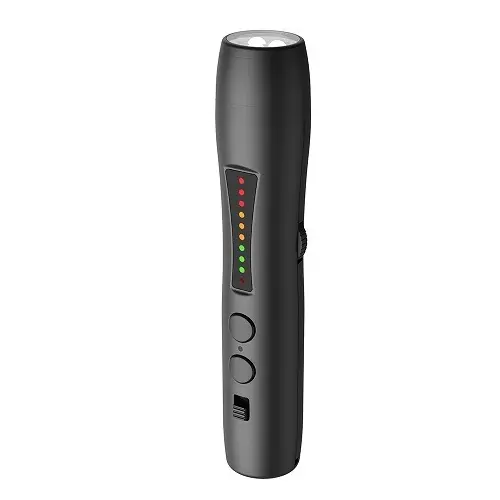
The NOYAFA JMS110 Anti-Spy Detector for GPS Trackers, Bugs, and Hidden Cameras is a portable electronic device engineered to locate unwanted surveillance equipment. Operating across a wide frequency range from 1 MHz to 8 GHz, this anti-spy detector identifies active radio frequency signals, wireless transmitters, Bluetooth, Wi-Fi, and cellular networks including 2G, 3G, and 4G. It features adjustable sensitivity with nine scanning levels, magnetic field detection up to 10 cm, and optical lens reflection detection supported by integrated LED illumination. Powered by a rechargeable 3.7V 300mAh lithium-polymer battery charged via a USB Type-C port, the unit provides audible, visual, and vibration alerts to notify the user of detected signals. With its lightweight ABS housing weighing only 28 grams, the device is designed for easy transport and deployment in various environments.
Advantages
The NOYAFA JMS110 anti-spy detector offers comprehensive detection capabilities by combining RF signal scanning, magnetic field sensing, and optical camera lens reflection detection into a single compact tool. Its broad 1 MHz to 8 GHz frequency range ensures the identification of modern wireless bugs and transmitters. Users can precisely pinpoint signal sources thanks to the nine adjustable sensitivity levels and signal strength indications. The inclusion of magnetic field detection enables the location of magnetically mounted GPS trackers on vehicles or metal surfaces. Additionally, the optical detection mode helps locate wired or non-transmitting cameras through lens reflection. The built-in rechargeable battery delivers up to 25 hours of continuous operation and up to 10 days of standby time, while the modern USB Type-C interface ensures convenient recharging.
Suitable for
- Inspecting hotel rooms, rental apartments, and holiday accommodations for hidden cameras and bugs
- Checking office meeting rooms and private workspaces for unauthorized listening devices
- Scanning personal and commercial vehicles for magnetically mounted GPS tracking devices
- Sweeping changing rooms, restrooms, and private residential areas for privacy protection
When it may not be suitable
This detector may not be effective for locating passive devices that do not emit radio frequencies, lack magnetic fields, and have non-reflective or obstructed lenses. It is also not designed for industrial radio frequency spectrum analysis or professional counter-surveillance sweeps in highly complex electronic environments.
Key specifications
- RF detection range: 1 MHz to 8,000 MHz
- Dynamic range: Greater than 73 dB
- RF sensitivity: Up to 0.03 mW
- Magnetic field detection distance: Up to approximately 10 cm
- Scanning sensitivity levels: 9
- Battery: 3.7 V, 300 mAh Li-Polymer
- Charging interface: USB Type-C
- Housing material: ABS
- Dimensions: Approximately 120 x 24 x 24 mm
- Weight: 28 g
How to use
To begin using the detector, power on the device and select the appropriate detection mode depending on the target. For wireless bugs and active transmitters, use the RF detection mode, adjusting the sensitivity levels as you move closer to potential signal sources. Pay attention to the audible, visual, or vibration alerts and signal strength indicators to locate the source. To find GPS trackers attached to metal surfaces, switch to the magnetic field detection mode and sweep areas within a distance of up to 10 cm. For hidden cameras, utilize the optical lens reflection detection function by looking through the central viewing opening while the integrated LED illumination highlights reflections from camera lenses.
What to consider before purchase
- Verify whether your privacy inspection needs require RF detection, magnetic sensing, or optical lens viewing
- Note that detection distances for wireless signals and magnetic fields have specific physical limits
- Ensure the device is regularly charged using a compatible USB Type-C cable before conducting inspections
Usage recommendations: Conduct sweeps methodically in quiet environments to better interpret audible and vibration alerts. Adjust the sensitivity gradually as you approach potential signal sources to avoid false readings and accurately isolate the location of hidden devices.