-
Management protocols:
-
SNMP
-
Serial interface type:
-
RS-232
-
Number of batteries supported:
The number of batteries that can be used with the product.
-
2
-
Serial ports quantity:
The number of serial ports in a computer or peripheral. A serial port is a serial communication physical interface through which information transfers in or out one bit at a time. The term "serial port" usually identifies hardware more or less compliant to the RS-232 standard, intended to interface with a modem or with a similar communication device. In modern computers and peripherals, serial ports have largely been replaced by USBs and other interfaces.
-
1
-
Battery recharge time:
Approximate time required to recharge the battery from completely empty to completely full
-
4 h
-
Audible alarm(s):
Alarms that make a sound when they are activated (set off).
-
Yes
-
Emergency Power Off (EPO):
-
Yes
-
Output power capacity:
The maximum power that the device can produce.
-
0.7 kVA
-
Typical backup time at half load:
The amount of time that a backup energy source (e.g. UPS - Uninterruptible Power Source) can power the device for, when the backup energy source is half-loaded (50% of capacity).
-
24 min
-
Typical backup time at full load:
The amount of time that a backup energy source (e.g. UPS - Uninterruptible Power Source) can power the device for, when the backup energy source is fully loaded (100% of capacity).
-
10 min
-
USB 2.0 ports quantity:
Number of USB 2.0 ports (connecting interfaces) in the device. USB 2.0 was released in April 2000 (now called "Hi-Speed"), adding higher maximum signaling rate of 480 Mbit/s (effective throughput up to 35 MB/s or 280 Mbit/s), USB 2.0 ports are usually black.
-
1
-
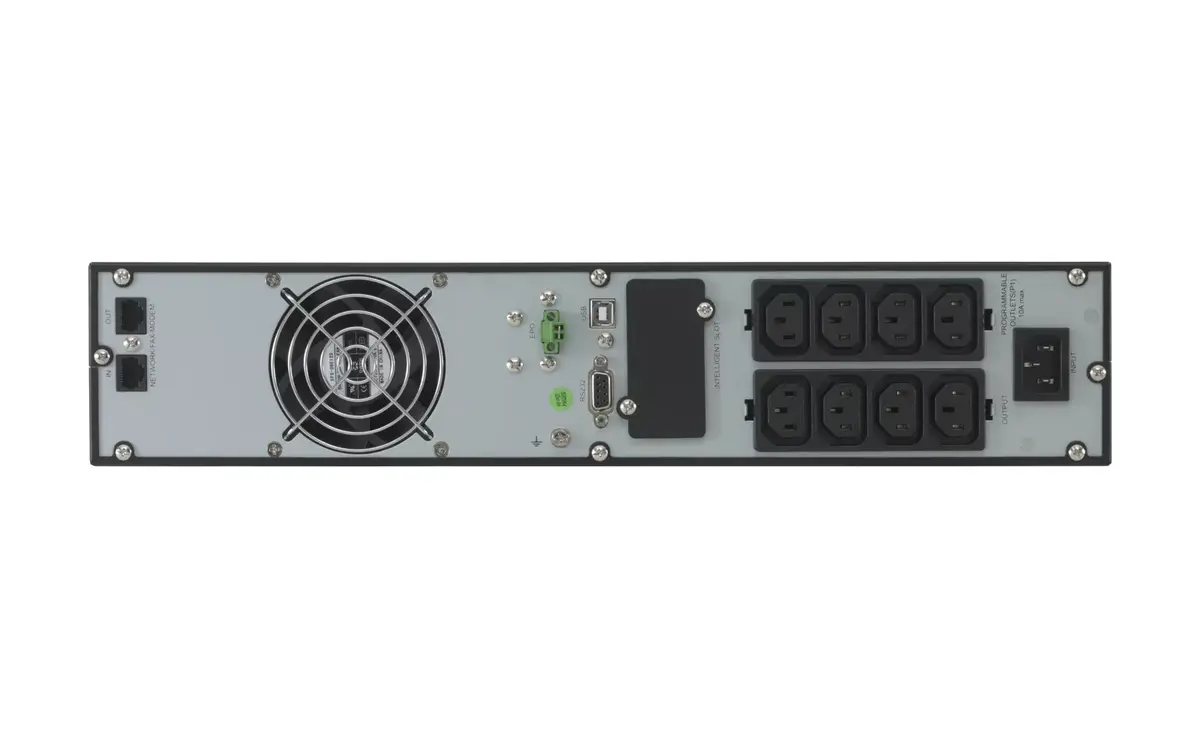
AC outlets quantity:
The number of sockets in the device where AC electrical power can be connected.
-
8 AC outlet(s)
-
Input frequency:
The frequency (Hz) which is required to power the product.
-
50/60
-
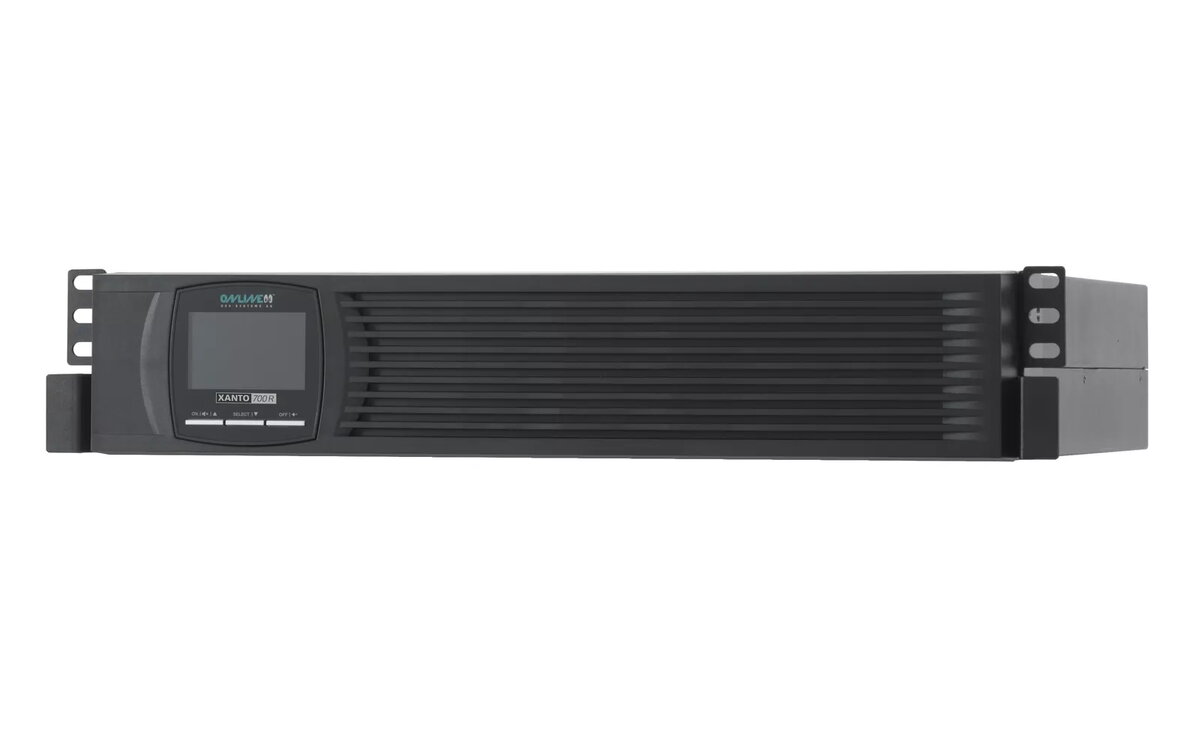
Rack capacity:
The spase that device fill in rack.
-
2U
-
RS-232 ports:
The number of sockets (ports) for RS-232. An RS-232 serial port was once a standard feature of a personal computer, used for connections to modems, printers, mice, data storage, uninterruptible power supplies, and other peripheral devices. Now it has been largely replaced by USB and other ports.
-
1
-
Battery voltage:
The voltage (V) of the battery.
-
12 V
-
Power plug:
A power plug is a 2 or 3 pinned device that is placed into an electrical socket in order to make an electrical connection.
-
C14 coupler
-
Output power:
The power that the device can produce.
-
700 W
-
International Protection (IP) code:
The IP code classifies and rates the degree of protection provided against the intrusion (including body parts such as hands and fingers), dust, accidental contact, and water by mechanical casings and electrical enclosures. It is published by the International Electrotechnical Commission (IEC). The digits (characteristic numerals) indicate conformity with the conditions summarized in the tables below. Where there is no protection rating with regard to one of the criteria, the digit is replaced with the letter X. an electrical socket rated IP22 is protected against insertion of fingers and will not be damaged or become unsafe during a specified test in which it is exposed to vertically or nearly vertically dripping water. Another example is the Sony Xperia Z Ultra, one of the first cellular phones to be IP-rated; it is rated at IP58 and marketed as "dust resistant" and can be "immersed in 1.5 meter of freshwater for up to 30 minutes".
-
IP20
-
AC outlet types:
The type of outlet for AC electricity.
-
C13 coupler
-
Surge protection features:
-
Network, Fax, Modem
-
Battery capacity:
The amount of electric charge a battery can deliver at the rated voltage. The more electrode material contained in the cell the greater its capacity. A small cell has less capacity than a larger cell with the same chemistry, although they develop the same open-circuit voltage. Capacity is measured in units such as amp-hour (A·h).
-
9 Ah
-
Cold start:
-
Yes
-
Input operation voltage (max):
The maximum input voltage supported by the device.
-
300 V
-
Input operation voltage (min):
The minumum voltage needed by the device during operation.
-
110 V
-
Output operation voltage (min):
The minumum voltage produced by the device during operation.
-
208 V
-
Output operation voltage (max):
The maximum output voltage produced by the device.
-
240 V
-
Output frequency:
-
50/60
-
Waveform:
-
Sine
-
Serial interface:
-
Yes
-
UPS topology:
The two main UPS topologies are Double-Conversion True Online and Standby / Eco. Many quality-based considerations are involved when choosing the the optimal UPS for the job, like how they are coping with voltage disturbances.
-
Double-conversion (Online)
-
USB port:
The device features a socket into which a USB cable can be plugged.
-
Yes
-
Audible alarm modes:
-
Low battery alarm, Overload alarm