-
Number of batteries supported:
The number of batteries that can be used with the product.
-
3
-
Battery recharge time:
Approximate time required to recharge the battery from completely empty to completely full
-
4 h
-
Audible alarm(s):
Alarms that make a sound when they are activated (set off).
-
Yes
-
Emergency Power Off (EPO):
-
Yes
-
Output power capacity:
The maximum power that the device can produce.
-
1 kVA
-
Typical backup time at half load:
The amount of time that a backup energy source (e.g. UPS - Uninterruptible Power Source) can power the device for, when the backup energy source is half-loaded (50% of capacity).
-
11 min
-
Typical backup time at full load:
The amount of time that a backup energy source (e.g. UPS - Uninterruptible Power Source) can power the device for, when the backup energy source is fully loaded (100% of capacity).
-
4 min
-
Noise level:
The amplitude level of the undesired background noise, usually measured in decibels (db).
-
45 dB
-
USB 2.0 ports quantity:
Number of USB 2.0 ports (connecting interfaces) in the device. USB 2.0 was released in April 2000 (now called "Hi-Speed"), adding higher maximum signaling rate of 480 Mbit/s (effective throughput up to 35 MB/s or 280 Mbit/s), USB 2.0 ports are usually black.
-
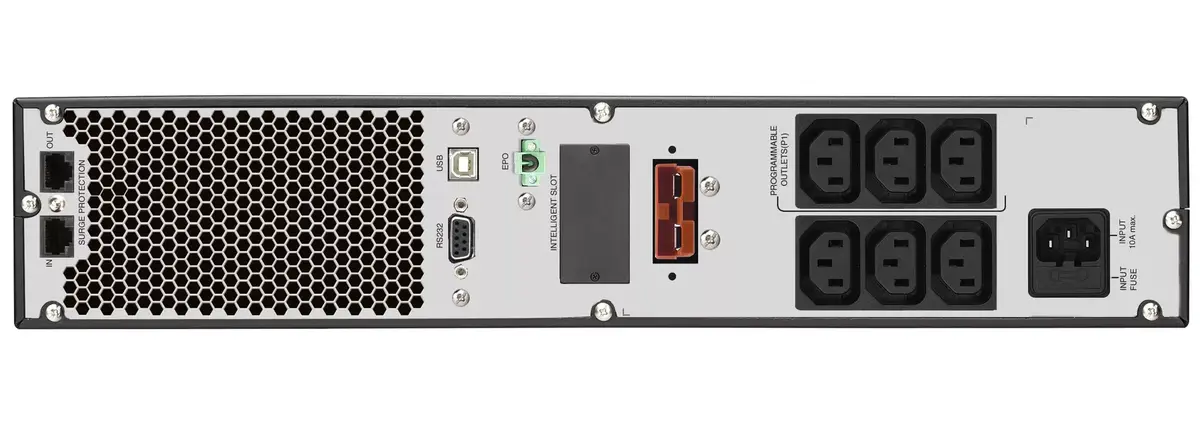
1
-
Hot-swap battery:
-
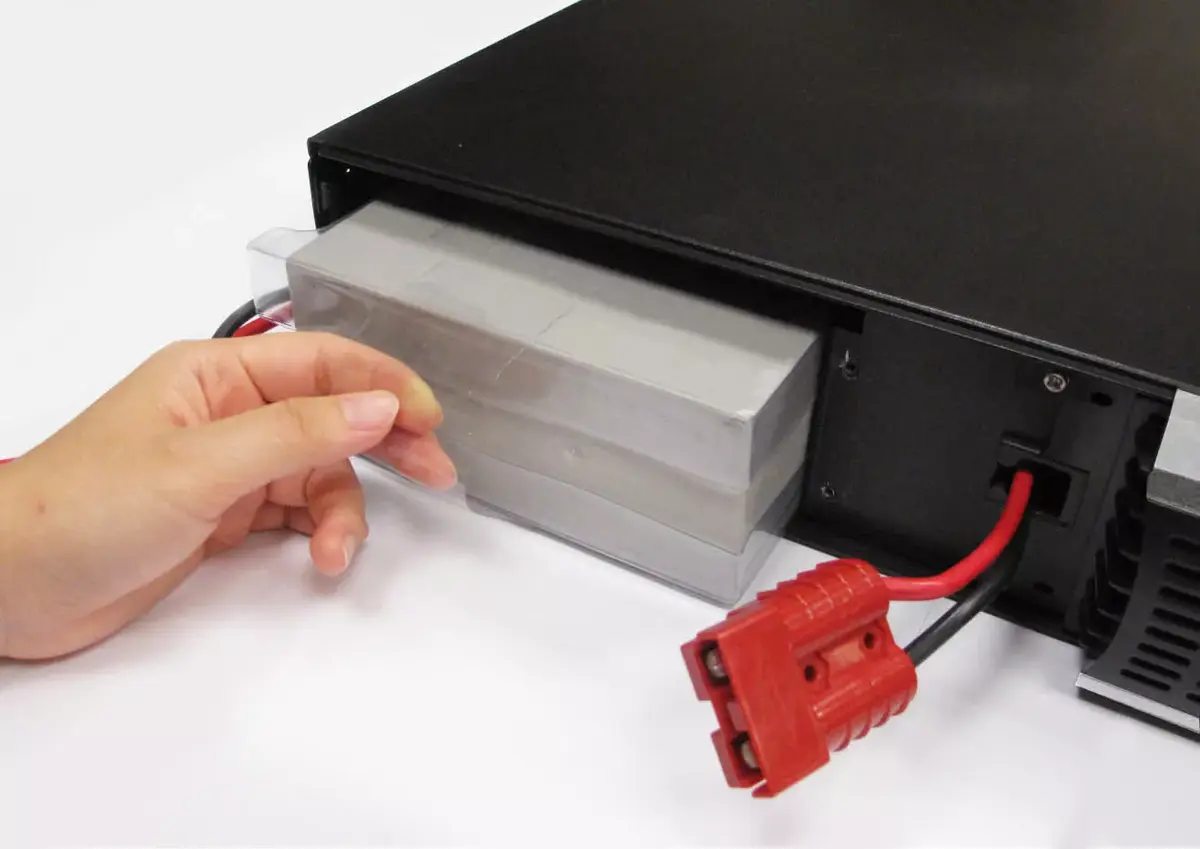
Yes
-
Battery voltage:
The voltage (V) of the battery.
-
12 V
-
Efficiency:
-
86 %
-
Output power:
The power that the device can produce.
-
900 W
-
Cooling type:
The method used to cool the device or to cool the air around the device.
-
Active
-
Input current Total Harmonic Distortion (THD):
-
5 %
-
Output voltage Total Harmonic Distortion (THD):
-
2 %
-
Crest factor:
-
3:1
-
Surge protection features:
-
Fax, Modem, Network, Telephone
-
Battery capacity:
The amount of electric charge a battery can deliver at the rated voltage. The more electrode material contained in the cell the greater its capacity. A small cell has less capacity than a larger cell with the same chemistry, although they develop the same open-circuit voltage. Capacity is measured in units such as amp-hour (A·h).
-
7 Ah
-
Input operation voltage (max):
The maximum input voltage supported by the device.
-
300 V
-
Input operation voltage (min):
The minumum voltage needed by the device during operation.
-
160 V
-
Output operation voltage (min):
The minumum voltage produced by the device during operation.
-
208 V
-
Output operation voltage (max):
The maximum output voltage produced by the device.
-
240 V
-
Display type:
Type of display (screen) e.g. LCD.
-
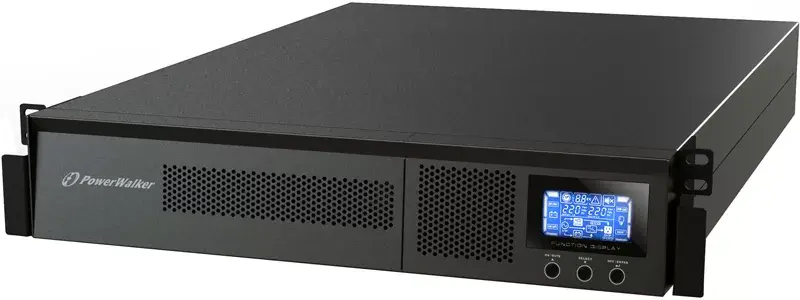
LCD
-
Input power factor:
-
0.99
-
Output power factor:
-
0.9
-
Waveform:
-
Sine
-
Output voltage regulation:
-
1
-
Output frequency regulation:
-
0.2
-
Software CD:
-
Yes
-
UPS topology:
The two main UPS topologies are Double-Conversion True Online and Standby / Eco. Many quality-based considerations are involved when choosing the the optimal UPS for the job, like how they are coping with voltage disturbances.
-
Double-conversion (Online)
-
Emergency Power Off (EPO) connector:
-
Yes
-
Harmonized System (HS) code:
-
85078000
-
USB port:
The device features a socket into which a USB cable can be plugged.
-
Yes