-
Processor frequency:
The clock rate is the fundamental rate in cycles per second (measured in hertz) at which a computer performs its most basic operations such as adding two numbers. There are more factors, like internal memory size, that influence a computer's actual response time.
-
1.4 MHz
-
Processor model:
The model number for the processor in a computer.
-
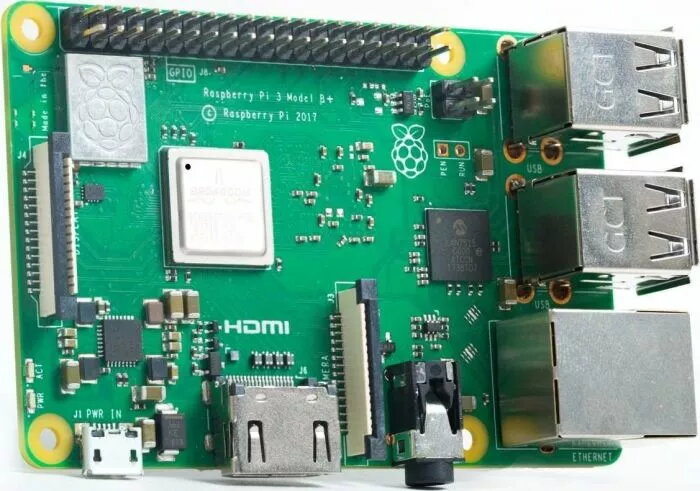
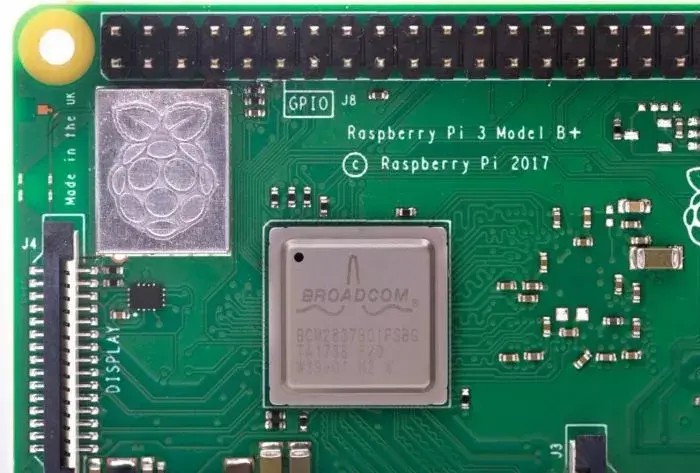
BCM2837B0
-
Internal memory type:
The type of internal memory such as RAM, GDDR5.
-
DDR2-SDRAM
-
Wi-Fi standards:
The type of wireless local area network (LAN). It can be ad-hoc, where units in a network communicate peer-to-peer, or Infrastructure, where units communicate with each other via an access point A LAN interconnects computers in a small area e.g. home, school or office.
-
Wi-Fi 5 (802.11ac), Wi-Fi 4 (802.11n), 802.11g, 802.11b
-
Compatible memory cards:
Types of memory cards which can be used with this product.
-
MicroSD (TransFlash)
-
Form factor:
The shape or design of the product.
-
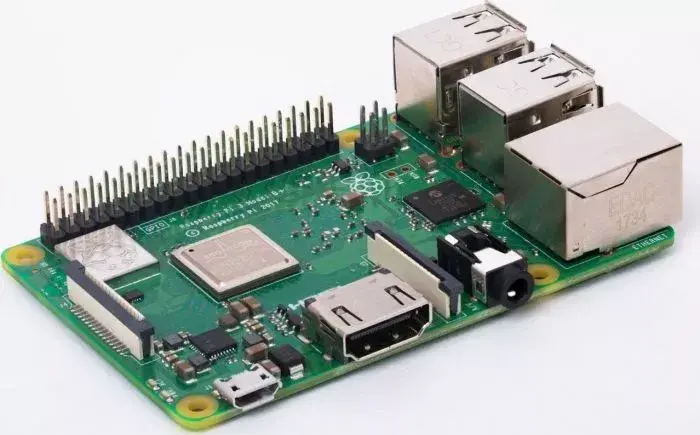
System on Module
-
Bluetooth version:
The type of bluetooth technology in the product e.g. Bluetooth Smart (v4.0).
-
4.2
-
Ethernet LAN:
An Ethernet LAN (Local Area Network) interface is present, for a wired conection via a cable.
-
Yes
-
Maximum internal memory:
The maximum internal memory which is available in the product.
-
1 GB
-
Bluetooth:
Bluetooth is a low-power radio technology developed to replace the cables and wires currently used to link or connect electronic devices such as personal computers, printers, and a wide variety of handheld devices including mobile phones. Because it uses radio-wave connectivity, a Bluetooth-enabled device has a constant, established connection to whatever browser it uses. This saves the user the trouble of logging on to check for emails or news updates, for example.
-
Yes
-
Wi-Fi:
Popular technology that allows an electronic device to exchange data or connect to the internet wirelessly using radio waves.
-
Yes
-
HDMI ports quantity:
The number of sockets (ports) for HDMI connections. HDMI (High-Definition Multimedia Interface) is a compact audio/video interface for transferring uncompressed video data and compressed/uncompressed digital audio data from a HDMI-compliant device ("the source device") to a compatible computer monitor, video projector, digital television, or digital audio device. HDMI is a digital replacement for existing analog video standards.
-
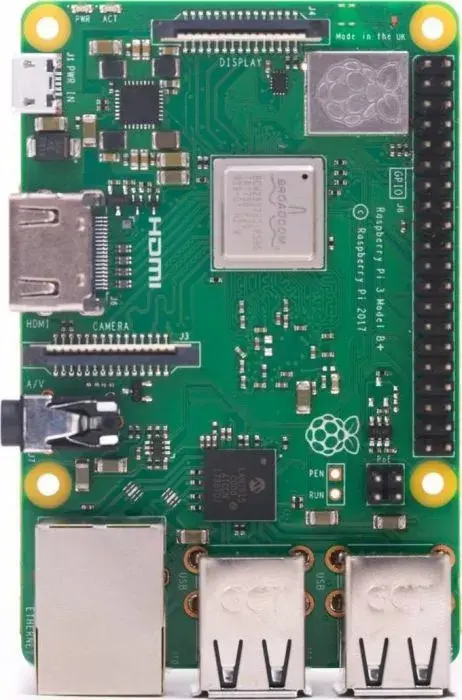
1
-
64-bit computing:
The use of processors that have datapath widths, integer size, and memory addresses widths of 64 bits (eight octets). In 2003 64-bit CPUs were introduced to the (previously 32-bit) mainstream personal computer arena in the form of the x86-64 and 64-bit PowerPC processor architectures and in 2012 even into the ARM architecture targeting smartphones and tablet computers, first sold on September 20, 2013 in the iPhone 5S powered by the ARMv8-A Apple A7 SoC.
-
Yes
-
Ethernet interface type:
-
Gigabit Ethernet
-
USB version:
Universal Serial Bus (USB) is an industry standard developed in the mid-1990s that defines the interface used for connection, communication and power supply between computers and electronic devices. Every new version - for example 1.1, 2.0, 3.0 - is much faster than the previous one.
-
2.0
-
DC input voltage:
-
5
-
Audio port type:
-
3.5mm
-
Headphone out:
The socket for connecting headphones to the device.
-
Yes
-
USB ports quantity:
-
4
-
MPI CSI interface:
-
Yes
-
MPI DSI interface:
-
Yes
-
Bluetooth Low Energy (BLE):
-
Yes