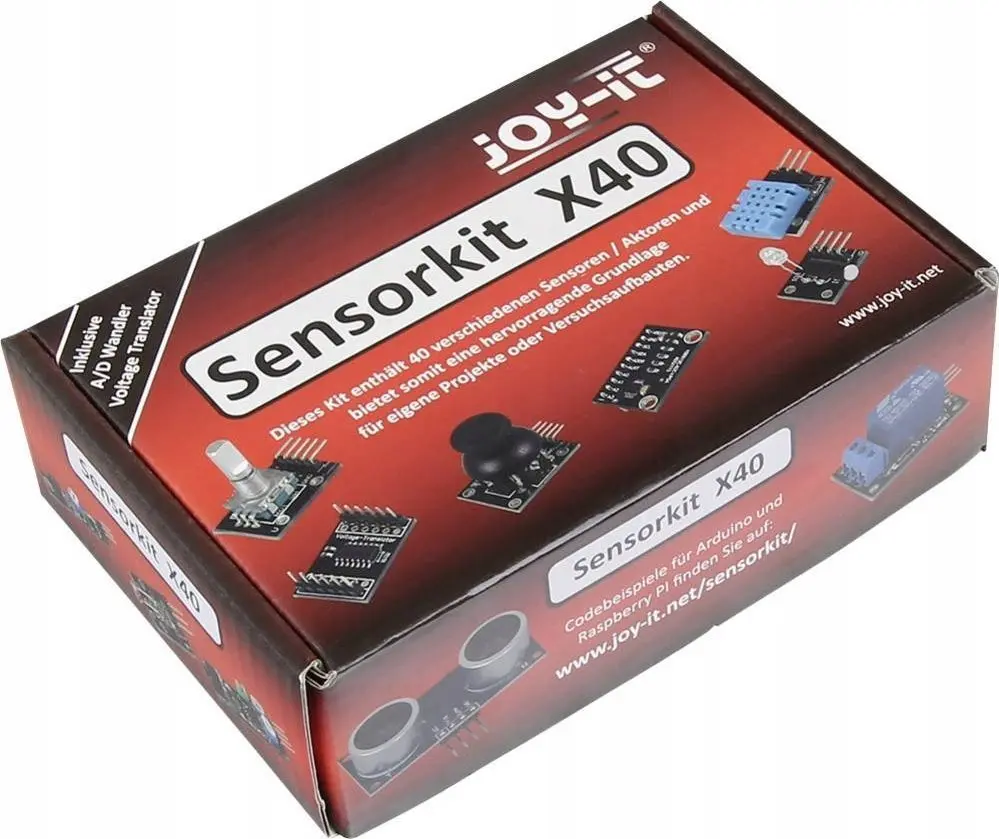
The Raspberry Sensor Kit X40 Raspberry SEN-KIT02 is compared against several specialized Raspberry ecosystem components and boards: two variations of the Camera Module 3, the Raspberry Pi 3 Model B+ and Raspberry Pi 4 Model B (2GB) single-board computers, and the IQaudio DAC+ sound card. All these products belong to the category of electronics and hardware experimentation tools, but they serve entirely different practical purposes. While the Raspberry Sensor Kit X40 focuses on electronics learning, prototyping, and building interactive circuits with sensors, the alternative options are designed for video capture, general computing, or audio enhancement.
⚙️ Below is a comparison of technical characteristics and product purposes, including device types, core capabilities, intended use cases, and the practical significance of the differences.
| Specification | Raspberry Sensor Kit X40 | Camera Module 3 | Raspberry Pi 3 B+ | Camera Module 3 Multicolour | Raspberry Pi IQaudio DAC+ | Raspberry Pi 4 Model B (2GB) | Practical significance |
|---|
| Device type | Sensor kit for electronics | High-resolution camera module | Single-board computer | Color camera module | Sound card / audio board | Single-board computer | The products perform completely different tasks and complement base boards rather than replacing each other. |
| Main purpose | Prototyping, educational projects, interactive circuits | High-quality video capture (1920x1080 at 120fps), robotics | IoT projects, media centers, embedded computing | High-frame-rate video, computer vision, robotics | High-fidelity digital-to-analog audio conversion | Programming, IoT, desktop computing | The choice depends on the specific engineering goal: sensors for measurements, cameras for vision, boards for computing, audio for sound. |
| Key features | Essential components and modules included | Compact dimensions (24x25x11.5 mm), high frame rate | 1.4 GHz processor, 1 GB RAM, Wi-Fi 5, Bluetooth | Compact color module, 1920x1080 @120fps | Advanced audio processing and clear sound output | 1.5 GHz processor, 2 GB RAM, Gigabit Ethernet | Each product fulfills a specialized need within hardware projects. |
◎ The table below evaluates how well each product fits different usage scenarios and buyer profiles to help you choose the right option.
| Use case | Recommended product | Why |
|---|
| Learning electronics and building interactive circuits with sensors | Raspberry Sensor Kit X40 Raspberry SEN-KIT02 | Provides a comprehensive assortment of components and modules for practical experiments and prototyping. |
| Building video surveillance, robotics, or computer vision systems | Camera Module 3 or Camera Module 3 Multicolour | Delivers high-resolution video capture and high frame rates suitable for visual projects. |
| Setting up media centers, home automation, and compact computing | Raspberry Pi 3 Model B+ | Offers a balanced processor, memory, and wireless connectivity for standalone computing tasks. |
| Creating high-fidelity DIY audio players and streaming devices | Raspberry Raspberry Pi IQaudio DAC+ | A specialized audio card that significantly enhances sound clarity and digital-to-analog conversion. |
| Full programming, IoT development, and standard desktop tasks | Raspberry Pi 4 Model B development board BCM2711 1.5 MHz 2GB LPDDR4 RAM | Provides a faster processor, larger RAM capacity, and wired Gigabit networking for heavier workloads. |
The Raspberry Sensor Kit X40 Raspberry SEN-KIT02 is the ideal choice if your goal is to learn electronics, build physical prototypes, and work with hardware sensors. Unlike computing boards, cameras, or audio modules, this comprehensive kit provides essential components for interactive hardware experiments, whereas the alternatives address entirely different multimedia, imaging, and processing requirements.