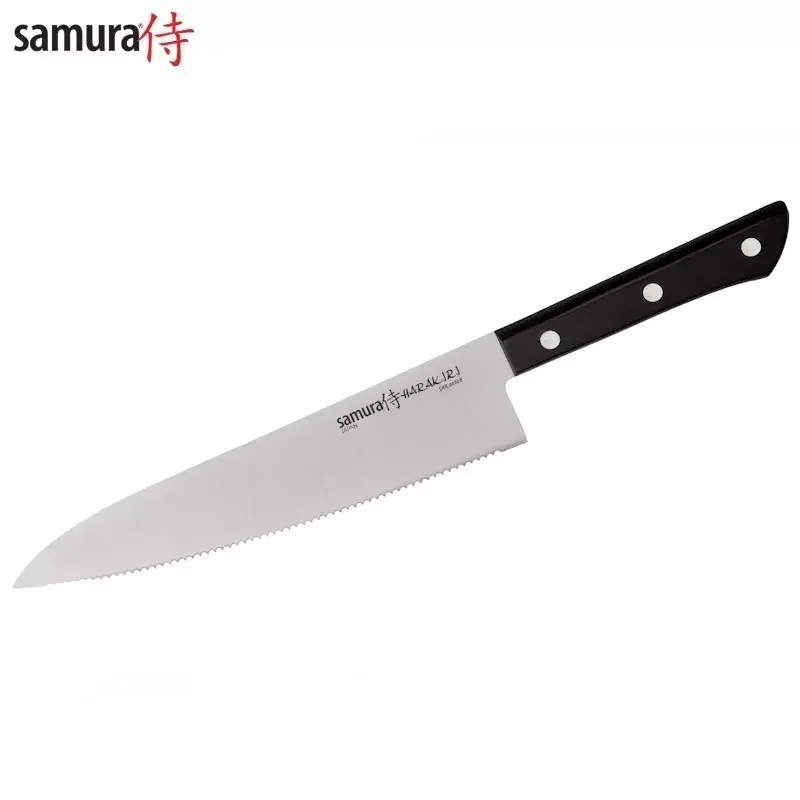
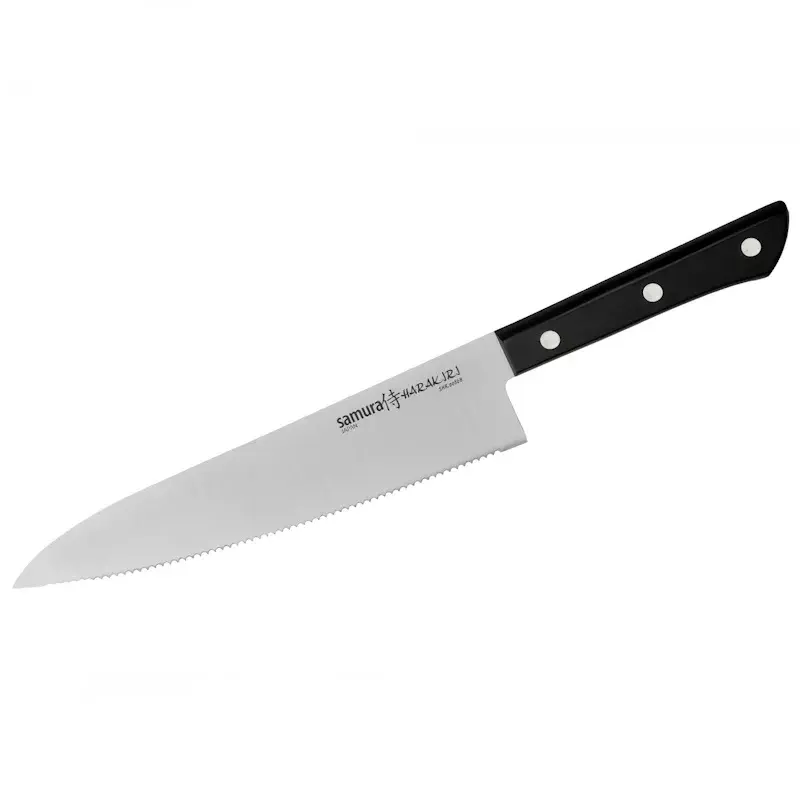
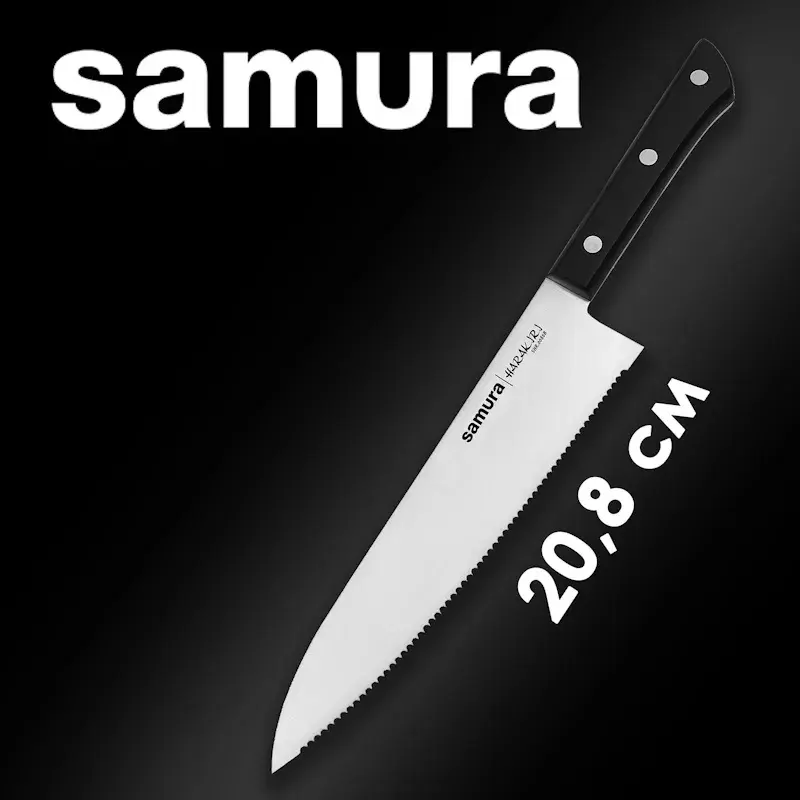
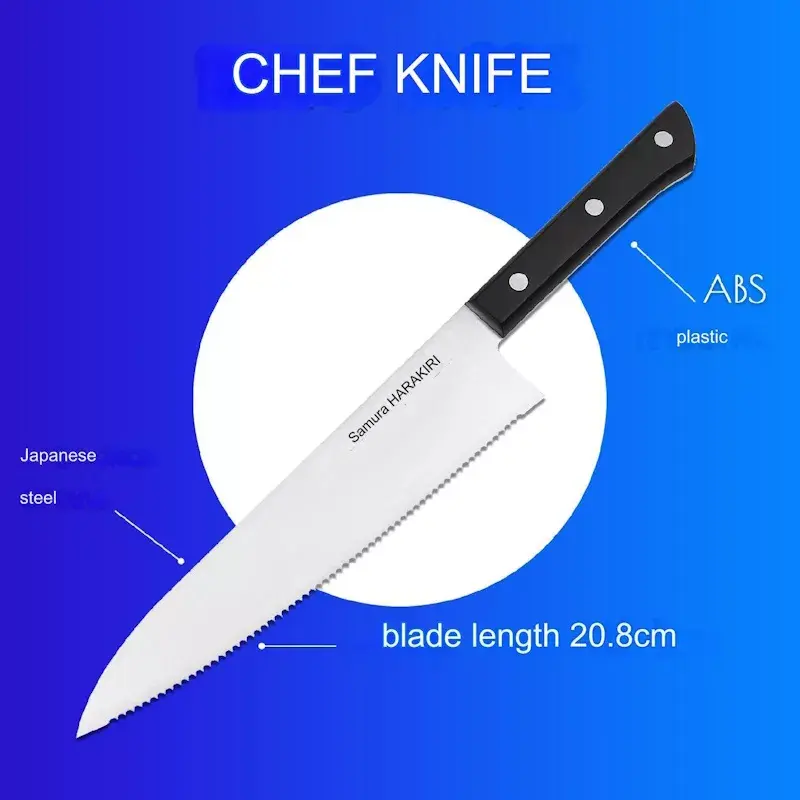
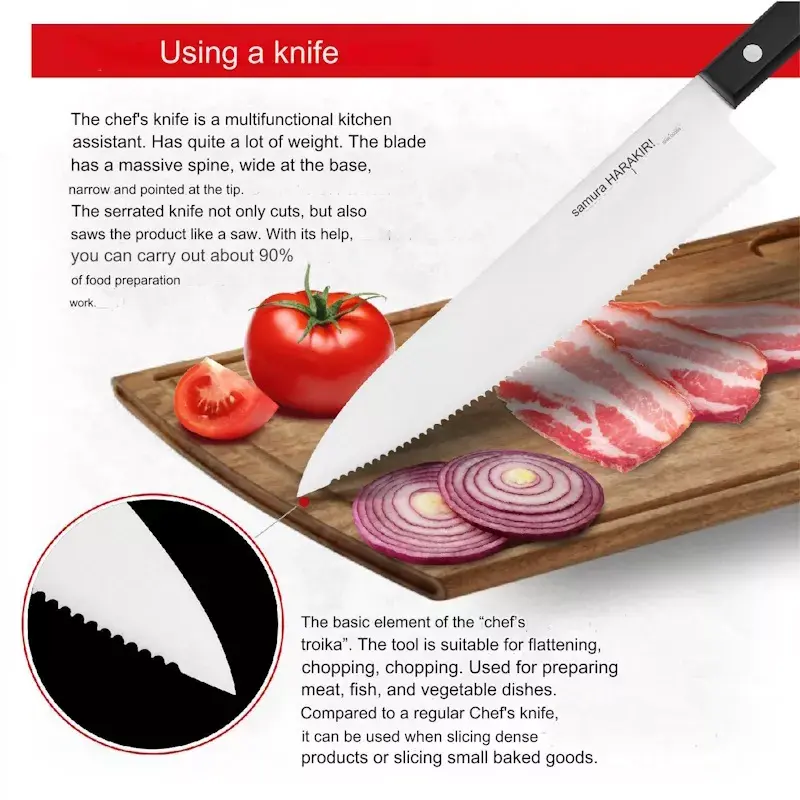
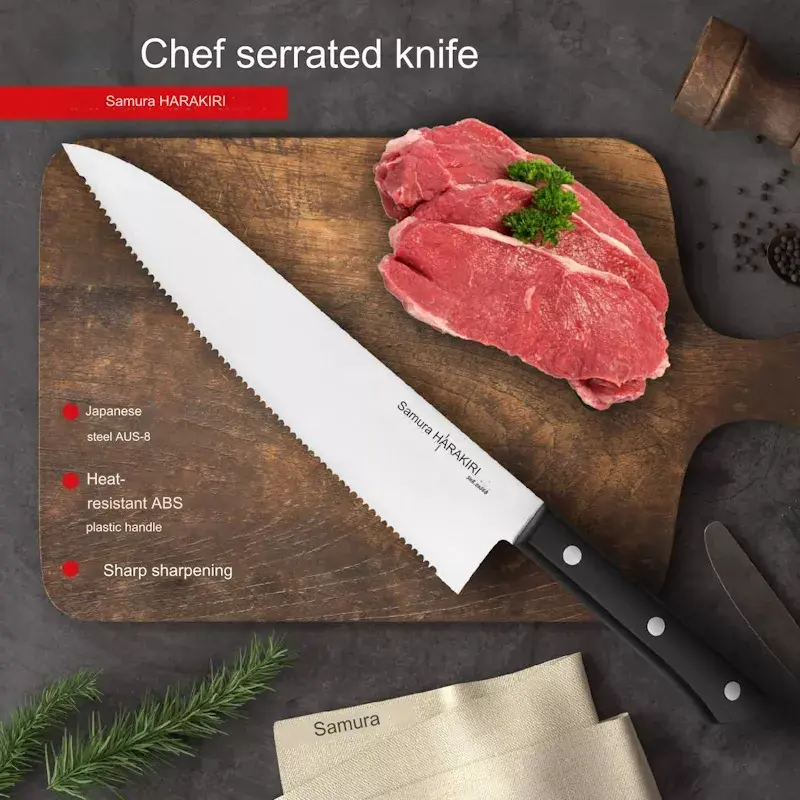
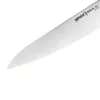
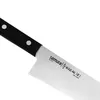
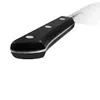
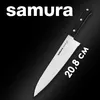
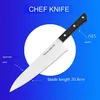
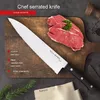
In this comparison, the main kitchen knife Samura Harakiri SHR-0086B is compared against several alternative knives from the same brand: the universal paring knife Samura Harakiri SHR-0011AW, the universal kitchen knife Samura Harakiri SHR-0023AW, and the Butcher series knives Samura Butcher SBU-0085, Samura Butcher SBU-0084, and Samura Butcher SBU-0087. All compared products share the use of high-quality Japanese AUS-8 steel with a hardness rating of 58 HRC, ensuring great durability and edge retention. The main differences lie in blade length, shape, and intended application: the Samura Harakiri SHR-0086B features a 208 mm serrated blade for universal slicing tasks, whereas the alternatives offer straight smooth blades of various lengths ranging from compact paring knives to large chef's knives.
⚙️ Comparison of specifications and design features between Samura Harakiri SHR-0086B and the alternative knives Samura Harakiri SHR-0011AW, Samura Harakiri SHR-0023AW, Samura Butcher SBU-0085, Samura Butcher SBU-0084, and Samura Butcher SBU-0087.
| Parameter | Samura Harakiri SHR-0086B | Samura Harakiri SHR-0011AW | Samura Harakiri SHR-0023AW | Samura Butcher SBU-0085 | Samura Butcher SBU-0084 | Samura Butcher SBU-0087 | Practical conclusion |
|---|
| Steel type | AUS-8 Japanese steel | AUS-8 Japanese steel | AUS-8 Japanese steel | AUS-8 Japanese steel | AUS-8 Japanese steel | AUS-8 Japanese steel | All models deliver an equally high level of blade durability and edge longevity. |
| Blade hardness | 58 HRC | 58 HRC | 58 HRC | 58 HRC | 58 HRC | 58 HRC | Consistent hardness ensures reliable cutting performance and easy sharpening across the entire product line. |
| Blade length | 208 mm | 99 mm | 150 mm | 219 mm | 150 mm | 240 mm | Different blade lengths dictate the practical scope: from delicate peeling tasks to heavy-duty food preparation. |
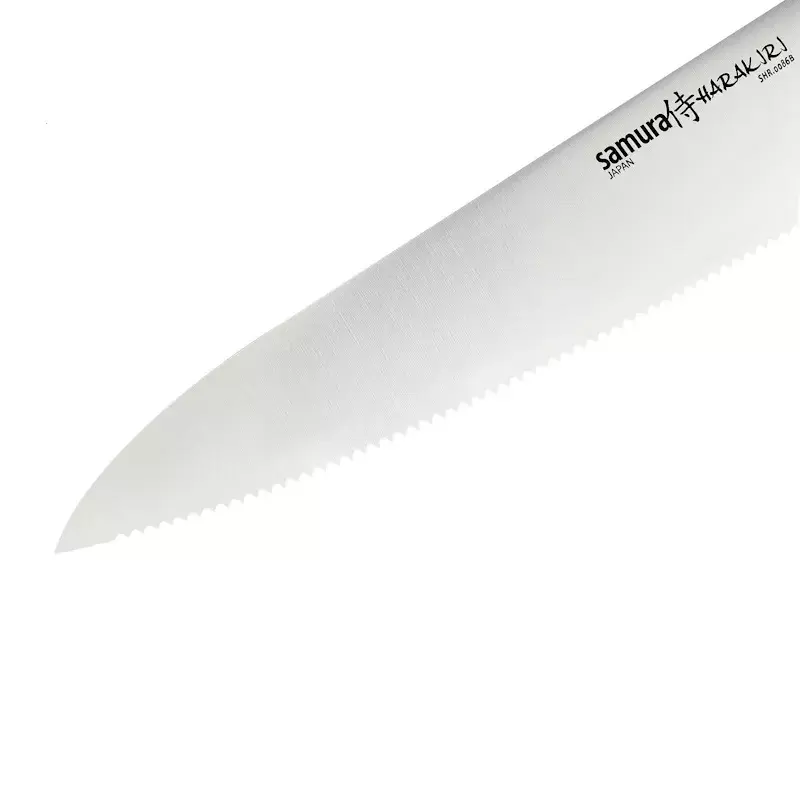
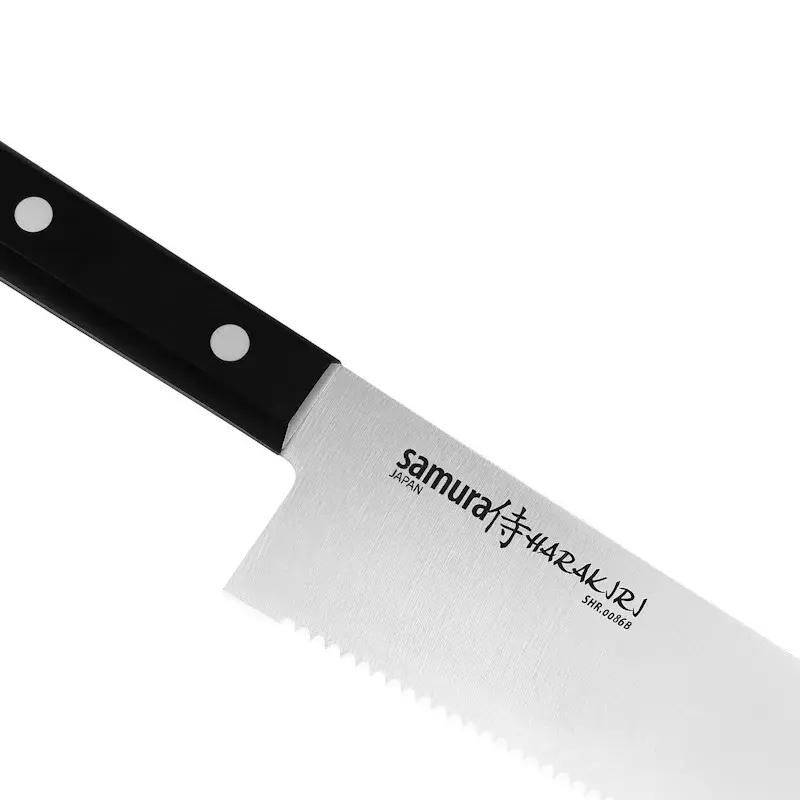
| Blade type | Serrated | Smooth | Smooth | Smooth | Smooth | Smooth | The serrated edge of the Samura Harakiri SHR-0086B excels at cutting through tough crusts and soft interiors, while alternatives feature a standard straight cut. |
| Series and purpose | Harakiri, serrated chef's knife | Harakiri, peeling and small tasks | Harakiri, universal | Butcher, main chef's knife | Butcher, short chef's knife | Butcher, grand chef's knife | Harakiri models feature acrylic handles for daily home use, whereas the Butcher series is geared towards intensive professional tasks. |
◎ Comparison of use cases and suitability scenarios to help you choose the most appropriate product for your culinary needs.
| Use case | Recommended product | Why |
|---|
| Slicing bread, tomatoes, and foods with tough crusts and soft interiors | Samura Harakiri SHR-0086B | The 208 mm serrated blade slices cleanly through challenging textures without squishing them. |
| Peeling vegetables, fruits, and performing detailed precision work | Samura Harakiri SHR-0011AW | The compact 99 mm blade offers maximum control for delicate trimming and peeling tasks. |
| Everyday slicing of various medium-sized ingredients | Samura Harakiri SHR-0023AW | The versatile 150 mm size is convenient for most standard household kitchen tasks. |
| Heavy-duty professional preparation of large ingredients | Samura Butcher SBU-0085 or Samura Butcher SBU-0087 | Extended blade lengths (219–240 mm) and the Butcher series design are optimized for intensive professional workloads. |
The main difference between the Samura Harakiri SHR-0086B and the alternative models is its serrated edge and optimal 208 mm length, making it an excellent choice for slicing bread, pastries, and foods with tough skins or soft interiors. This knife is best suited for home and professional kitchens where a versatile tool for specific textures is required. Choose the Samura Harakiri SHR-0086B if you need a reliable serrated chef's knife, whereas alternative straight-blade models will be more suitable for classic smooth cuts or small-scale food preparation.