
Filters you can trust. Pure water every day.
In cart {{totalProductsCount}} item(s)
Your cart is empty
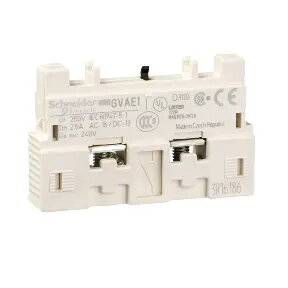
Schneider Electric GVAE1 Auxiliary Contact Block for Motor Circuit Breakers
The Schneider Electric GVAE1 is a front-mounted auxiliary contact block engineered specifically for integration with TeSys GV2 and GV3 motor circuit breakers. This component serves as a critical interface for monitoring the operational status of circuit breakers, providing reliable feedback within industrial electrical panels. By enabling precise signaling, it supports the effective management and automation of motor protection systems, ensuring that operators are promptly informed of the breaker's position during normal operation or fault conditions.
The primary benefit of the GVAE1 auxiliary contact block is its seamless compatibility with the TeSys GV series, allowing for quick and secure front-mounting installation without the need for complex tools. Its robust design ensures consistent electrical performance and long-term reliability in demanding industrial environments. By facilitating accurate status reporting, this accessory enhances the overall safety and diagnostic capabilities of electrical distribution and motor control architectures.
This auxiliary contact block is designed exclusively for use with specific TeSys GV2 and GV3 circuit breakers. It is not compatible with other series of circuit breakers or electrical devices from different manufacturers. Furthermore, it should not be used in applications exceeding its rated electrical and environmental specifications.
To install the GVAE1, ensure that the motor circuit breaker is disconnected from the power supply to prevent accidental activation. The contact block is designed to be snapped onto the front of the compatible TeSys breaker. Align the device with the designated mounting interface on the breaker and press firmly until it clicks into place. Once installed, connect the necessary control wiring to the terminals according to your system's wiring diagram. Always verify the connection and test the signaling function before putting the system back into full operation.
Always perform a functional test of the auxiliary contact after installation to ensure that the signaling accurately reflects the breaker's state. Regularly inspect the wiring connections during routine maintenance to maintain system integrity.
{{highlightedFeature.featureTitle}}:
{{getProductFeatureValueById(product, highlightedFeature.featureId)}}
{{ productComparisonGenerationError }}