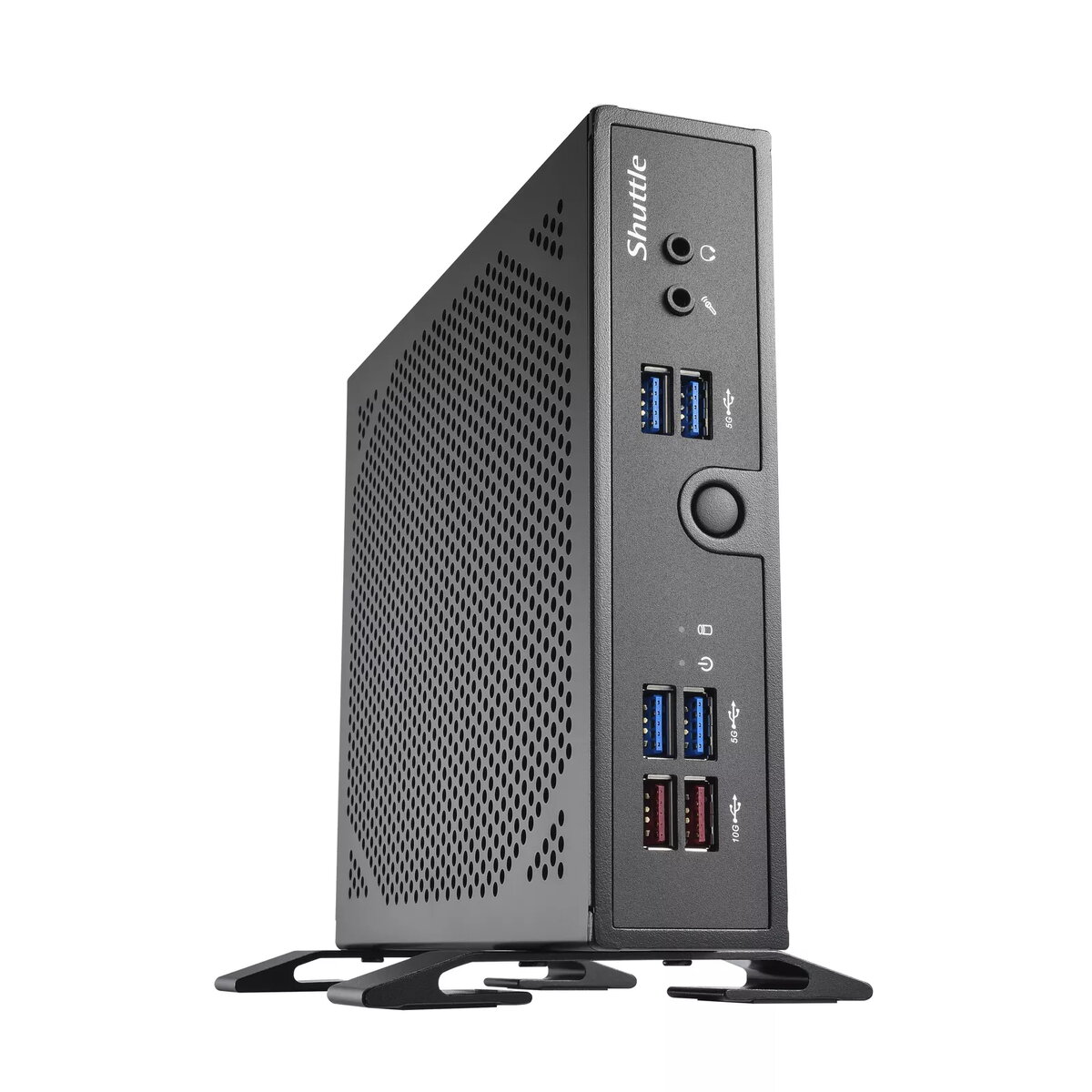
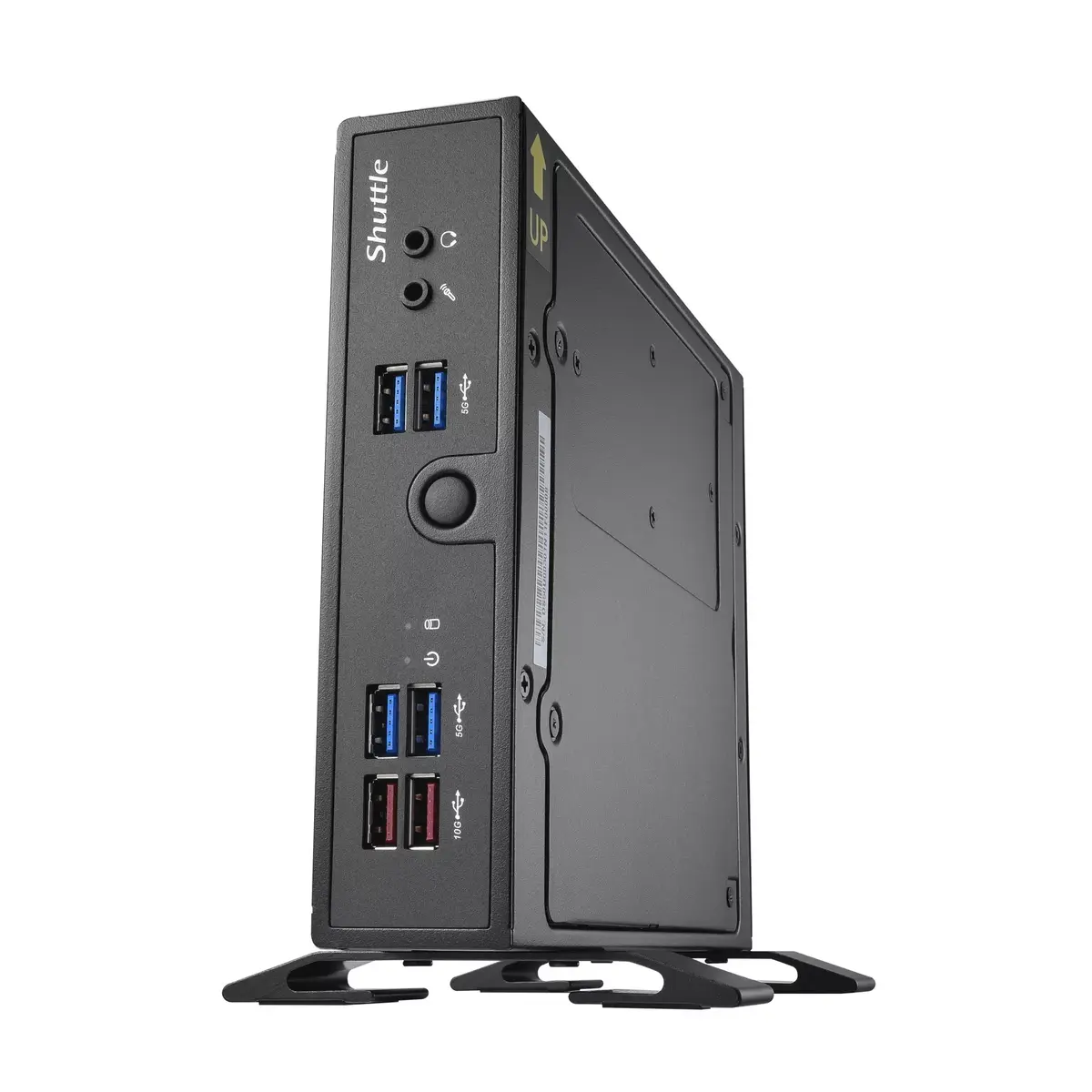
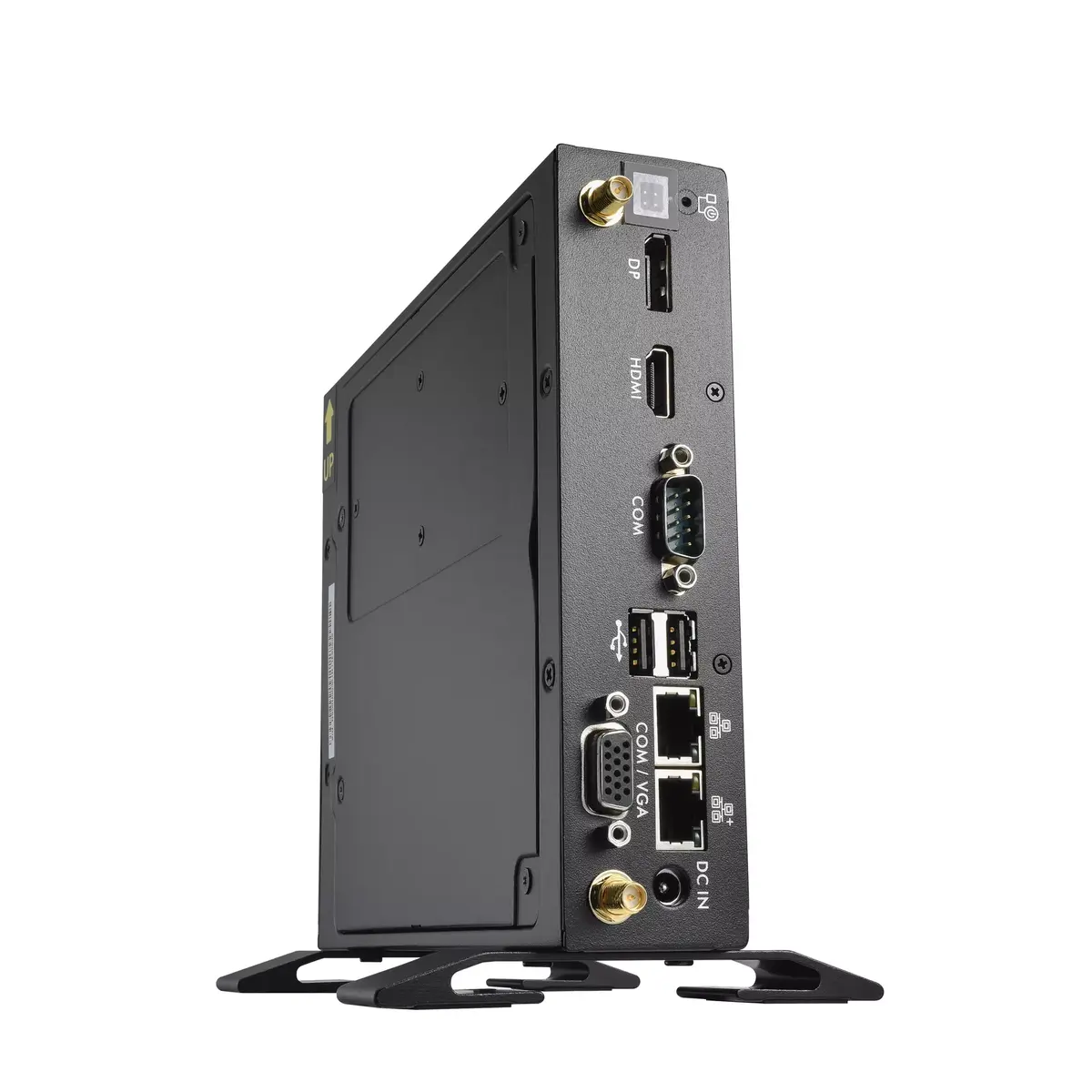
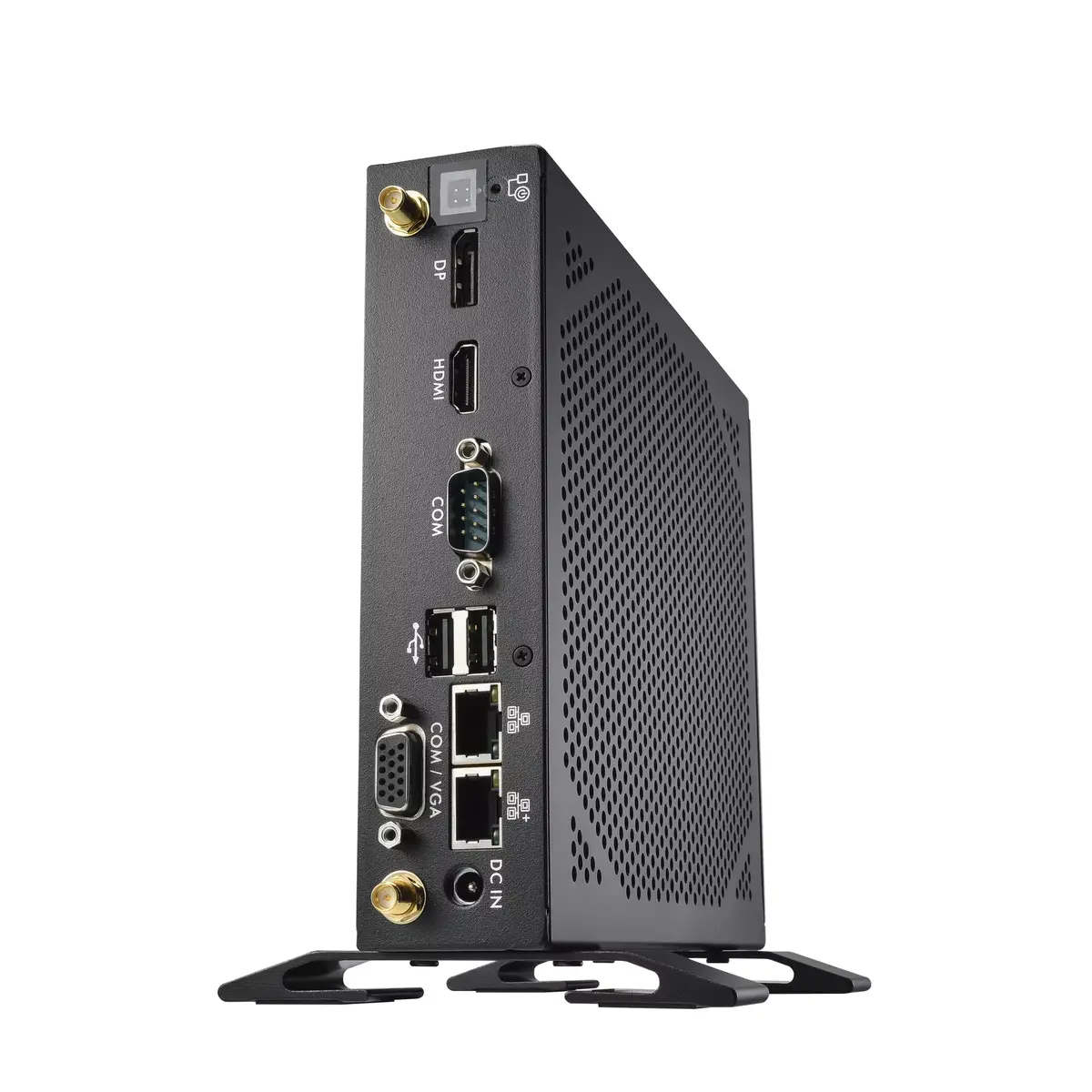
-
Processor model:
The model number for the processor in a computer.
-
i5-1335U
-
Weight:
Weight of the product without packaging (net weight). If possible, the net weight is given including standard accessories and supplies. Please note that sometimes the manufacturer leaves out the weight of accessories and/or supplies.
-
1.6 kg
-
Power supply type:
The type of power supply which this product uses.
-
External AC adapter
-
Number of power supply units:
-
1
-
Operating relative humidity (H-H):
-
10 - 90
-
Chassis type:
The type of rigid framework onto which is the hosuing for device components.
-
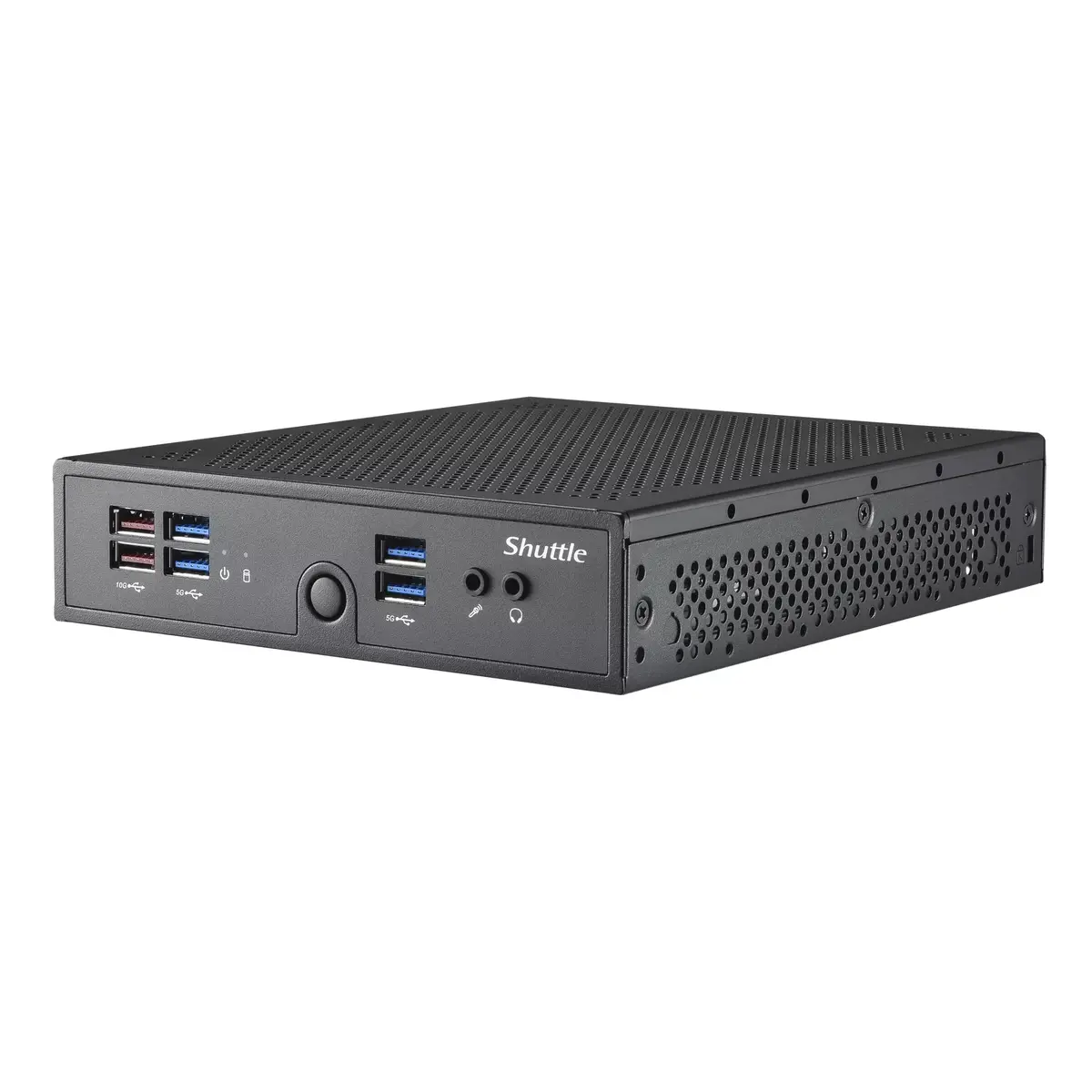
1.3L sized PC
-
Package weight:
Weight of the packaged product.
-
2300 g
-
AC adapter output voltage:
-
19
-
AC adapter output current:
-
1.6 A
-
Processor manufacturer:
The manufacturer that produced the processor.
-
Intel
-
Operating temperature (T-T):
The minimum and maximum temperatures at which the product can be safely operated.
-
0 - 40
-
AC adapter included:
-
Yes
-
Power supply:
The way in which the product is powered e.g. rechargeable battery, mains electricity connected via a plug and cable.
-
90 W
-
Serial ports quantity:
The number of serial ports in a computer or peripheral. A serial port is a serial communication physical interface through which information transfers in or out one bit at a time. The term "serial port" usually identifies hardware more or less compliant to the RS-232 standard, intended to interface with a modem or with a similar communication device. In modern computers and peripherals, serial ports have largely been replaced by USBs and other interfaces.
-
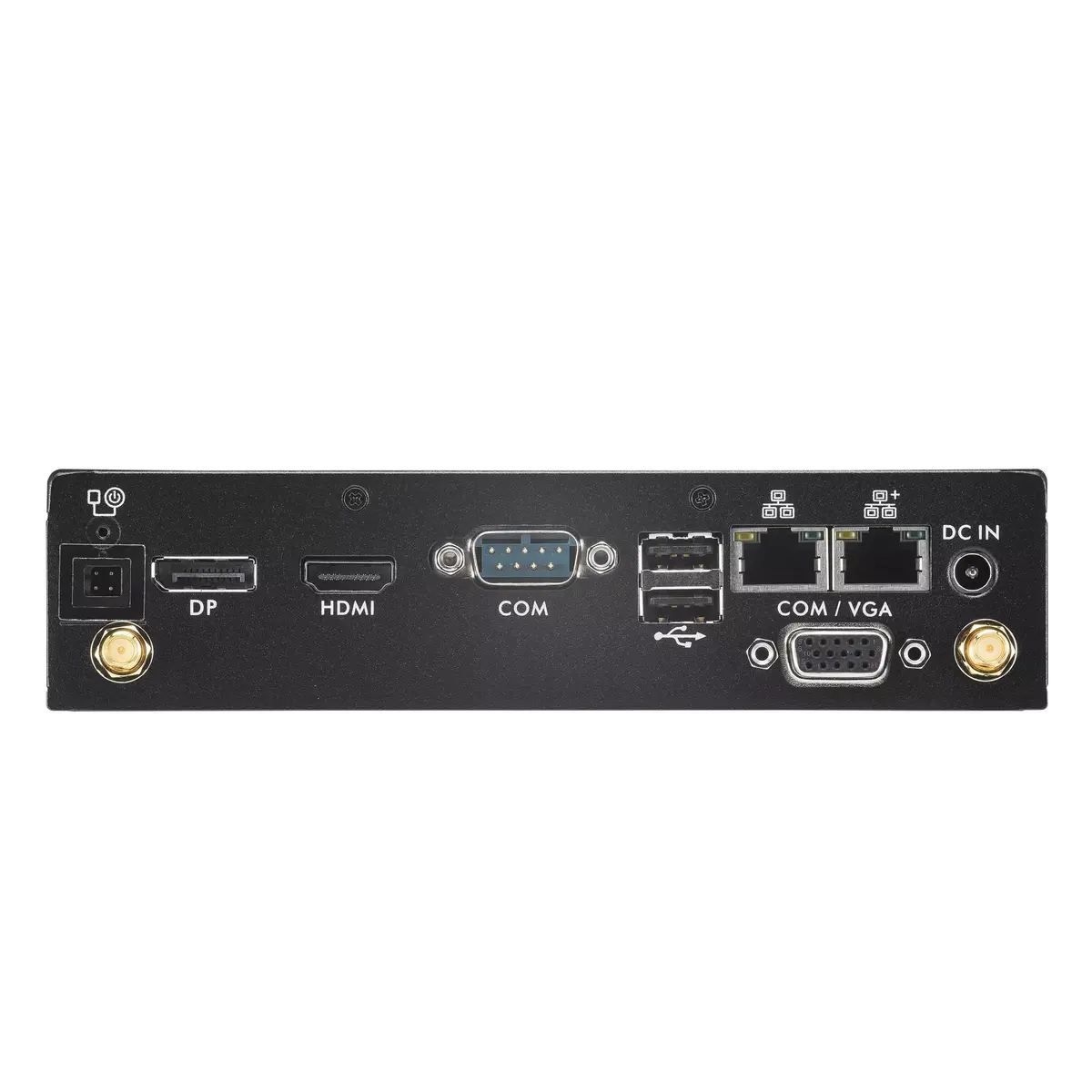
1
-
Ethernet LAN:
An Ethernet LAN (Local Area Network) interface is present, for a wired conection via a cable.
-
Yes
-
Cable lock slot:
Holes on the edge of devices through which a cable lock can be passed, so the device can be locked to a desk etc.
-
Yes
-
Maximum internal memory:
The maximum internal memory which is available in the product.
-
64 GB
-
Height:
The measurement of the product from head to foot or from base to top.
-
39.5 mm
-
LED indicators:
-
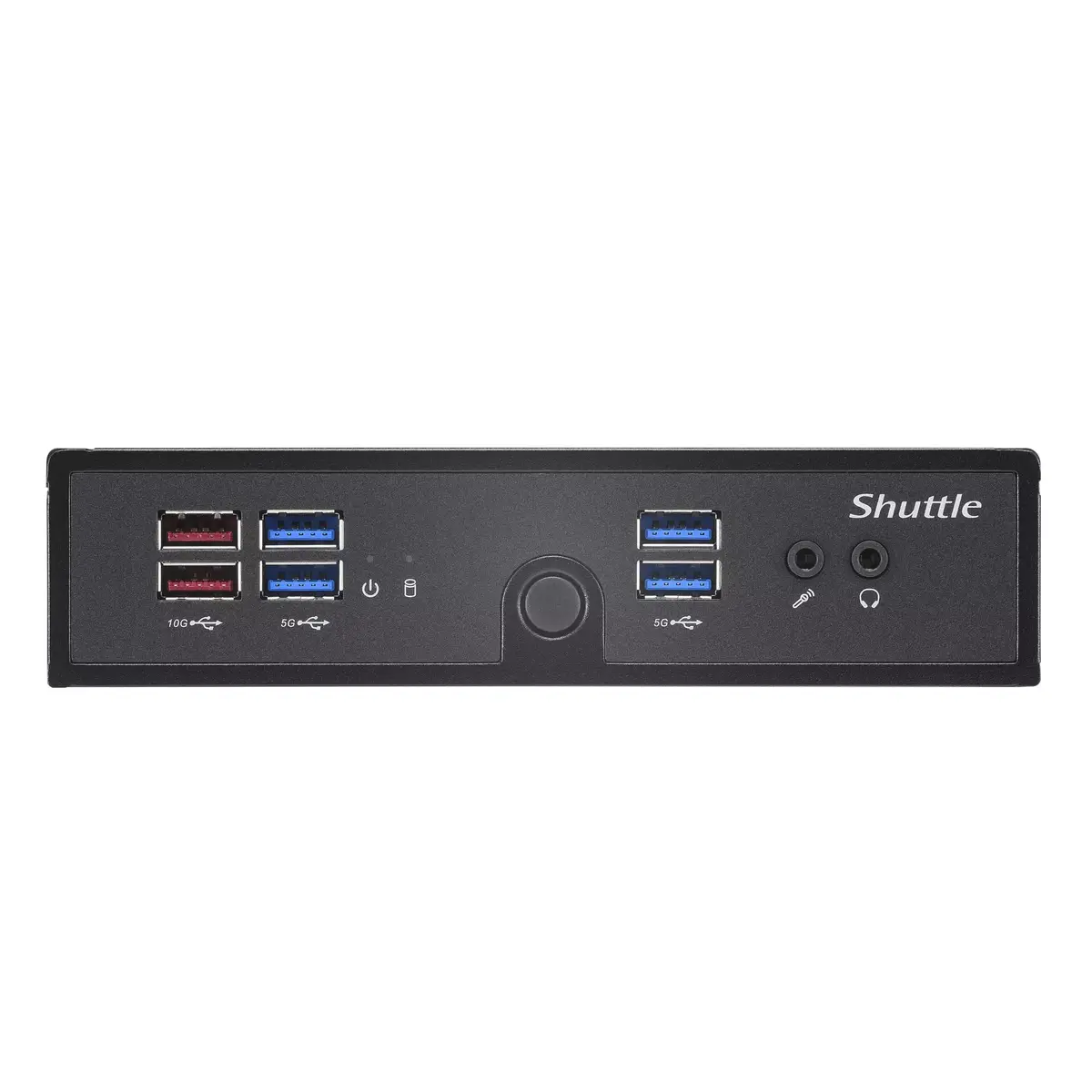
Power, HDD
-
Width:
The measurement or extent of something from side to side.
-
200 mm
-
Depth:
The distance from the front to the back of something.
-
165 mm
-
Product colour:
The colour e.g. red, blue, green, black, white.
-
Black
-
BIOS type:
The BIOS (Basic Input/Output System) initializes and tests system hardware components, and loads a bootloader or an operating system from a mass memory device. The BIOS additionally provides abstraction layer for the hardware, i.e. a consistent way for application programs and operating systems to interact with the keyboard, display, and other input/output devices. There are several types of BIOS, including the motherboard ROM BIOS, video BIOS, drive controller BIOS, network adapter BIOS, and SCSI adapter BIOS.
-
UEFI AMI
-
Processor family:
A family of processors is a group of processors produced by one company over a short period of time e.g. Intel Pentium processors.
-
Intel Core i5
-
USB 2.0 ports quantity:
Number of USB 2.0 ports (connecting interfaces) in the device. USB 2.0 was released in April 2000 (now called "Hi-Speed"), adding higher maximum signaling rate of 480 Mbit/s (effective throughput up to 35 MB/s or 280 Mbit/s), USB 2.0 ports are usually black.
-
2
-
Ethernet LAN (RJ-45) ports:
Number of Ethernet LAN (RJ-45) ports (connecting interfaces) in the device. Ethernet LAN (RJ-45) ports allow a computer to connect to the ethernet.
-
2
-
Headphone outputs:
Number of sockets /ports where headphones are connected.
-
1
-
Microphone in:
The socket where a microphone is connected to the device.
-
Yes
-
DC-in jack:
The socket/plug where the DC electricity supply connects to the device.
-
Yes
-
VGA (D-Sub) ports quantity:
Number of VGA (D-Sub) ports (connecting interfaces) in the device. The VGA (D-Sub) connector is a 15 pin connector between a computer and a monitor. It was first introduced in 1987 by IBM.
-
1
-
Built-in speaker(s):
The device contains speaker(s) to produce sound.
-
No
-
LAN controller:
-
Intel® I219
-
Operating system installed:
Type of operating system on a device e.g. IOS on Apple devices, Android for mobile devices.
-
No
-
Wi-Fi:
Popular technology that allows an electronic device to exchange data or connect to the internet wirelessly using radio waves.
-
No
-
HDMI ports quantity:
The number of sockets (ports) for HDMI connections. HDMI (High-Definition Multimedia Interface) is a compact audio/video interface for transferring uncompressed video data and compressed/uncompressed digital audio data from a HDMI-compliant device ("the source device") to a compatible computer monitor, video projector, digital television, or digital audio device. HDMI is a digital replacement for existing analog video standards.
-
1
-
Trusted Platform Module (TPM):
-
Yes
-
Quick start guide:
Instructions, either online, as a computer program or in paper form, to allow you to set up and start using the product quickly.
-
Yes
-
Power cord included:
-
Yes
-
Panel mounting interface:
The product can be used wih VESA mounting interfaces.
-
100 x 100, 75 x 75
-
Housing material:
What the casing of the product is made of.
-
Steel
-
HDMI version:
-
2.0b
-
Processor cores:
The number of central processing units ('cores') in a processor. Some processors have 1 core, others have 2 (e.g. Intel Core Duo) or more (e.g. the Intel Xeon E7-2850 has 10 cores).
-
10
-
Memory voltage:
The voltage (V) of the memory in the device.
-
1.1
-
On/off switch:
The button which is pressed to switch the device on or off.
-
Yes
-
Cooling type:
The method used to cool the device or to cool the air around the device.
-
Passive
-
DisplayPorts quantity:
Number of DisplayPorts. A DisplayPort is a digital display interface developed by the Video Electronics Standards Association (VESA). The interface is primarily used to connect a video source to a display device such as a computer monitor, though it can also be used to carry audio, USB, and other forms of data.
-
1
-
Processor threads:
-
12
-
Supported memory clock speeds:
Memory clock speed is the time it takes for a computer to complete basic operations. It refers to the computer's processing speed and is measured in hertz. It is however not such a reliable measure of a computer's speed as it doesn't take into account other factors like RAM and cache size.
-
5200
-
Supported memory types:
Types of memory which can be used with the product.
-
DDR5-SDRAM
-
Graphics card family:
-
Intel
-
Built-in processor:
Whether or not a processor is built into the device.
-
Yes
-
Memory channels:
-
Dual-channel
-
Number of processors supported:
The quantity of processors which can be used by the product.
-
1
-
Processor boost frequency:
The turbo boost is an automatic, managed accelleration of the processor when one of the cores is overloaded.
-
4.6 GHz
-
Windows operating systems supported:
Windows vesions wich can be used with the device.
-
Windows 10, Windows 11
-
Linux operating systems supported:
8 RT. Linux (9.4, 9.5), Red Hat Enterprise Linux 5.0 (supported with a pre-built package); SUSE Linux (10.3, 11.0, 11, 11.1, 11.2), Fedora (9, 9.0, 10, 10.0, 11.0, 11, 12, 12.0), Ubuntu (8.04, 8.04.1, 8.04.2, 8.10, 9.04, 9.10, 10.04), Debian (5.0, 5.0.1, 5.0.2, 5.0.3)
-
Yes
-
AC input frequency:
-
50/60
-
AC input voltage:
The voltage of the AC electricity that is inputted into the product.
-
100 - 240
-
Storage drive interface:
Where the storage device links with other parts of the product, or an external device.
-
Serial ATA III, PCI Express
-
Number of storage drives supported:
How many storage drives can be fit into the product at once.
-
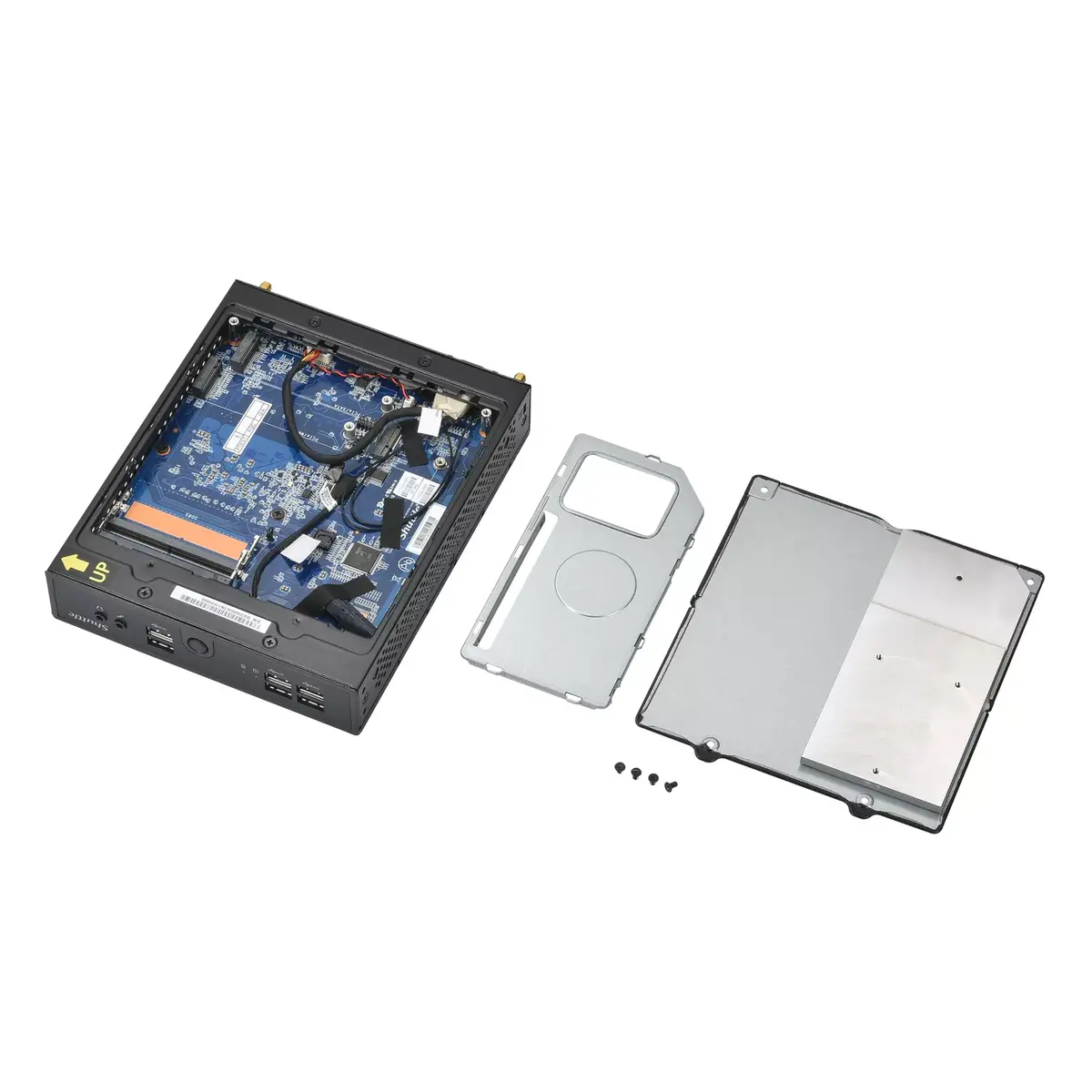
3
-
Storage drive sizes supported:
The sizes of storage drives that can be used with the product.
-
M.2, 2.5
-
On-board graphics card:
Graphics hardware which is built into the motherboard or CPU, as opposed to a separate graphics adapter (video card). On-board graphics uses CPU and RAM for graphics processing.
-
Yes
-
Processor cache:
-
12 MB
-
Memory slots type:
A memory slot, also known as a memory socket or RAM slot, is what allows computer memory (RAM) to be inserted into the computer. Depending on the motherboard, there will usually be 2 to 4 memory slots (sometimes more on high-end motherboards). The most common types of RAM are SDRAM and DDR for desktop computers and SODIMM for laptop computers, each having various types and speeds.
-
SO-DIMM
-
Trusted Platform Module (TPM) version:
-
2.0
-
DisplayPort version:
-
1.4
-
Thermal Design Power (TDP):
-
15 W
-
Product type:
The sub-category of the product.
-
Mini PC barebone
-
Supported storage drive types:
The type of storage drives the device is compatible with.
-
HDD & SSD
-
VESA mounting:
-
Yes
-
Number of memory slots:
-
2
-
ECC supported by processor:
-
No
-
USB 3.2 Gen 1 (3.1 Gen 1) Type-A ports quantity:
-
4
-
USB 3.2 Gen 2 (3.1 Gen 2) Type-A ports quantity:
-
2
-
Harmonized System (HS) code:
-
84733080
-
Audio chip:
-
Realtek ALC888S
-
NVMe:
NVM Express (NVMe) or Non-Volatile Memory Host Controller Interface Specification (NVMHCIS) is an open logical device interface specification for accessing non-volatile storage media attached via a PCI Express (PCIe) bus. NVM Express, as a logical device interface, has been designed to capitalize on the low latency and internal parallelism of solid-state storage devices.
-
Yes
-
Sustainability compliance:
-
Yes
-
Sustainability certificates:
-
cTUVus, VCCI, RoHS, RCM, Federal Communications Commission (FCC), ErP, ENERGY STAR, CE, CB, BSMI
-
Efficient cores:
-
8
-
Performance cores:
-
2
-
Efficient-core boost frequency:
-
3.4 GHz
-
Performance-core boost frequency:
-
4.6 GHz