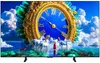
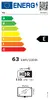
-
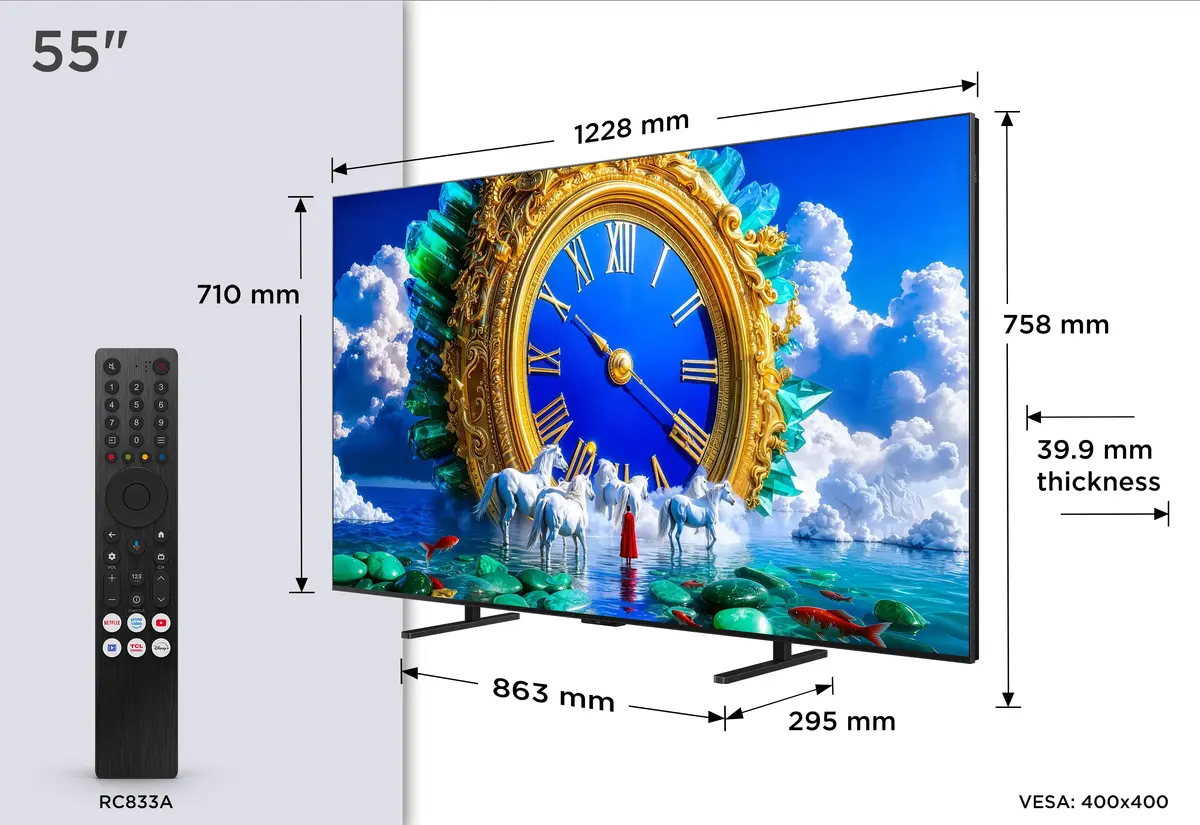
Display diagonal (metric):
This is the size of the display screen, measured diagonally.
-
140 cm
-
Viewing angle, horizontal:
Maximum horizontal angle at which a display can be viewed with acceptable visual performance.
-
178 °
-
Viewing angle, vertical:
Maximum vertical angle at which a display can be viewed with acceptable visual performance.
-
178 °
-
Display brightness:
Brightness is the amount of radiating light emitted from the screen. The brightness rating is measured in candellas per square meter, commonly known as 'nits'.
-
600 cd/m²
-
Display number of colours:
-
1.07 billion colours
-
Response time:
The response time is the time difference between the moment that a source (for example a video card) sends a signal and that equipment (for example a monitor) receives or display the signal. (Used abbreviations: R/F = Rise and Fall.)
-
5.7 ms
-
Dynamic contrast ratio marketing name:
-
Mega Contrast
-
Display refresh rates supported:
-
48 Hz, 120 Hz, 144 Hz, 288 Hz
-
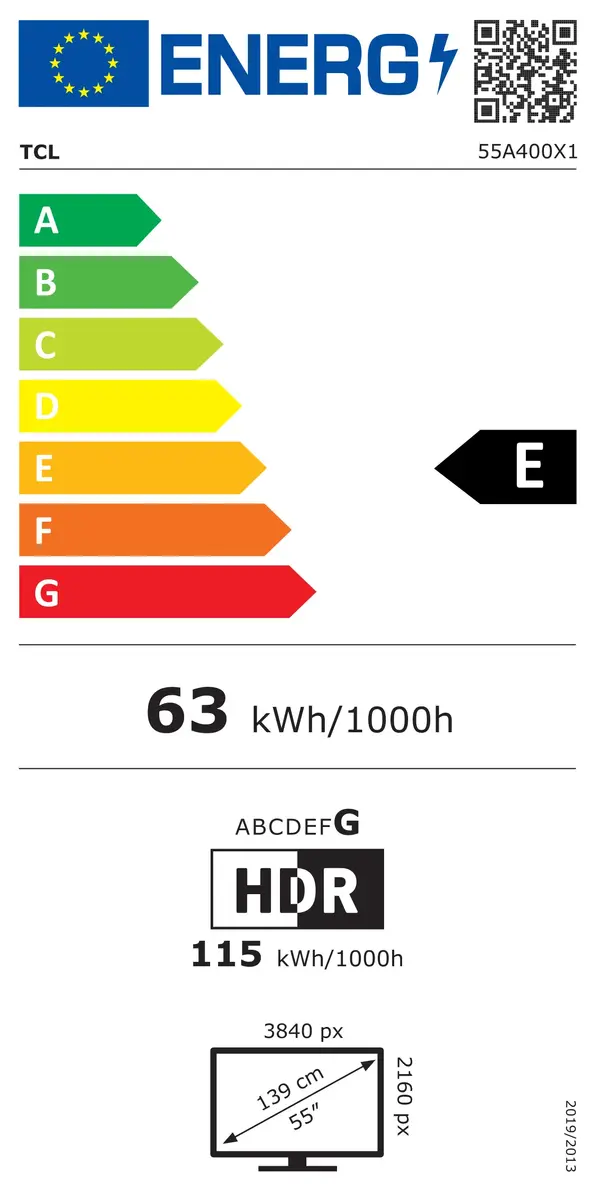
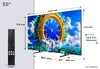
Display diagonal:
Size of the display for this product, measured diagonally, usually in inches.
-
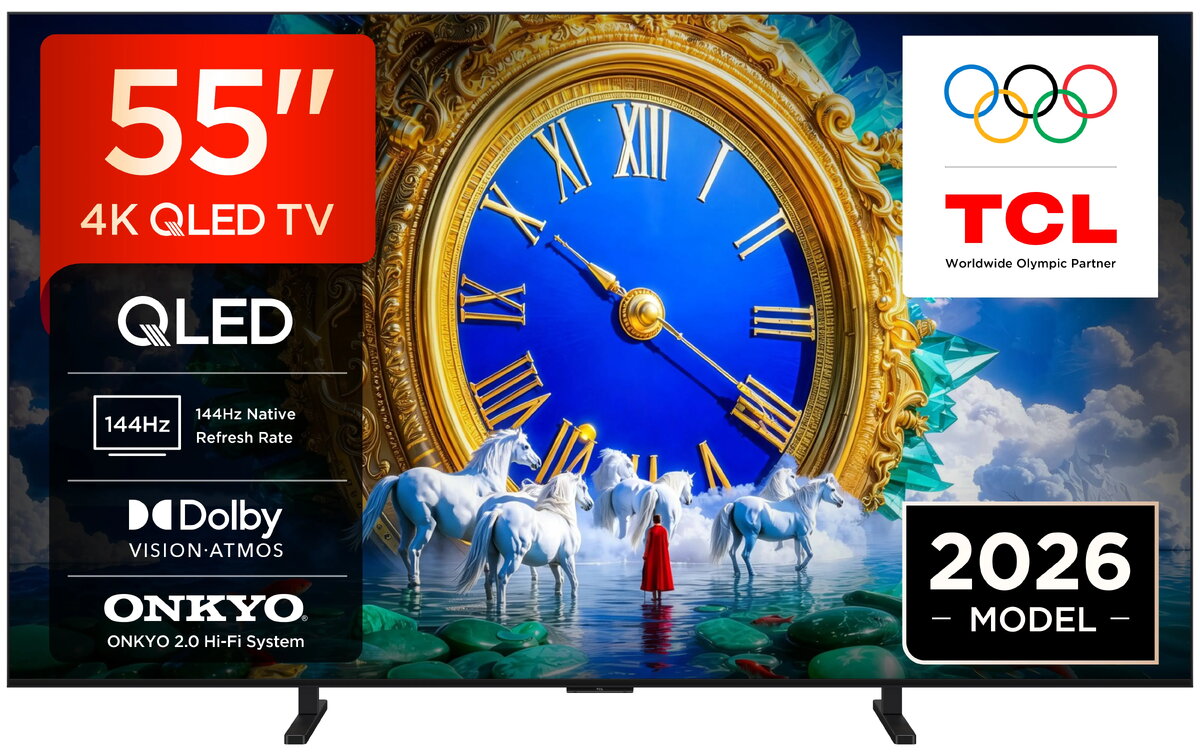
55 "
-
Screen shape:
-
Flat
-
Display technology:
The technology used in the display e.g. plasma, LED.
-
QLED
-
Display resolution:
The number of distinct pixels in each dimension that can be displayed. It is usually quoted as width × height, with the units in pixels: for example, "1024 × 768" means the width is 1024 pixels and the height is 768 pixels. The higher the number of pixels, the sharper the image.
-
3840 x 2160
-
Motion interpolation technology:
Describes which motion interpolation technology device uses e.g. BLS (Back Light Scanning), PPR (Picture Perfection Rate), PMR (Perfect Motion Rate), TruMotion.
-
PPI (Picture Performance Index) 4500
-
Native refresh rate:
-
144 Hz
-
Progressive scan:
Also referred to as noninterlaced scanning, this is a way of displaying, storing, or transmitting moving images in which all the lines of each frame are drawn in sequence. This is in contrast to interlaced video used in traditional analog television systems where only the odd lines, then the even lines of each frame (each image called a video field) are drawn alternately.Progressive scan is used for DVDs and HDTV (high defintion television).
-
Yes
-
Supported graphics resolutions:
The graphic resolutions that can be displayed by the device. The graphic resolution describes the width and height dimensions of a display, such as a computer monitor, measured in pixels.
-
3840 x 2160
-
Supported video modes:
The video modes that can be displayed by the device.
-
2160p
-
Screen format adjustments:
-
4:3, 16:9, Zoom
-
LED backlighting type:
Backlighting is the illumination of a screen e.g. LCD (liquid crystal display). There are several types of backlighting with LEDs, e.g. full array, edge lit.
-
Direct-LED
-
LED backlight:
A backlight is a form of illumination used in liquid crystal displays (LCDs). One type of backlight is made by LEDs, which can be either white or RGB (red green blue). White LEDs are used most often in notebooks and desktop screens, and in virtually all mobile LCD screens. RGB LEDs for backlighting are found in high-end color proofing displays such as HP DreamColor LP2480zx monitor or selected HP EliteBook notebooks, as well as newer consumer grade displays such as Dell's Studio series laptops which have an optional RGB LED display.
-
Yes
-
Native aspect ratio:
The aspect ratio is the ratio of the width of an image to its height. The native aspect ratio is the one which the projector/display is particularly designed for. Images shown in native aspect ratio will utilize the entire resolution of the display and achieve maximum brightness. Images shown in other than native aspect ratio will always have less resolution and less brightness than images shown in native aspect ratio.
-
16:9
-
HD type:
Type of supported High Definition (e.g. Full HD, 4K Ultra HD).
-
4K Ultra HD