
Dreame vacuums for fast and efficient cleaning!
In cart {{totalProductsCount}} item(s)
Your cart is empty
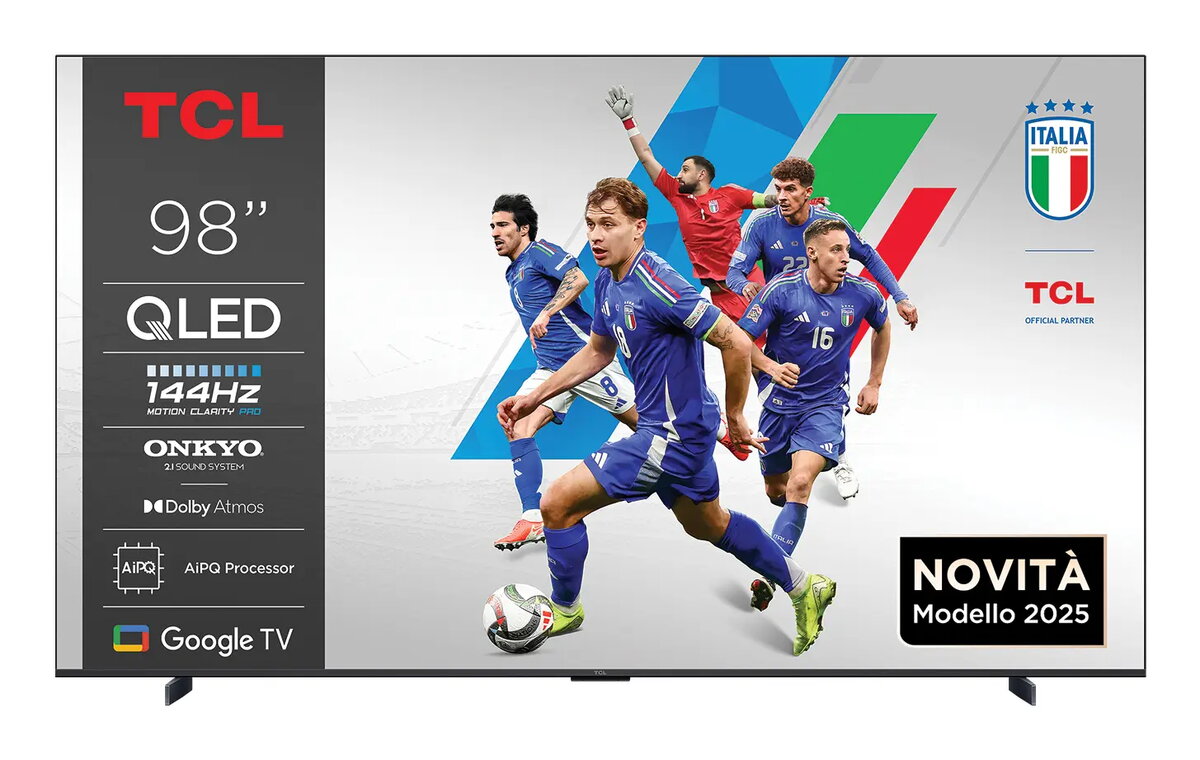
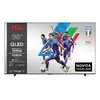
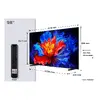
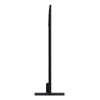
TCL 98" QLED 4K Smart TV P89K — 249 cm, Google TV, 120 Hz (144 Hz max), 3840×2160, 40 W 2.1 audio, HDMI 2.1, Wi‑Fi 5
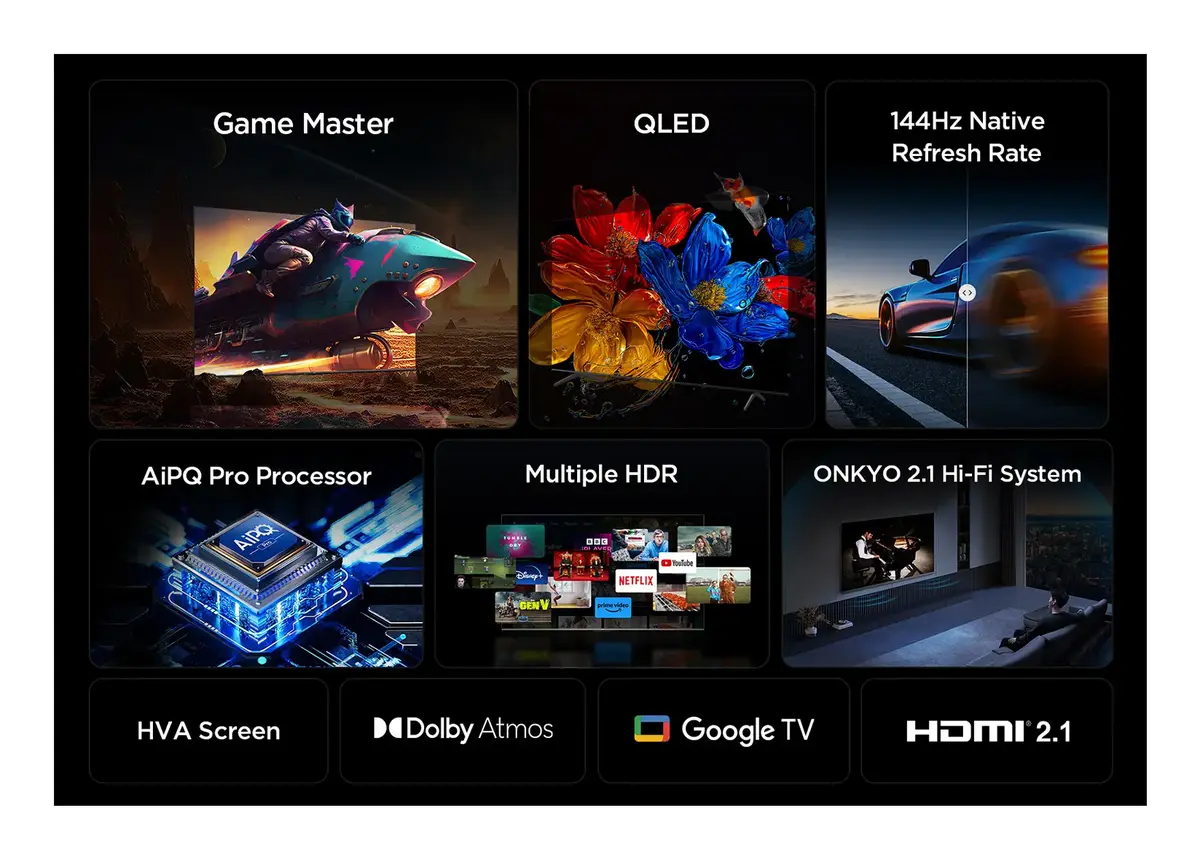
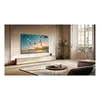
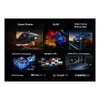
The TCL P89K 98" 4K Ultra HD QLED Smart TV delivers a large 98‑inch (249 cm) QLED display with 3840 x 2160 resolution and a Picture Performance Index of 3700. With 450 cd/m² peak brightness and HDR support, the set is designed for clear detail, vibrant colours and smooth motion. It runs Google TV, includes built‑in Chromecast and supports common broadcast standards for flexible reception.
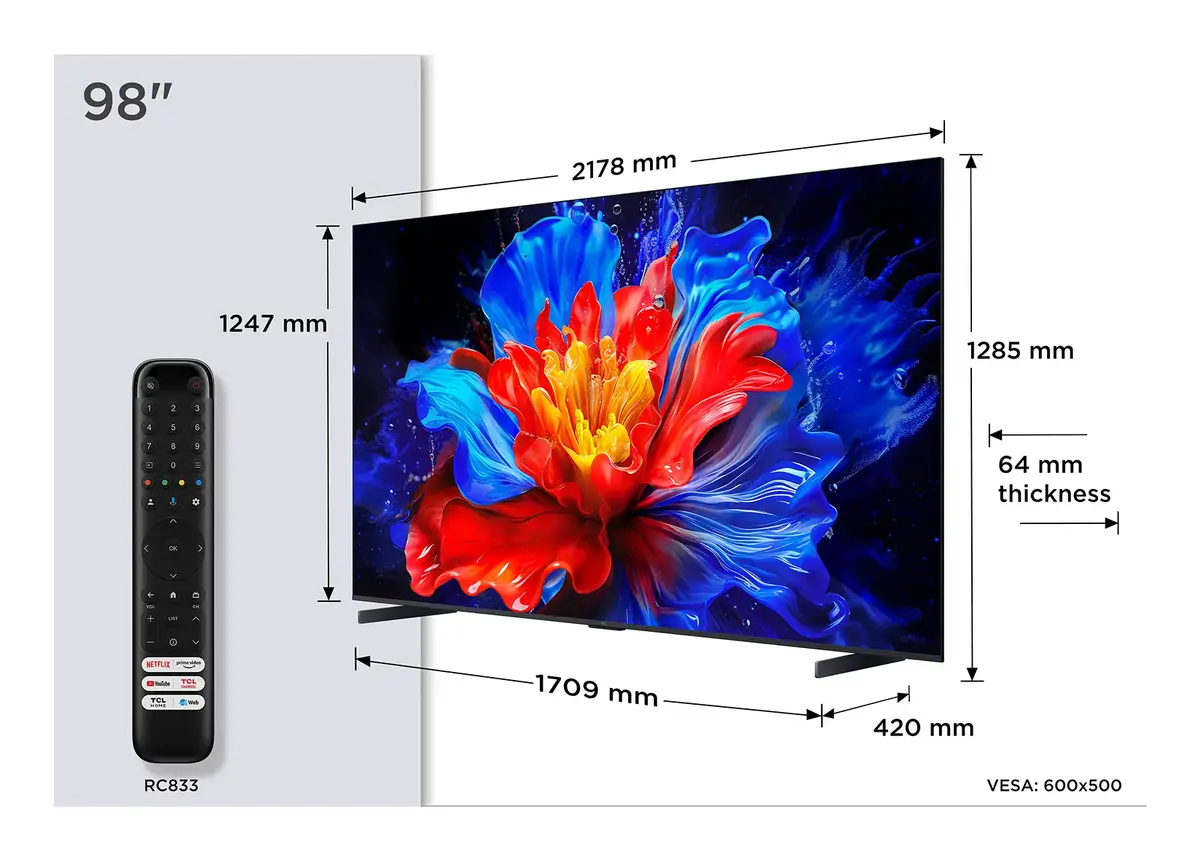
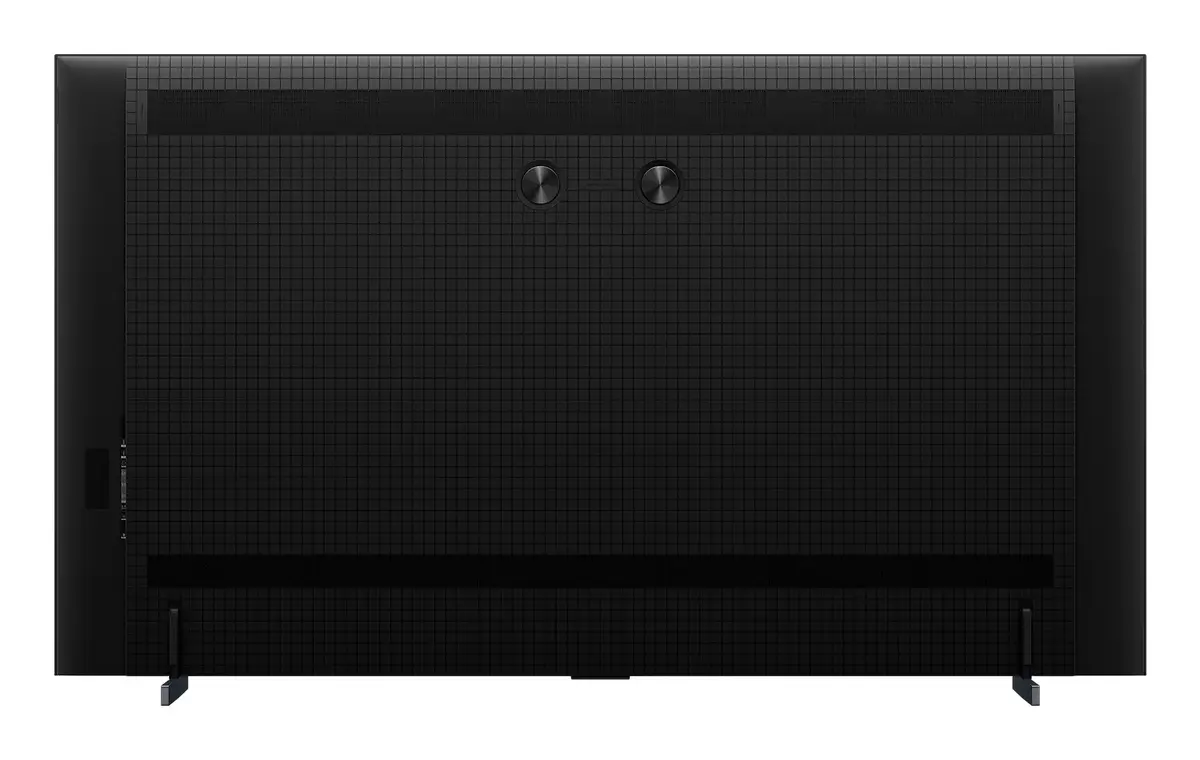
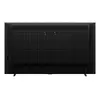
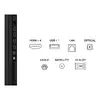
This TCL TV combines QLED color technology and 4K Ultra HD resolution on a flat 98" panel to provide high detail and wide colour gamut. Network connectivity via Wi‑Fi, Ethernet LAN and Bluetooth enables streaming and accessory pairing, while built‑in Chromecast and Google TV simplify app access. The set also supports multiple digital signal formats for cable, satellite and terrestrial reception, and offers VESA 600 x 500 mm mounting compatibility.
Place the TV on a stable stand or mount it on a wall using a VESA 600 x 500 mm bracket. Connect to power and follow the on‑screen setup to configure Google TV, sign in to your accounts and connect to Wi‑Fi or Ethernet. Use the input menu to select broadcast sources (cable, satellite, terrestrial) or open apps for streaming. For optimal picture, enable HDR content where available and select the appropriate picture mode in settings.
For the best viewing experience, position the screen at eye level for seated viewing and ensure a viewing distance appropriate for a 98" 4K display (typically 2.5–4.0 m). Keep firmware up to date and use a wired Ethernet connection for the most reliable streaming performance when possible.
{{highlightedFeature.featureTitle}}:
{{getProductFeatureValueById(product, highlightedFeature.featureId)}}
{{ productComparisonGenerationError }}
Device manufacturer code
Device manufacturer
Power consumption in switched-on state expressed in W.
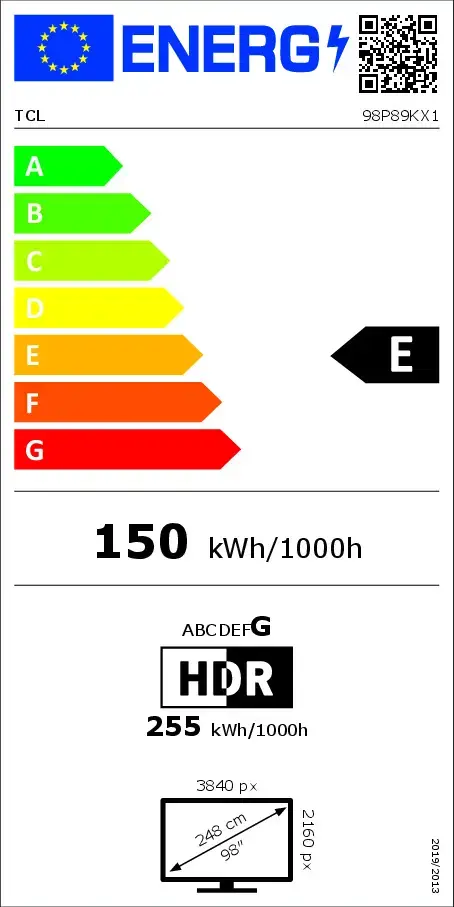
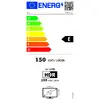
Energy efficiency class is a standard classification that is used all over Europe and which is understandable at first sight. Products can be efficiently compared according to classes, starting from A (the most energy efficient class), and ending with G (the most energy-intensive class). The classification of energy efficiency is based on annual energy consumption which is being calculated on the basis of several different parameters.
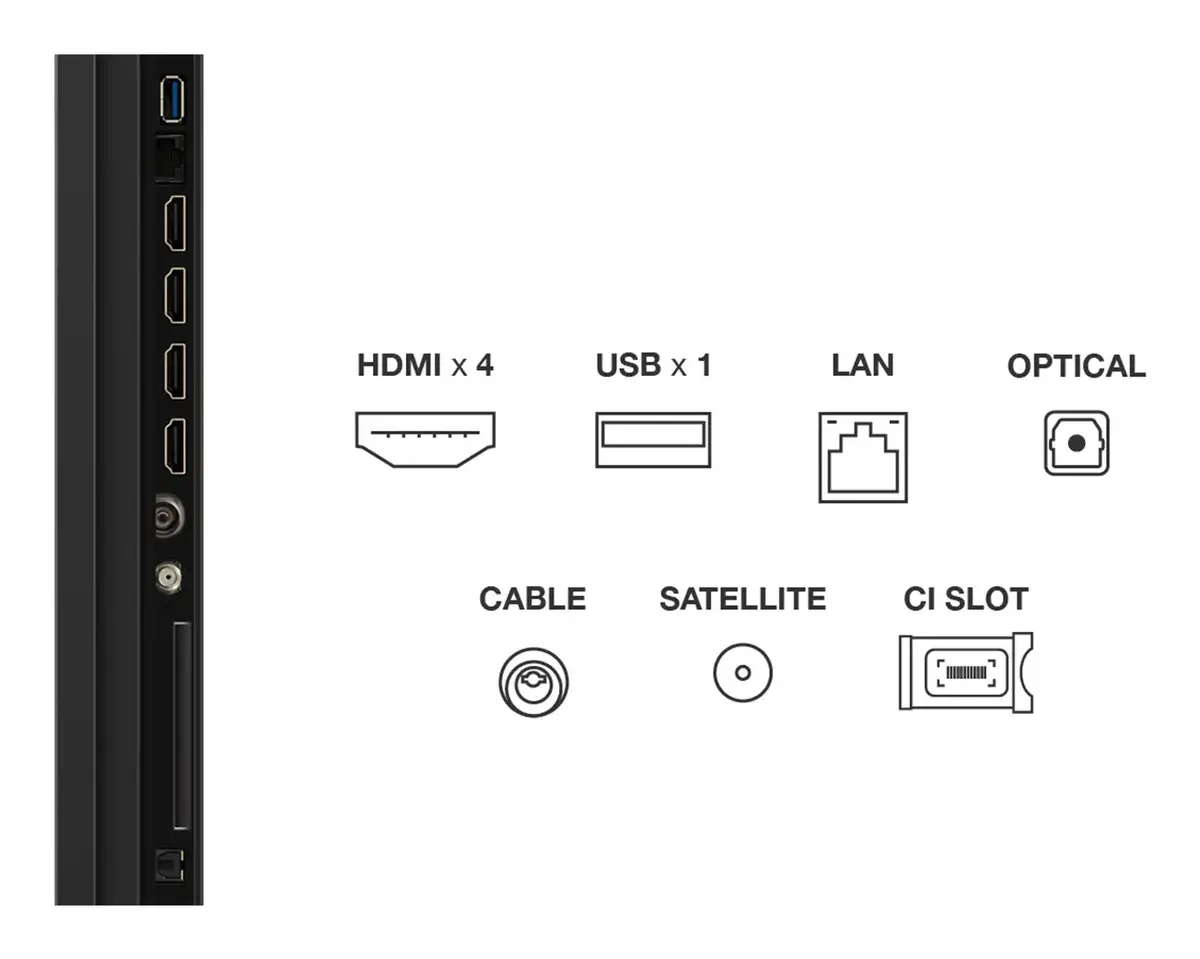
In Digital Video Broadcasting, the Common Interface (CI) is a technology which allows separation of conditional access functionality from a digital TV receiver-decoder (Host) into a removable conditional access module (CAM). CI+ or Common Interface Plus implements a form of copy protection between a Conditional Access Module (CAM) and the television receiver (Host). CI+ is backward compatible with CIv1. Old television receivers, which have CIv1 CI-slot, can be used with CI+ CAM and vice versa, but for viewing only those of TV programs which are not marked as CI+ protected.
Technology which allows separation of conditional access functionality from a digital TV receiver-decoder (Host) into a removable conditional access module (CAM). It is also referenced as DVB-CI for Digital Video Broadcast - Common Interface. The host is responsible for tuning to pay TV channels and demodulation of the RF signal, while CAM is responsible for CA descrambling. The Common Interface allows them to communicate with each other.
An Ethernet LAN (Local Area Network) interface is present, for a wired conection via a cable.
Digital distribution of television content via the Internet. Internet television is a general term that covers the delivery of television shows and other video content over the Internet by video streaming technology, typically by major traditional television broadcasters.
The type of radio tuner e.g. analog, digital.
Describes which motion interpolation technology device uses e.g. BLS (Back Light Scanning), PPR (Picture Perfection Rate), PMR (Perfect Motion Rate), TruMotion.
The number of distinct pixels in each dimension that can be displayed. It is usually quoted as width × height, with the units in pixels: for example, "1024 × 768" means the width is 1024 pixels and the height is 768 pixels. The higher the number of pixels, the sharper the image.
The technology used in the display e.g. plasma, LED.
Size of the display for this product, measured diagonally, usually in inches.
The colour e.g. red, blue, green, black, white.