

Leave your address - as soon as the price of the product goes down, you'll know about it right away
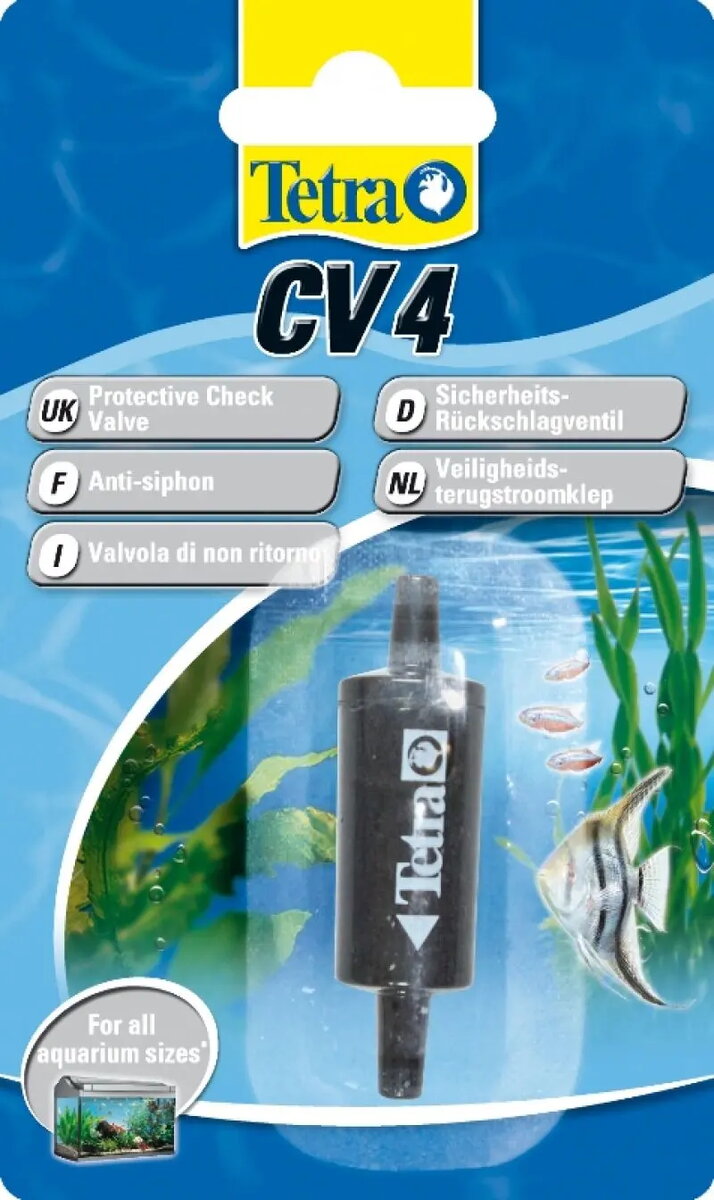
Check valve Tetra CV 4 — inline non-return valve for aquarium plumbing
In cart {{totalProductsCount}} item(s)
Your cart is empty
Check valve Tetra CV 4 — inline non-return valve for aquarium plumbing
Leave your address - as soon as the price of the product goes down, you'll know about it right away
Check valve Tetra CV 4 — inline non-return valve for aquarium plumbing
The Tetra CV 4 — inline non-return valve for aquarium plumbing is a compact check valve designed to prevent reverse flow in aquarium systems. It permits unidirectional water movement through standard aquarium tubing and helps protect pumps and filters from backflow and potential damage after power outages or during maintenance. The valve is intended for straightforward in-line installation and integrates with common return or drain lines used in both hobby and professional aquatic setups.
This check valve offers reliable prevention of siphoning and backflow, reducing the risk of water damage and equipment stress. Its compact inline form factor allows installation directly within tubing runs without bulky fittings. The valve is constructed for durability and compatibility with standard aquarium hoses, providing consistent one-way flow while requiring minimal maintenance.
Install the Tetra CV 4 in the return or drain line so that the arrow or flow direction marking on the valve aligns with the intended water movement. Ensure tubing is cut cleanly and pushed fully onto the valve barbs for a secure fit; use hose clamps if needed for additional security. Position the valve above the waterline where possible to reduce the chance of trapping air, and check for leaks after powering the system. Regularly inspect the valve for debris accumulation and confirm that it operates freely during routine maintenance.
For reliable operation, select tubing that matches the valve barbs and avoid sharp bends immediately before or after the valve. Periodically remove and rinse the valve if you notice reduced flow or any debris; do not use aggressive chemicals that could degrade the valve materials. When integrating into critical systems, consider placing the valve in an accessible location for easier inspection and maintenance.
{{highlightedFeature.featureTitle}}:
{{getProductFeatureValueById(product, highlightedFeature.featureId)}}