-
Certification:
-
CE / FCC / BSMI / KC / RCM
-
TBW rating:
-
850
-
Linux operating systems supported:
8 RT. Linux (9.4, 9.5), Red Hat Enterprise Linux 5.0 (supported with a pre-built package); SUSE Linux (10.3, 11.0, 11, 11.1, 11.2), Fedora (9, 9.0, 10, 10.0, 11.0, 11, 12, 12.0), Ubuntu (8.04, 8.04.1, 8.04.2, 8.10, 9.04, 9.10, 10.04), Debian (5.0, 5.0.1, 5.0.2, 5.0.3)
-
Yes
-
Windows operating systems supported:
Windows vesions wich can be used with the device.
-
Windows 8, Windows 7, Windows 10
-
ECC:
ECC means Error Correction Code, and it is memory that is able to detect and correct some memory errors without user intervention.
-
Yes
-
S.M.A.R.T. support:
-
Yes
-
PCI Express interface data lanes:
-
x4
-
Sequential write speed (ATTO):
-
2800 MB/s
-
Sequential read speed (ATTO):
-
3800 MB/s
-
Random write (4KB):
-
540000 IOPS
-
Random read (4KB):
-
190000 IOPS
-
Hardware encryption:
-
No
-
Component for:
What this product is used as a part of (component for).
-
PC
-
Memory type:
Type of memory in the device e.g. DDR3, SRAM (Static RAM).
-
3D NAND
-
NVMe:
NVM Express (NVMe) or Non-Volatile Memory Host Controller Interface Specification (NVMHCIS) is an open logical device interface specification for accessing non-volatile storage media attached via a PCI Express (PCIe) bus. NVM Express, as a logical device interface, has been designed to capitalize on the low latency and internal parallelism of solid-state storage devices.
-
Yes
-
Interface:
Interface ports to connect pieces of equipment. USB (Universal Serial Bus) has become the most popular wired interface to connect peripherals. USB 2.0 supports speeds up to 480 Mbit/s (USB 1: 12 Mbit/s). The interface FireWire is also known as the IEEE 1394 standard. Enhanced IDE (EIDE)is sometimes referred to as Fast ATA, Fast IDE or ATA-2.
-
PCI Express 4.0
-
SSD form factor:
The size of the solid-state drive, given in inches
-
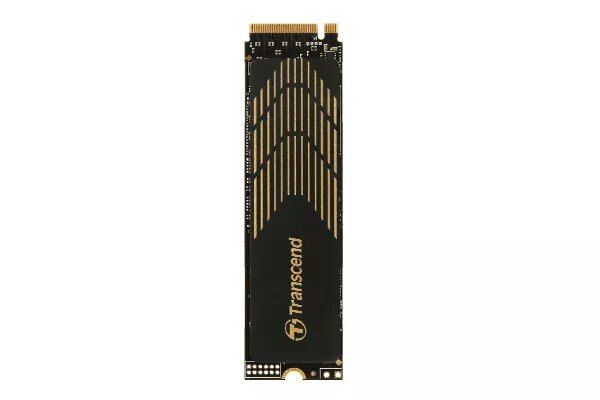
M.2
-
SSD capacity:
-
500 GB