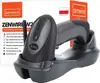
In this comparison, the Zenwire W903 barcode reader is evaluated alongside alternative models, including similar devices from the same manufacturer (Zenwire WJ13, Zenwire W213, Zenwire W2503, Zenwire J13) and an option from another brand (CipherLab 1504B Barcode Scanner A1504B2BKU001 Handheld Imager). All these products are designed for efficient data capture in retail, warehousing, and office environments, streamlining inventory management and checkout workflows. The main practical differences lie in the supported barcode types (such as 1D or 2D), physical design variants, and intended scanning capabilities.
⚙️ The specifications comparison covers the brand, device type, environment suitability, barcode support types, and connectivity features for each product.
| Comparison parameter | Zenwire W903 | Zenwire WJ13 | Zenwire W213 | Zenwire W2503 | Zenwire J13 | CipherLab 1504B | Practical conclusion |
|---|
| Brand | zenwire | zenwire | zenwire | zenwire | zenwire | CIPHERLAB | All Zenwire products share the same manufacturer background, whereas CipherLab provides an alternative from a different brand ecosystem. |
| Device type | Barcode reader | Barcode reader | Barcode scanner | Barcode scanner | Barcode scanner | Handheld imager | Most options are standard barcode readers, while CipherLab is specified as a handheld imager for versatile data capture. |
| Intended environment | Retail, warehousing, offices | Retail, warehouse, office environments | Retail, warehousing, office environments | Retail, warehousing, logistics | Retail, warehousing, logistics, office | Retail, inventory, office environments | All devices serve nearly identical professional environments like retail and logistics without requiring specialized industry setups. |
| Barcode support | Standard barcodes | Standard barcodes | Standard 1D and 2D codes | Various barcode types | Barcodes | Various barcode types | Models like W213 and CipherLab 1504B offer advanced 2D code scanning, while others focus primarily on standard linear barcodes. |
| Connectivity & operation | Plug-and-play functionality | Plug-and-play connectivity, ergonomic design | Wired connection, high precision | Workflow productivity improvement | Quick plug-and-play operation | Efficient data capture | Zenwire devices emphasize straightforward plug-and-play setup, whereas CipherLab focuses on structured handheld imaging tasks. |
◎ The suitability and use cases comparison evaluates which product fits specific user requirements and operational scenarios best.
| Use case | Recommended product | Why |
|---|
| Basic retail checkout and office scanning | Zenwire W903 | Provides fast and reliable recognition of standard barcodes with simple plug-and-play operation. |
| Comfortable everyday handling for professionals | Zenwire WJ13 | Features an ergonomic body design that ensures comfortable everyday use during extended shifts. |
| Scanning both 1D and modern 2D codes | Zenwire W213 | Efficiently reads advanced 1D and 2D barcode formats with high precision and reliability. |
| Intensive warehouse and logistics workflow management | Zenwire W2503 | Optimized specifically to improve workflow productivity in heavy logistics and inventory environments. |
| Quick setup in fast-paced office or retail tasks | Zenwire J13 | Offers quick operation without complex configuration for general business environments. |
| Alternative handheld imaging from an external brand | CipherLab 1504B | Provides a reliable alternative handheld data capture device for general retail and office tracking. |
The Zenwire W903 barcode reader differs from the alternatives by offering reliable, straightforward core scanning for standard barcodes with instant plug-and-play usability. It is most suitable for retail, office, and standard warehousing tasks where advanced 2D code support is not required. A buyer might prefer this model over the W213 or CipherLab 1504B if they only need standard linear barcodes, and choose it over the WJ13 if special ergonomic styling is not a primary requirement.