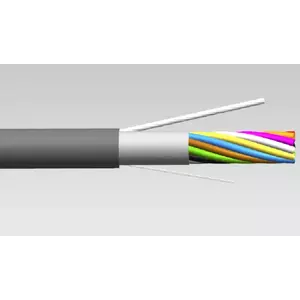
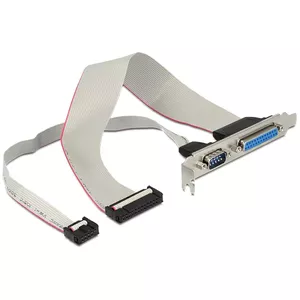
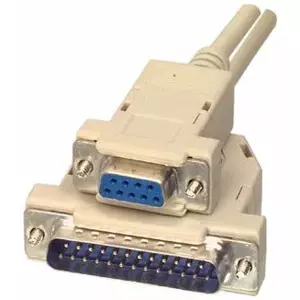
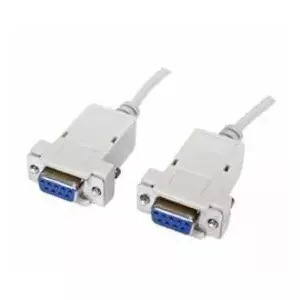
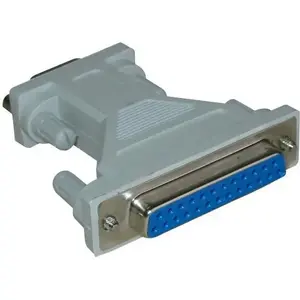
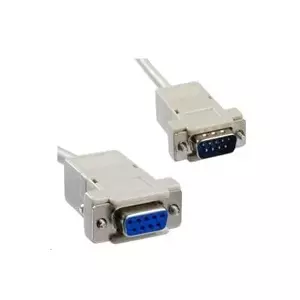
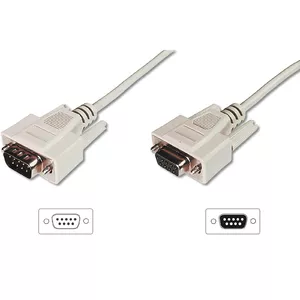
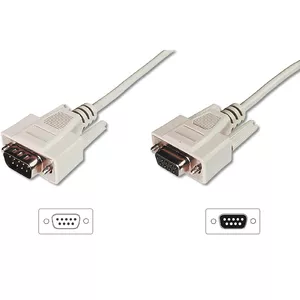
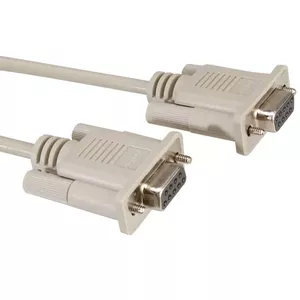
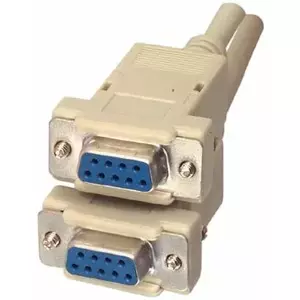
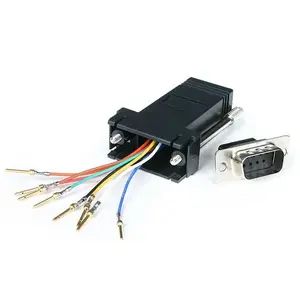
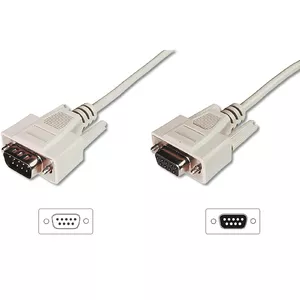
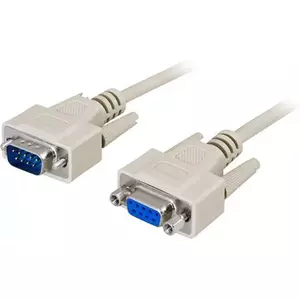
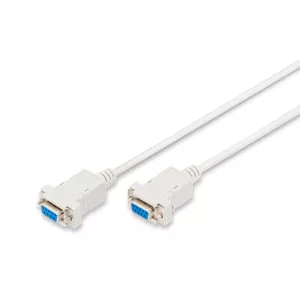
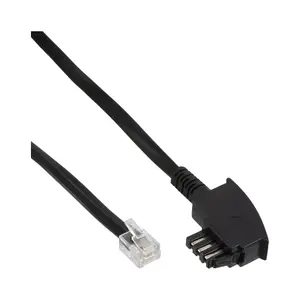
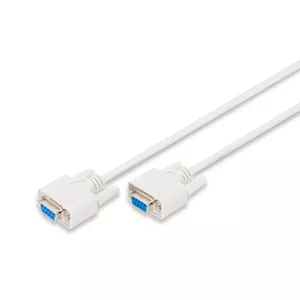
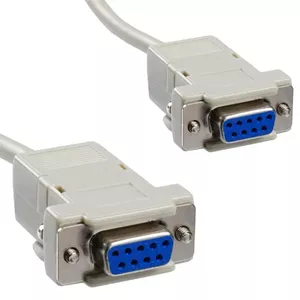
Serial & Parallel cables are electrical interconnects designed to transmit data between devices using serial or parallel communication protocols. These cables include a range of connectors and wiring patterns suited for RS-232, RS-485, USB-serial adapters, DB9 serial leads, and parallel printer interfaces, and are chosen where point-to-point data exchange, device control, or legacy equipment connectivity is required. Typical applications include connecting industrial controllers, laboratory instruments, point-of-sale terminals, printers, and embedded systems for configuration, debugging, or continuous data transfer. Users select serial and parallel cables for their protocol compatibility, pinout matching, signal integrity needs, and environmental durability when used in industrial or commercial settings. Specifications such as conductor gauge, shielding, connector type, and cable length influence electrical performance and noise immunity. Proper selection and correct wiring ensure reliable communication between legacy and modern devices without altering device firmware or interfaces.
Types of Serial & Parallel cables
Common product types cover a variety of connector formats, wiring schemes, and construction methods.
- DB9 and DB25 serial cables — standard connectors for RS-232 point-to-point links.
- RS-485/RS-422 twisted-pair cables — differential serial cabling for multi-drop and long-distance communication.
- USB-to-serial adapters and cables — convert USB ports to serial interfaces for modern computers.
- Parallel printer cables (IEEE 1284) — multi-wire flat or round cables for parallel data transfers to printers and industrial devices.
- Custom pinout and null-modem cables — prewired or configurable cables for specific device pin mapping and handshaking signals.
- Shielded vs. unshielded options — choices that affect electromagnetic interference protection and grounding.
What are Serial & Parallel cables used for?
These cables serve to connect and transmit data between equipment that uses serial or parallel communication standards.
- Industrial automation — connecting PLCs, motor controllers, and sensors for configuration and control.
- Legacy device connectivity — linking older printers, test instruments, and networking equipment to modern systems.
- Device programming and debugging — providing a communication path for firmware updates, console access, and diagnostics.
- Point-of-sale and embedded systems — interfacing barcode scanners, scales, and terminal peripherals.
- Data acquisition and laboratory equipment — reliable transfer of measurement data and instrument control commands.
Key Differences between Serial & Parallel cables
Serial and parallel cables differ in how many data signals they carry simultaneously, their physical wiring, and typical application contexts.
- Data transmission method — serial cables send data one bit at a time over one or a few conductors; parallel cables send multiple bits simultaneously over separate conductors.
- Distance and noise immunity — serial differential interfaces (e.g., RS-485) generally support longer distances and better noise rejection than unshielded parallel lines.
- Connector size and complexity — parallel interfaces often require wider connectors with more pins (e.g., DB25 or IEEE 1284), while serial connectors can be smaller (DB9, modular, or USB).
- Speed and synchronization — parallel links can provide high raw throughput at short distances but require careful timing; serial protocols use clocking or encoding schemes to maintain data integrity over longer runs.
- Compatibility and modern usage — serial interfaces remain common in industrial and embedded systems; parallel interfaces are now mostly limited to legacy equipment.
How to Choose Serial & Parallel cables?
Select cables by matching device interfaces, electrical requirements, and environmental conditions.
- Verify connector type and pinout — confirm that the cable matches both device connectors and signal assignments (null-modem vs. straight-through).
- Check protocol and voltage levels — ensure compatibility with RS-232, RS-485, RS-422, IEEE 1284, or USB signaling and required voltage ranges.
- Consider cable length and conductor gauge — longer runs may need thicker conductors or differential pairs to preserve signal quality.
- Choose shielding and jacket type — shielded cables reduce electromagnetic interference; select jacket material rated for temperature, abrasion, or chemical exposure if needed.
- Account for grounding and termination — follow recommended termination and grounding practices for differential buses like RS-485 to avoid reflections and noise.
- Use adapters or converters when needed — USB-to-serial adapters and protocol converters can bridge modern hosts with legacy interfaces when direct cabling is not possible.
Which serial & parallel cables - new arrivals are the most popular and affordable in 2026?
The full list of popular models at affordable prices is available on this page. In 2026, the following models show high demand and an excellent price-to-quality ratio:
Why is it worth buying serial & parallel cables - new arrivals at AiO.lv?
At the AiO.lv online store, you can place an order at a great price with delivery across Latvia — to Riga, Daugavpils, Liepaja, Jurmala, Ventspils, and other cities, as well as throughout Europe. We offer products from leading manufacturers: ADAPTEC, APC, Cisco, Epson, HAMA, HP, Panasonic, Siemens, TRENDNET, WENTRONIC, Asus, DIGITUS, LOGILINK, Navilock, GEMBIRD, Unitek, ATEN, GOOBAY, DELTACO, QNAP. When you shop with us, you get:
- official warranty and guaranteed quality;
- convenient payment options (including installment and credit);
- fast and reliable delivery across Latvia and to any EU country.
FAQ
Where can you find a serial & parallel cables - new arrivals with cheap prices?
You can buy cheaper at the AiO.lv online store. We offer competitive prices and regular discounts, so you always have the chance to find a great deal.
What is the delivery time for serial & parallel cables - new arrivals?
If you place your order today, delivery will take between 1 and 5 business days depending on the chosen method.
How long is the warranty period for serial & parallel cables - new arrivals?
Our store provides an official manufacturer’s warranty ranging from 12 to 36 months, depending on the model and brand. If needed, you can always contact our customer service department or the manufacturer’s authorized service center for support.
Are serial & parallel cables - new arrivals purchasable with leasing?
Yes, if the selected product costs more than €50. You can learn more about installment purchase options and the terms of application on the Payment page.
Can serial & parallel cables - new arrivals be purchased for a company (with VAT)?
Yes. AiO.lv works with legal entities in Latvia and throughout Europe. All product prices are shown with VAT included. In certain cases, a 0% VAT rate may apply — for example, when purchasing from other EU countries with a valid VAT number. We issue an invoice immediately after the order is placed, support BIS electronic invoices, and automatically generate all required accounting documents. To complete a purchase for a company, simply select the company profile during checkout.