Dreame vacuums for fast and efficient cleaning!

{{ totalProductsCount }}
In cart {{totalProductsCount}} item(s)
In cart {{totalProductsCount}} item(s)
Total:
{{sum | formatAmount}}
Your cart is empty
Wi‑Fi Antennas
Fast shipping
Excellent choice
Teltonika Networks
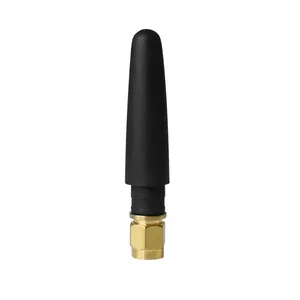
Teltonika PR1CS450 network antenna SMA 5 dBi 0.7-2.7 GHz
Delivery: Tuesday
7.49 €
Fast delivery available
Excellent choice
Teltonika Networks
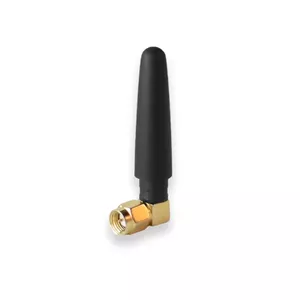
Network antenna TELTONIKA PR1US450 5 dBi, 0.7–2.7 GHz, SMA male, 50 Ω, linear polarization, black
Delivery: 12.11.2026
7.49 €
Fast shipping
Excellent choice
Fast shipping
Excellent choice
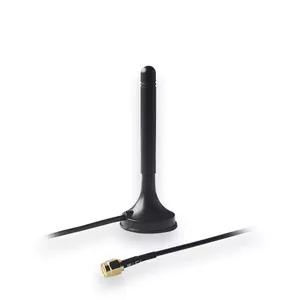
Fast delivery available
Excellent choice
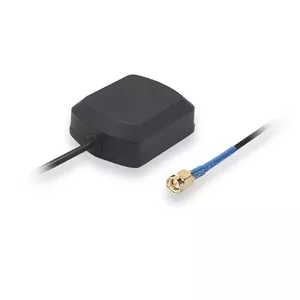
Fast delivery available
Excellent choice
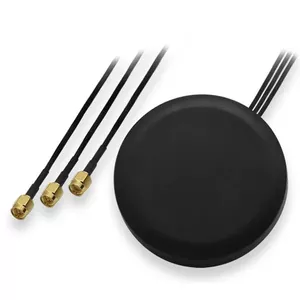
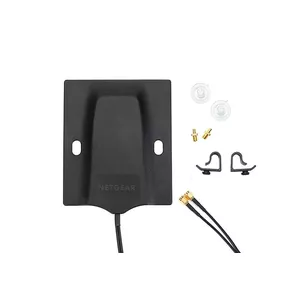
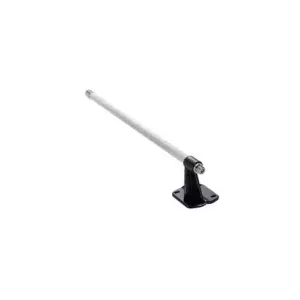
Excellent choice
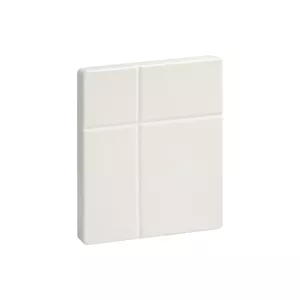
Excellent choice
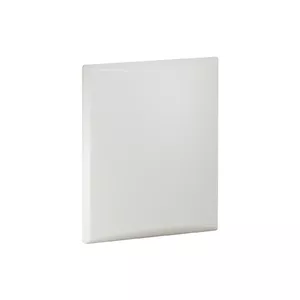
New Arrival
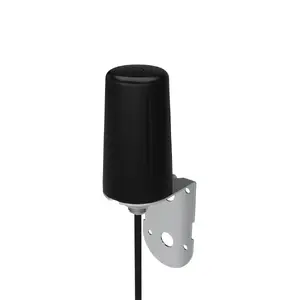
Panorama Antennas
Panorama Antennas B4BE-6-60-5SP Omni-directional Network Antenna SMA 5 dBi 0.617 - 6 GHz
Delivery: 02.11.2026
30.49 €
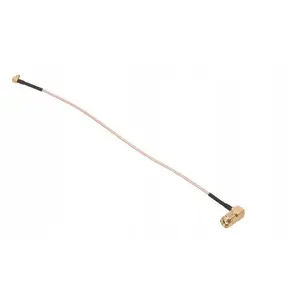
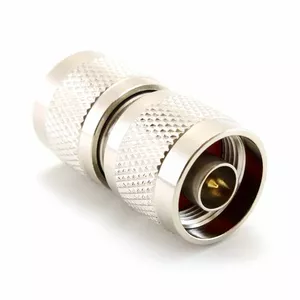

DELTACO
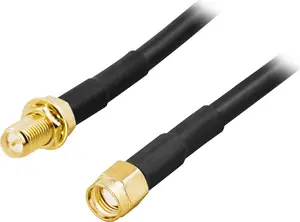
DELTACO SMA-FM200 Antenna Cable with RP-SMA Connectors, 2 m, Black
Delivery: 12.11.2026
4.99 €
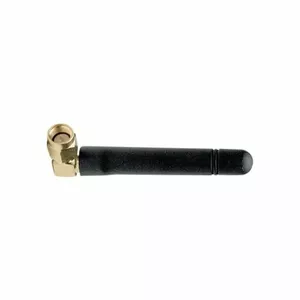
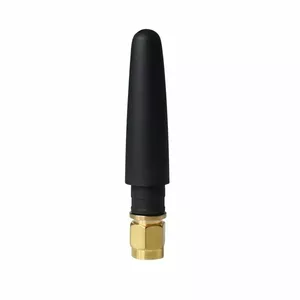
Wi-Fi antennas are hardware components designed to transmit and receive radio signals for wireless local area networks. They connect to routers, access points, USB adapters, or embedded wireless modules and alter the direction, range, and quality of wireless signal propagation. These antennas are selected when a standard built-in antenna does not meet coverage, performance, or directional requirements—for example, to extend range in large spaces, focus signal towards specific devices, or improve reception in weak-signal locations. Models vary by form factor, gain, frequency band support, and mounting options, which determines their suitability for indoor, outdoor, mobile, or fixed installations. Technical compatibility with device connectors (SMA, RP-SMA, TNC, IPEX, etc.) and support for 2.4 GHz, 5 GHz, or dual-band operation are common decision factors. Proper antenna choice and placement can affect link stability, throughput, and interference resilience without changing the underlying network equipment.
Types of Wi-Fi antennas
Common antenna types differ in shape, radiation pattern, and intended use.
- Omnidirectional antennas: provide roughly 360° horizontal coverage and are used for general-purpose, broad-area coverage indoors and outdoors.
- Directional antennas: include Yagi, panel, and log-periodic designs that focus energy in a specific direction to increase range and reduce interference from other directions.
- High-gain antennas: characterized by higher numeric gain values to concentrate energy and extend range; available in both omnidirectional and directional forms.
- Dipole and quarter-wave antennas: simple, compact designs often used in consumer routers and adapters for balanced performance.
- Internal and PCB antennas: small, integrated antennas for compact devices and modules where external connectors are unavailable or undesirable.
- Sector and MIMO antennas: used in enterprise and outdoor systems; sector antennas cover defined angular sectors, while MIMO arrays support multiple spatial streams.
What are Wi-Fi antennas used for?
Wi-Fi antennas serve to shape and improve wireless communication between devices and network equipment.
- Extending coverage: increase signal reach to cover larger rooms, buildings, or outdoor areas.
- Improving signal quality: enhance received signal strength and reduce packet loss or retransmissions in weak-signal locations.
- Focusing connectivity: directional antennas aim signals toward remote access points or client devices to establish stronger links.
- Supporting multiple streams: MIMO antennas enable concurrent spatial streams for higher throughput in compatible equipment.
- Adapting installations: specialized outdoor or weatherproof antennas provide reliable wireless links in exposed environments.
Key Differences between Wi-Fi antennas
Antennas differ by parameters that affect performance and compatibility.
- Gain (dBi): indicates how much an antenna concentrates radio energy; higher gain narrows coverage angle but can extend range.
- Radiation pattern: omnidirectional vs. directional patterns determine how signal is distributed in space.
- Frequency support: single-band (2.4 GHz or 5 GHz) vs. dual-band antennas affect compatibility with modern Wi‑Fi standards.
- Connector type and cable: matching connectors and cable quality influence signal loss and ease of installation.
- Form factor and mounting: size, housing, and mounting options (wall, mast, magnetic base) determine where and how an antenna can be installed.
- Environmental rating: weatherproofing and UV resistance are important for outdoor antennas to ensure long-term performance.
How to Choose Wi-Fi antennas?
Selecting an appropriate antenna requires matching technical requirements and installation conditions.
- Confirm device compatibility: check connector type, supported frequency bands, and whether the device expects an external antenna.
- Determine coverage goals: choose omnidirectional for even, local coverage or directional/high-gain models to reach specific targets or increase range.
- Consider gain vs. beamwidth: higher gain increases range but reduces coverage angle; balance according to the coverage area.
- Account for installation environment: select weatherproof antennas for outdoor use and compact or internal types for small devices.
- Evaluate MIMO and multiple-antenna needs: ensure antenna type and arrangement support the number of spatial streams required by the equipment.
- Plan cable routing and losses: use appropriate cable types and keep runs short to minimize signal loss; verify connector compatibility and polarity (SMA vs RP-SMA).
- Follow regulations: adhere to local regulations on transmit power and antenna installations to avoid interference or non-compliance.
Which wi‑fi antennas are the most popular and affordable in 2026?
The full list of popular models at affordable prices is available on this page. In 2026, the following models show high demand and an excellent price-to-quality ratio:
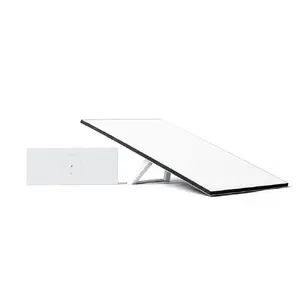
- Starlink Standard Kit V4x Router for 399.99€
Why is it worth buying wi‑fi antennas at AiO.lv?
At the AiO.lv online store, you can place an order at a great price with delivery across Latvia — to Riga, Daugavpils, Liepaja, Jurmala, Ventspils, and other cities, as well as throughout Europe. We offer products from leading manufacturers: Cisco, Dell, HAMA, HP, Lenovo, Netgear, Panasonic, Philips, PLANET, Siemens, TRENDNET, Zyxel, DIGITUS, LOGILINK, MSI, OEM, Navilock, one for all, PIONEER, EMOS. When you shop with us, you get:
- official warranty and guaranteed quality;
- convenient payment options (including installment and credit);
- fast and reliable delivery across Latvia and to any EU country.
FAQ
Where can you find a wi‑fi antennas with cheap prices?
You can buy cheaper at the AiO.lv online store. We offer competitive prices and regular discounts, so you always have the chance to find a great deal.
What is the delivery time for wi‑fi antennas?
If you place your order today, delivery will take between 1 and 5 business days depending on the chosen method.
How long is the warranty period for wi‑fi antennas?
Our store provides an official manufacturer’s warranty ranging from 12 to 36 months, depending on the model and brand. If needed, you can always contact our customer service department or the manufacturer’s authorized service center for support.
Are wi‑fi antennas purchasable with leasing?
Yes, if the selected product costs more than €50. You can learn more about installment purchase options and the terms of application on the Payment page.
Can wi‑fi antennas be purchased for a company (with VAT)?
Yes. AiO.lv works with legal entities in Latvia and throughout Europe. All product prices are shown with VAT included. In certain cases, a 0% VAT rate may apply — for example, when purchasing from other EU countries with a valid VAT number. We issue an invoice immediately after the order is placed, support BIS electronic invoices, and automatically generate all required accounting documents. To complete a purchase for a company, simply select the company profile during checkout.


