
Leave your address - as soon as the price of the product goes down, you'll know about it right away
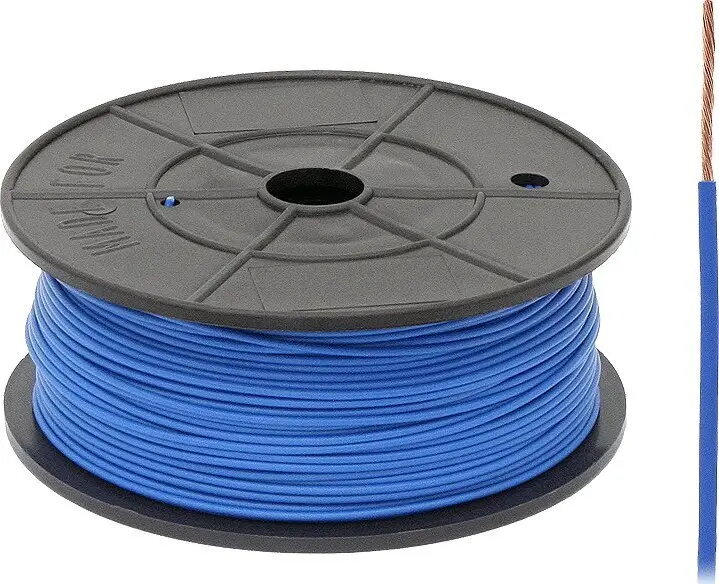
Cable/Lead BLOW 73-003# 0.22 mm² blue — electrical wire, single conductor
In cart {{totalProductsCount}} item(s)
Your cart is empty
Cable/Lead BLOW 73-003# 0.22 mm² blue — electrical wire, single conductor
Leave your address - as soon as the price of the product goes down, you'll know about it right away
Cable/Lead BLOW 73-003# 0.22 mm² blue — electrical wire, single conductor
BLOW 73-003# 0.22 mm² blue is a single-conductor electrical wire intended for low-current and signal wiring. The 0.22 mm² conductor cross-section and flexible insulation make this lead suitable for compact wiring inside control panels, junction boxes and electronic devices where space is limited and neat routing is required. The blue insulation provides clear color identification for circuits and signal paths.
The cable offers a small cross-section with sufficient conductivity for signal and control circuits while occupying minimal space. Its single-conductor construction enables straightforward termination with ferrules, crimps or solder joints. The colored insulation improves circuit identification and reduces wiring errors during installation or maintenance. The product is designed for reliable low-current performance and tidy routing in confined assemblies.
Strip a short length of insulation to expose the conductor and terminate according to the equipment requirements: use appropriate ferrules or crimp terminals for stranded conductors, or solder for solid conductors where applicable. Route the cable through ducts, channels or cable ties to maintain a tidy installation and avoid mechanical strain at termination points. Ensure connections are made to powered-off circuits and verify continuity and correct polarity before energizing.
For reliable long-term connections, match termination hardware to the conductor type and cross-section, avoid over-tightening terminal screws that could damage the conductor, and protect exposed lengths from abrasion. Use color-coded wiring practices to simplify maintenance and testing.
{{highlightedFeature.featureTitle}}:
{{getProductFeatureValueById(product, highlightedFeature.featureId)}}