
Leave your address - as soon as the price of the product goes down, you'll know about it right away
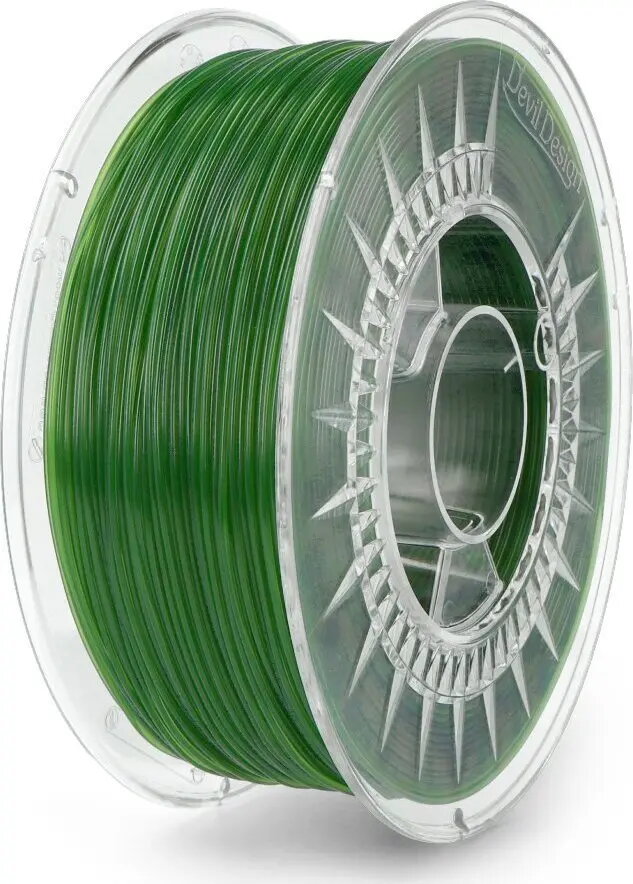
Filament PETG 1.75 mm 1 kg, devil design — Green Transparent
In cart {{totalProductsCount}} item(s)
Your cart is empty
Filament PETG 1.75 mm 1 kg, devil design — Green Transparent
Leave your address - as soon as the price of the product goes down, you'll know about it right away
Filament PETG 1.75 mm 1 kg, devil design — Green Transparent
Filament PETG 1.75 mm 1 kg from devil design in Green Transparent is a general-purpose PETG filament supplied on a 1 kg spool and designed for FDM/FFF 3D printers that accept 1.75 mm filament. PETG combines mechanical strength and moderate flexibility, offering good layer adhesion and lower tendency to warp compared with some other materials. The transparent green shade is suitable for parts where partial light transmission and a colored translucent finish are required.
This PETG filament provides a balance of tensile strength and impact resistance while remaining easier to print than many engineering plastics. It offers improved chemical and moisture resistance compared with PLA, good interlayer bonding, and reduced warping on typical build surfaces. The 1.75 mm diameter is a common size for hobby and prosumer FDM printers, and the 1 kg spool size is suitable for small to medium print projects.
Load the filament into a 3D printer configured for 1.75 mm filament and set printing temperatures according to your printer and hotend; typical PETG print temperatures range above PLA and often sit between 230°C and 250°C depending on the machine and nozzle. Use a heated bed to reduce warping; bed temperatures commonly range from 70°C to 90°C. Print at moderate speeds and allow for cooling settings that avoid excessive layer separation while maintaining adhesion. Store the spool in a dry environment or sealed container with desiccant when not in use to preserve filament quality.
For consistent results, calibrate extrusion multiplier and retraction settings for your specific printer and nozzle. Use a build surface that promotes PETG adhesion, such as glass with a thin adhesive aid or PEI, and avoid overly aggressive first-layer squish. When transparency is important, use larger nozzle diameters and fewer shells to reduce internal scattering and enhance translucency.
{{highlightedFeature.featureTitle}}:
{{getProductFeatureValueById(product, highlightedFeature.featureId)}}