
Leave your address - as soon as the price of the product goes down, you'll know about it right away
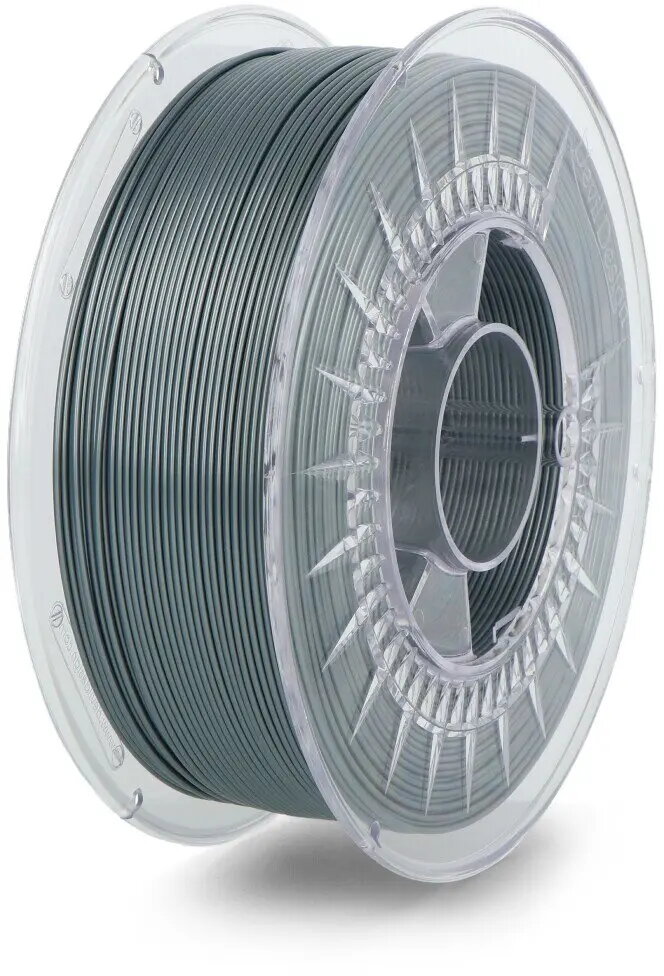
Filament PETG 1.75 mm 1 kg spool, devil design — Silver
In cart {{totalProductsCount}} item(s)
Your cart is empty
Filament PETG 1.75 mm 1 kg spool, devil design — Silver
Leave your address - as soon as the price of the product goes down, you'll know about it right away
Filament PETG 1.75 mm 1 kg spool, devil design — Silver
devil design PETG filament, 1.75 mm diameter on a 1 kg spool in silver is a thermoplastic filament formulated for FDM/FFF 3D printing. PETG offers a balance between printability and mechanical performance: it prints easier than many engineering plastics while providing better toughness, chemical resistance and layer adhesion compared with PLA. This silver PETG is intended for functional prototypes, mechanical parts and visually durable prints where higher impact resistance and dimensional stability are required.
PETG filament combines good flow behavior with reduced warping and strong interlayer bonding, enabling reliable printing of medium- to large-sized parts. The material provides increased toughness and chemical resistance compared to PLA, while remaining easier to print than many higher-performance polymers. Silver coloration gives prints a neutral metallic appearance suitable for visible components and aesthetic functional parts.
Load the 1.75 mm PETG filament on a compatible FDM/FFF 3D printer and set the extruder temperature typically between 230–250 °C, depending on printer and nozzle. Use a heated bed set around 70–80 °C to reduce warping and improve first-layer adhesion. Print speeds of 30–60 mm/s are generally effective; adjust retraction distance and speed to minimise stringing. Ensure good part cooling for overhangs while avoiding excessive cooling that could reduce layer adhesion. Follow usual spool handling: keep the filament dry and store in a sealed bag with desiccant when not in use.
For best results, calibrate extrusion multiplier and first-layer height for your specific printer and nozzle size. Dry the filament if it shows signs of moisture (brittleness, popping or excessive stringing) by using a filament dryer or oven at low temperature for several hours. Use adhesive aids such as a PEI sheet, glue stick or specialised build surfaces to enhance bed adhesion when printing larger base areas.
{{highlightedFeature.featureTitle}}:
{{getProductFeatureValueById(product, highlightedFeature.featureId)}}