
Leave your address - as soon as the price of the product goes down, you'll know about it right away
Filament Devil Design PETG 1.75 mm 1 kg — Galaxy Super Blue
In cart {{totalProductsCount}} item(s)
Your cart is empty
Filament Devil Design PETG 1.75 mm 1 kg — Galaxy Super Blue
Leave your address - as soon as the price of the product goes down, you'll know about it right away
Filament Devil Design PETG 1.75 mm 1 kg — Galaxy Super Blue
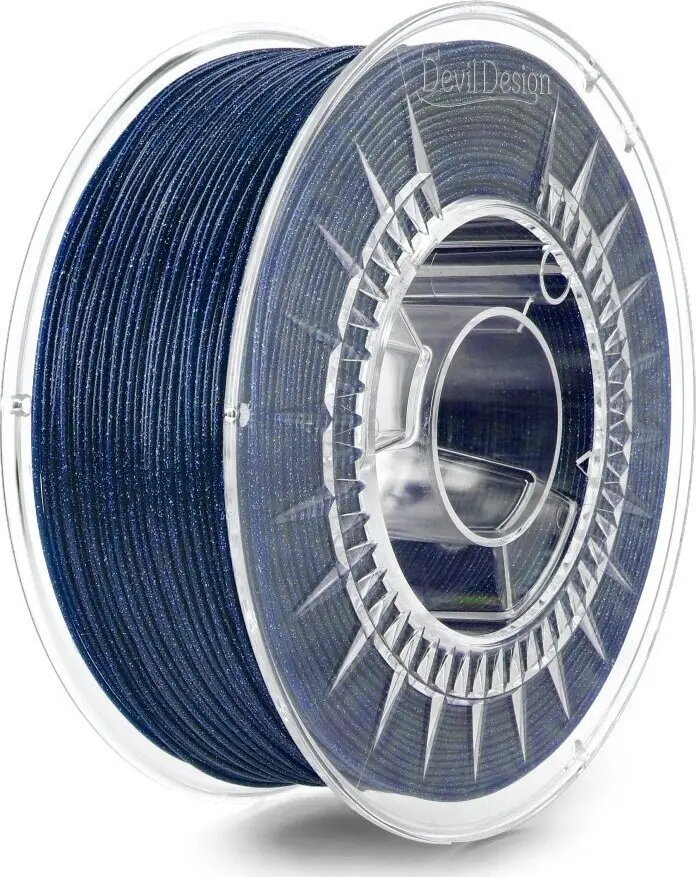
Devil Design PETG 1.75 mm 1 kg — Galaxy Super Blue is a PETG filament formulated for FDM/FFF 3D printers. The 1.75 mm diameter filament on a 1 kg spool combines good mechanical strength, chemical resistance and reduced warping compared with typical PLA materials. The Galaxy Super Blue color provides a glossy, deep blue finish suitable for both functional prototypes and visually appealing parts. Designed for users who need durable prints with a smooth surface appearance, this filament performs well with a heated build plate and standard PETG extrusion settings.
The filament delivers a balance of toughness and dimensional stability, with lower shrinkage during cooling which reduces adhesion problems and improves first-layer reliability. Its chemical resistance makes it suitable for parts exposed to mild solvents or cleaning agents. The glossy Galaxy Super Blue pigment offers consistent coloration and a smooth sheen that highlights contours and surface details. The spool format and consistent diameter help ensure steady feeding in most desktop FDM/FFF printers.
Load the 1.75 mm filament into your FDM/FFF printer following the manufacturer's filament loading procedure. Use a heated bed and set extrusion temperatures according to PETG recommendations for your specific printer and nozzle (typical range is higher than PLA). Calibrate the first layer for proper bed adhesion, and use moderate print speeds to maintain dimensional accuracy. Ensure the filament spool can rotate freely and that the filament path is free of sharp bends or obstructions to prevent feeding issues.
For consistent results, print with a heated build plate and apply a suitable adhesion aid if necessary. Store the filament in a dry environment or sealed container with desiccant to minimize moisture uptake. Test extrusion temperature and retraction settings on small samples to optimize surface finish and stringing for your printer setup.
{{highlightedFeature.featureTitle}}:
{{getProductFeatureValueById(product, highlightedFeature.featureId)}}