-
RMS rated power:
RMS (Root mean square) is a measure of the continuous power required by a device, in particular audio amplifiers and loudspeakers.
-
4 W
-
Height adjustment:
The part of the device that can be adjusted to change the height.
-
No
-
Power consumption (off):
-
0.16 W
-
Power consumption (PowerSave):
-
16.5 W
-
Digital horizontal frequency:
-
30 - 82
-
Digital vertical frequency:
-
50 - 75
-
On Screen Display (OSD) languages:
-
French, Spanish, English, German, Simplified Chinese, Japanese, Italian, Traditional Chinese
-
Supported graphics resolutions:
The graphic resolutions that can be displayed by the device. The graphic resolution describes the width and height dimensions of a display, such as a computer monitor, measured in pixels.
-
1440 x 900 (WXGA+), 1366 x 768, 1280 x 800, 1280 x 720 (HD 720), 1680 x 1050 (WSXGA+), 640 x 400, 640 x 480 (VGA), 720 x 400, 800 x 500, 800 x 600 (SVGA), 1024 x 768 (XGA), 1280 x 1024 (SXGA), 1920 x 1080 (HD 1080)
-
HDMI:
HDMI (High-Definition Multimedia Interface) is a compact audio/video interface for transferring uncompressed video data and compressed/uncompressed digital audio data from a HDMI-compliant device ("the source device") to a compatible computer monitor, video projector, digital television, or digital audio device. HDMI is a digital replacement for existing analog video standards.
-
Yes
-
Maximum refresh rate:
-
60 Hz
-
Touch technology:
Technology of touch sensetive screen e.g. dual-touch.
-
Multi-touch
-
Market positioning:
Under which category can the device be positioned in the market, e.g. camera phone.
-
Business
-
Display technology:
The technology used in the display e.g. plasma, LED.
-
LED
-
Anti-glare screen:
Always gives an optimal view, even in direct sunlight.
-
Yes
-
Native aspect ratio:
The aspect ratio is the ratio of the width of an image to its height. The native aspect ratio is the one which the projector/display is particularly designed for. Images shown in native aspect ratio will utilize the entire resolution of the display and achieve maximum brightness. Images shown in other than native aspect ratio will always have less resolution and less brightness than images shown in native aspect ratio.
-
16:9
-
HD type:
Type of supported High Definition (e.g. Full HD, 4K Ultra HD).
-
Full HD
-
Weight (without stand):
-
6300 g
-
Height (without stand):
-
43.8 mm
-
Width (without stand):
-
626.2 mm
-
Depth (without stand):
-
372.8 mm
-
Panel type:
-
TFT
-
Screen shape:
-
Flat
-
NVIDIA G-SYNC:
-
No
-
Built-in USB hub:
Whether or not the device features a USB hub to connect more than one other device via USB.
-
Yes
-
USB hub version:
-
2.0
-
USB upstream port type:
-
USB Type-B
-
USB Type-A downstream ports quantity:
-
2
-
AMD FreeSync:
The product includes AMD Freesync Technology for the dynamic synchronization of the graphic card and the monitor in order to avoid screen tearing.
-
No
-
USB Touch port:
-
Yes
-
USB Touch ports quantity:
-
1
-
Display brightness (peak):
-
300 cd/m²
-
Display brightness (typical):
Display brightness, measured by its Luminance, presented as a figure in nits. Typical brightness ratings for monitors range from 250 to 350 nits with a target value of between 80 to 120 nits being suitable for most displays in a normal viewing environment.
-
270 cd/m²
-
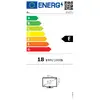
Energy efficiency scale:
Range of energy efficiency levels classifying devices from most to least energy-efficient.
-
A to G
-
Number of USB Type-B upstream ports quantity:
-
1
-
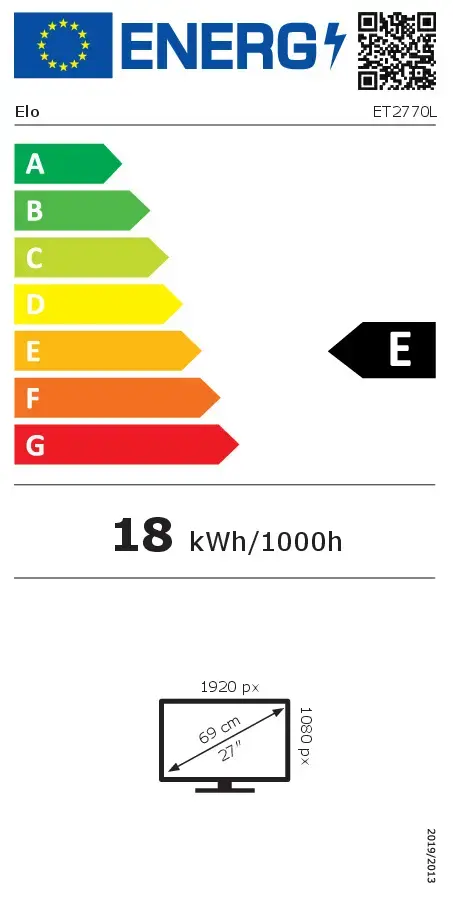
Energy efficiency class (SDR):
Energy efficiency class is a standard classification that is used all over Europe and which is understandable at first sight. Products can be efficiently compared according to classes, starting from A (the most energy efficient class), and ending with G (the most energy-intensive class). The classification of energy efficiency is based on annual energy consumption which is being calculated on the basis of several different parameters.
-
E
-
Energy consumption (SDR) per 1000 hours:
Power consumption in switched-on state expressed in W.
-
18 kWh