
A curated selection of maximum value offers!
In cart {{totalProductsCount}} item(s)
Your cart is empty
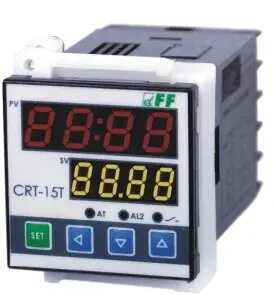
F&F CRT-15T PID Temperature Controller 0-400C
The F&F CRT-15T is a professional PID temperature controller engineered for precise thermal regulation across a temperature range of 0 to 400°C. This device is designed to provide stable and accurate heat management in demanding industrial and heating environments. By utilizing advanced PID control algorithms, the controller minimizes temperature fluctuations and ensures that the set parameters are maintained with high consistency, making it an essential component for automated systems requiring reliable thermal performance.
The primary advantage of the F&F CRT-15T lies in its sophisticated PID control logic, which dynamically adjusts the output to prevent overshoot and maintain a steady state. Its robust construction ensures long-term reliability in continuous operation, while the wide temperature range allows for versatility across various heating processes. The controller is designed for seamless integration into existing control panels, offering a user-friendly interface that simplifies the monitoring and adjustment of thermal processes.
This controller is not intended for applications requiring cooling control or complex multi-stage programming beyond standard PID regulation. It may also be unsuitable for environments with extreme electromagnetic interference or high humidity levels that exceed the device's specified protection ratings.
To use the F&F CRT-15T, mount the device securely in a standard control panel cutout. Connect the temperature sensor to the designated input terminals and wire the heating element output according to the provided electrical diagram. Once powered, use the front-panel interface to set the desired target temperature. The PID algorithm will automatically calibrate the heating output to reach and maintain the setpoint. Ensure that all electrical connections are tightened and verified against the technical documentation before applying power to the system.
For optimal performance, ensure the temperature sensor is placed in a location that accurately represents the thermal state of the process. Regularly inspect electrical connections to prevent overheating at the terminals and ensure the controller is kept free from dust and debris to maintain clear visibility of the display.
{{highlightedFeature.featureTitle}}:
{{getProductFeatureValueById(product, highlightedFeature.featureId)}}
{{ productComparisonGenerationError }}