
Filters you can trust. Pure water every day.
In cart {{totalProductsCount}} item(s)
Your cart is empty
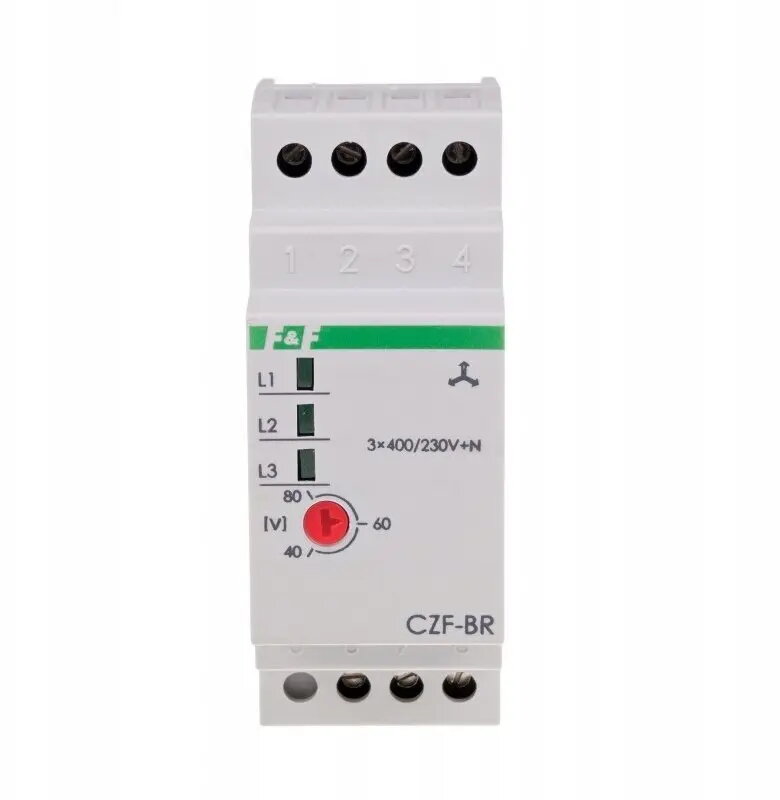
FF CZF-B-TRMS Phase Asymmetry and Loss Relay
The FF CZF-B-TRMS is a professional phase asymmetry and phase loss monitoring relay engineered to provide robust protection for three-phase electrical installations. By utilizing advanced True RMS (TRMS) measurement technology, this device ensures precise detection of voltage irregularities, even in environments with distorted waveforms. It serves as a critical safety component in industrial and commercial power systems, effectively preventing potential damage to motors, compressors, and sensitive electronic equipment by automatically disconnecting the circuit when a phase failure or significant voltage imbalance is detected.
The primary benefit of the CZF-B-TRMS relay is its high measurement accuracy provided by TRMS technology, which allows it to function reliably regardless of the harmonic content in the power supply. Its design focuses on operational stability and rapid response times, ensuring that connected equipment is shielded from the harmful effects of unbalanced phases or total phase loss. The device is built for durability and seamless integration into standard electrical cabinets, offering a reliable solution for maintaining the longevity of expensive three-phase machinery.
This relay is specifically designed for three-phase systems and is not compatible with single-phase electrical installations. Furthermore, it may not be suitable for applications requiring specialized communication features or advanced remote monitoring capabilities, as it functions primarily as a standalone protection device.
The relay should be installed by a qualified electrician within a standard electrical distribution board. Once mounted on a DIN rail, the input phases must be connected to the designated terminals according to the wiring diagram provided with the device. After installation, the relay monitors the incoming voltage levels continuously. If the voltage parameters fall outside the defined safety thresholds, the internal relay contacts will trigger to disconnect the load, thereby preventing damage to the connected equipment.
Regularly inspect the relay and the associated electrical connections to ensure they remain secure and free from oxidation. It is recommended to perform periodic testing of the protection function to verify that the device correctly disconnects the circuit during simulated fault conditions.
{{highlightedFeature.featureTitle}}:
{{getProductFeatureValueById(product, highlightedFeature.featureId)}}