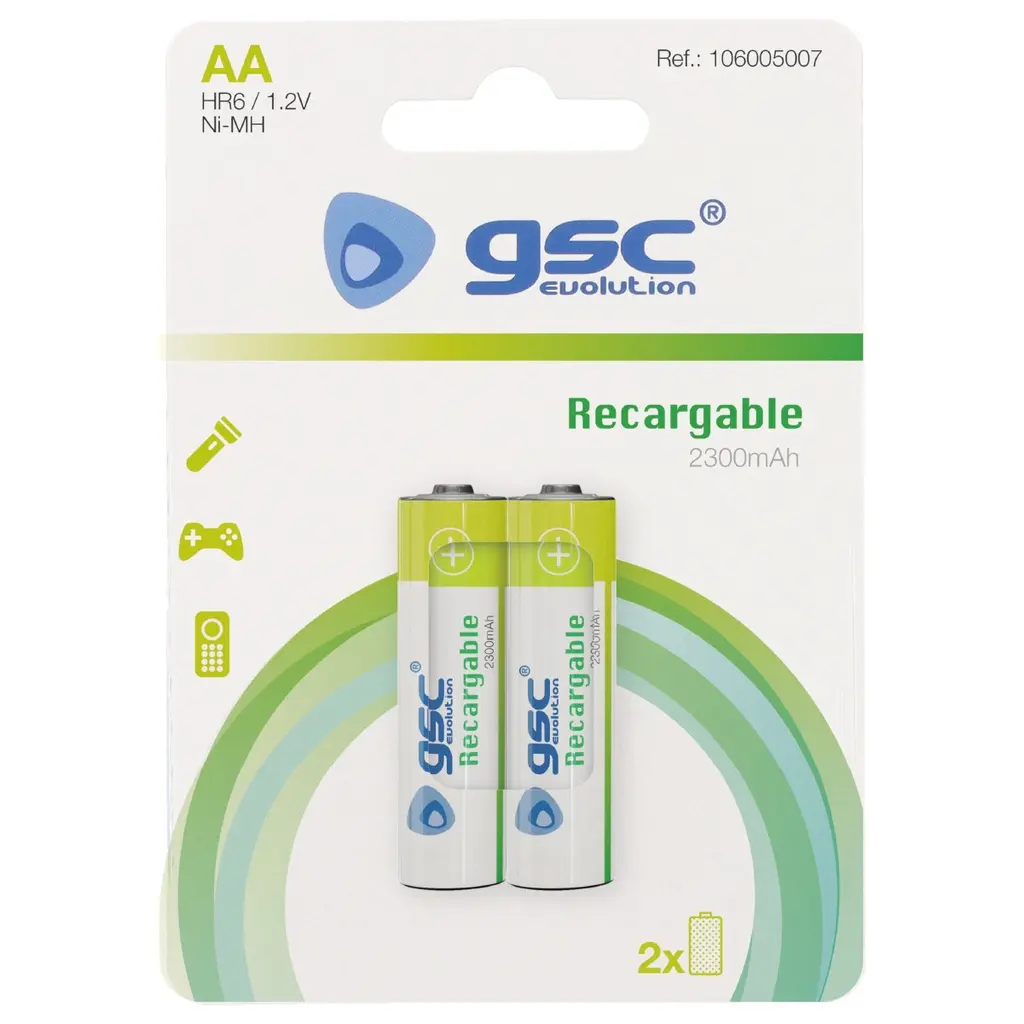
The GSC evolution Rechargeable HR6 AA Battery 1.2V 2300mAh 2pcs per blister is compared here with other GSC evolution rechargeable and alkaline battery alternatives, including the smaller AAA size, AA alkaline batteries in different pack sizes, and larger C and D format power cells. All products belong to the same overarching category of portable power sources, but differ in chemical composition, nominal voltage, capacity, and physical form factor, which directly influences device compatibility and operational runtime.
⚙️ The specifications comparison table below contrasts the battery type, format size, nominal voltage, capacity, and package quantity to help you understand the technical distinctions and practical application of each option.
| Comparison parameter | GSC evolution Rechargeable HR6 AA Battery 1.2V 2300mAh 2pcs per blister | GSC evolution Rechargeable HR03 AAA 1.2V 800mAh Battery 2pcs Blister | GSC evolution alkaline LR6 AA Battery 1.5V 2pcs blister | GSC evolution alkaline LR6 AA Battery 1.5V 4 pieces per blister | GSC evolution alkaline LR14 C battery 1.5V 2pcs per blister | GSC evolution alkaline LR20 D battery 1.5V 2pcs per blister | Practical conclusion |
|---|
| Battery type | Rechargeable battery (HR6) | Rechargeable battery (HR03) | Alkaline battery (LR6) | Alkaline battery (LR6) | Alkaline battery (LR14) | Alkaline battery (LR20) | The primary difference is between rechargeable chemistry for repeated use and primary alkaline chemistry for long-term single-use applications. |
| Form factor | AA (HR6) | AAA (HR03) | AA (LR6) | AA (LR6) | C (LR14) | D (LR20) | The physical size and shape determine direct compatibility with the battery compartment of a specific electronic device. |
| Nominal voltage | 1.2V | 1.2V | 1.5V | 1.5V | 1.5V | 1.5V | Alkaline cells provide 1.5V, whereas Ni-MH rechargeable cells operate at a standard 1.2V. |
| Capacity | 2300mAh | 800mAh | Not specified | Not specified | Not specified | Not specified | The 2300mAh capacity rating indicates a strong energy reserve suitable for high-drain AA devices. |
| Package quantity | 2 pcs | 2 pcs | 2 pcs | 4 pcs | 2 pcs | 2 pcs | Pack counts of 2 or 4 pieces allow matching purchase quantity to the device slot requirements. |
◎ The suitability table below evaluates user needs, usage scenarios, and buyer profiles to show which product fits specific application requirements best.
| Use case | Recommended product | Why |
|---|
| Frequently used high-drain devices (toys, flashlights, wireless mice) | GSC evolution Rechargeable HR6 AA Battery 1.2V 2300mAh 2pcs per blister | Reusability and high 2300mAh capacity make this an economical and long-lasting choice for regular AA device use. |
| Compact electronic devices and remote controls | GSC evolution Rechargeable HR03 AAA 1.2V 800mAh Battery 2pcs Blister | Suits devices requiring a smaller AAA form factor while maintaining the cost-saving benefits of rechargeable power. |
| Everyday low-to-medium drain devices (clocks, basic remotes) | GSC evolution alkaline LR6 AA Battery 1.5V 2pcs blister | An AA alkaline battery delivering 1.5V is convenient for devices that do not require frequent battery recharging. |
| Devices requiring four AA cells | GSC evolution alkaline LR6 AA Battery 1.5V 4 pieces per blister | A four-piece pack is optimal for electronics designed to take four AA batteries at once. |
| Larger portable radios and lanterns | GSC evolution alkaline LR14 C battery 1.5V 2pcs per blister | The C format is engineered for larger equipment requiring a bulkier physical cell size. |
| High-output flashlights and heavy-duty portable devices | GSC evolution alkaline LR20 D battery 1.5V 2pcs per blister | The D format provides extended power delivery for demanding high-capacity equipment. |
The GSC evolution Rechargeable HR6 AA Battery 1.2V 2300mAh 2pcs per blister differs from the alternatives by offering rechargeable convenience and a robust 2300mAh capacity in the widely used AA format. It is most suitable for users who regularly operate energy-demanding electronics and want to avoid the recurring cost of single-use cells. A buyer should prefer this rechargeable option over alkaline alternatives when usage is frequent, whereas specific alternate sizes (AAA, C, D) or primary alkaline variants remain better suited if the device requires a different physical format or sees very infrequent use.