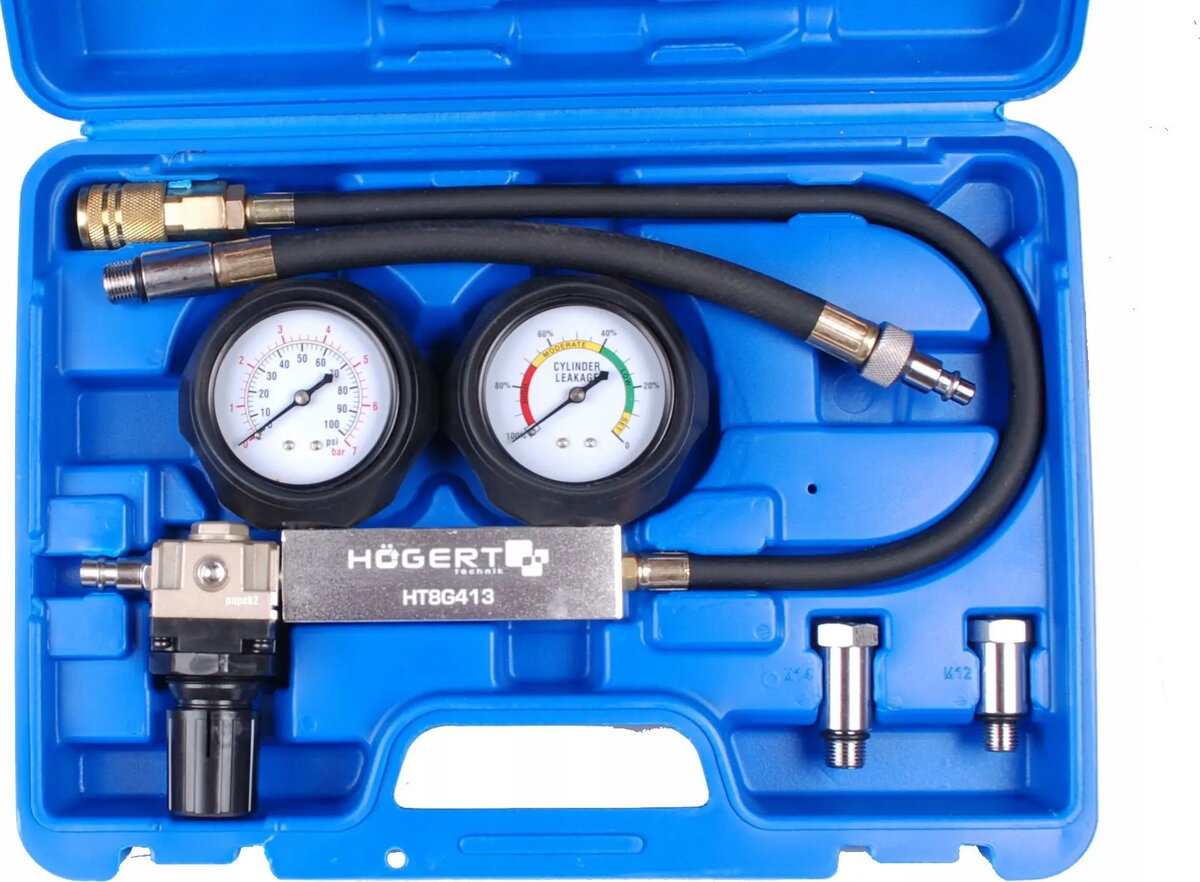
The Cylinder Leak Tester Högert Technik HT8G413 is a handheld diagnostic tool for detecting and measuring leakage in internal combustion engine cylinders. It is intended for workshop and maintenance use to help identify common sealing faults such as leaking valves, worn piston rings, or compromised head gaskets. The tester supports engine inspection workflows by providing a controlled source of compressed air to the cylinder while measuring escape paths, enabling a practical assessment of cylinder sealing condition during compression tests and routine engine diagnostics.
Advantages
The tester is compact and designed for handheld operation, allowing technicians to perform quick cylinder leak assessments without complex setup. It delivers a steady air supply and includes fittings for connection to spark plug or injector openings, simplifying the testing process. The construction focuses on durability for workshop conditions, and the device enables clear identification of leak location by observing escaping air or using accessory adapters.
Suitable for
- Engine diagnostics in automotive repair workshops
- Routine maintenance checks on gasoline and diesel engines
- Troubleshooting suspected valve, piston ring, or head gasket leaks
- Pre-purchase inspections and compression test follow-ups
Key specifications
- Handheld pneumatic cylinder leak tester designed for engine sealing inspections
- Connections suitable for spark plug or injector openings and common workshop fittings
- Provides controlled compressed-air input for leak detection procedures
- Robust construction intended for workshop and maintenance environments
How to use
Ensure the engine is at safe working temperature and the battery is disconnected or ignition is disabled to prevent accidental starting. Remove the spark plug or injector from the cylinder to be tested and attach the tester using the appropriate adaptor for a secure seal. Apply compressed air at a recommended pressure within safe limits for the engine type while observing for air escaping through the intake, exhaust, crankcase, or coolant passages. Interpret leak location and severity by noting the escape route and the rate of air flow; use a stethoscope or soapy water to help localize small leaks when necessary. After testing, release pressure, remove the tester, and reinstall components following torque specifications.
Usage recommendations
Use compatible adaptors and regulated workshop compressed air sources. Avoid exceeding safe pressures for the specific engine to prevent damage. Combine leak detection with compression measurements and visual inspection for comprehensive diagnostics. Wear appropriate personal protective equipment and follow workshop safety procedures when working with pressurized air and engine components.