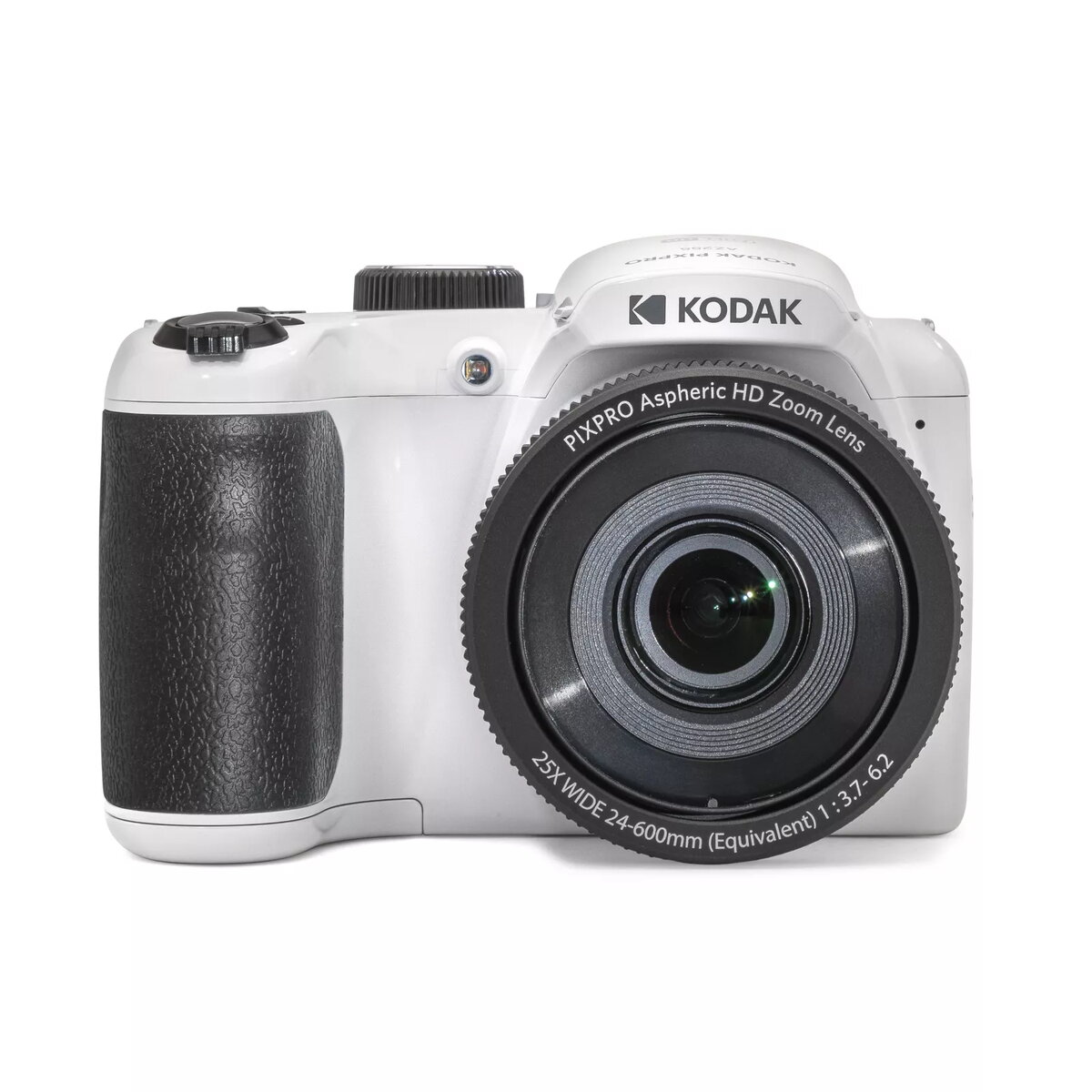
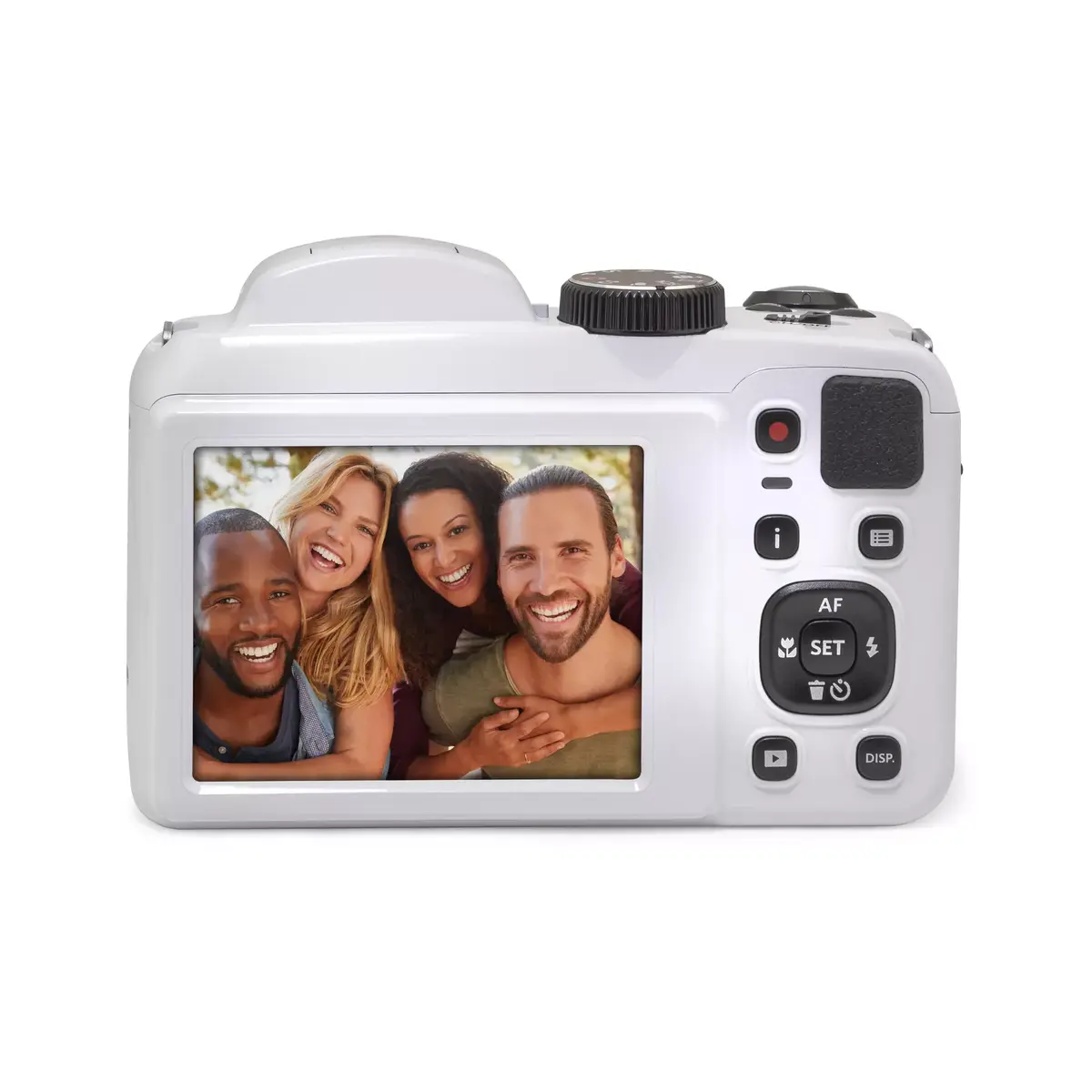
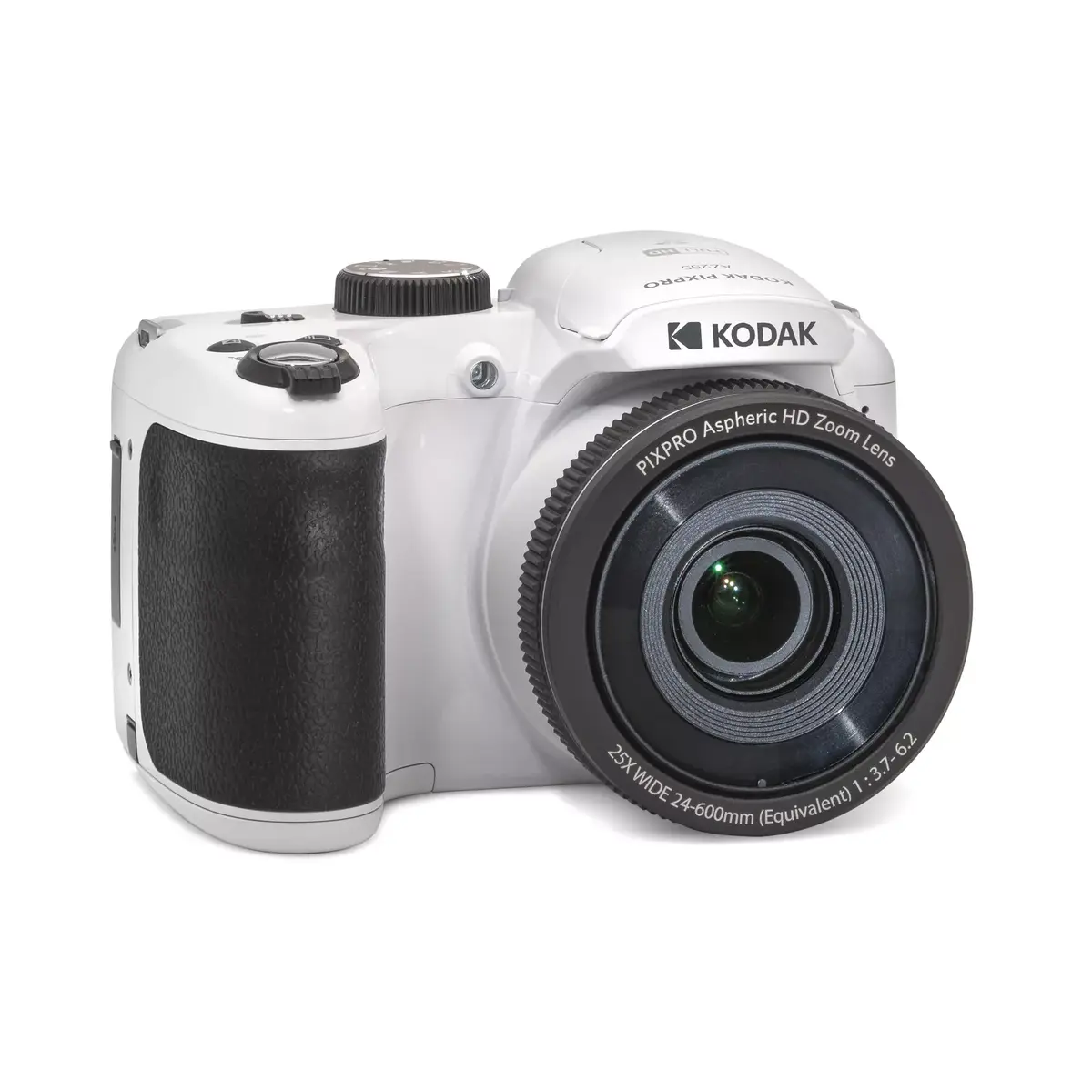
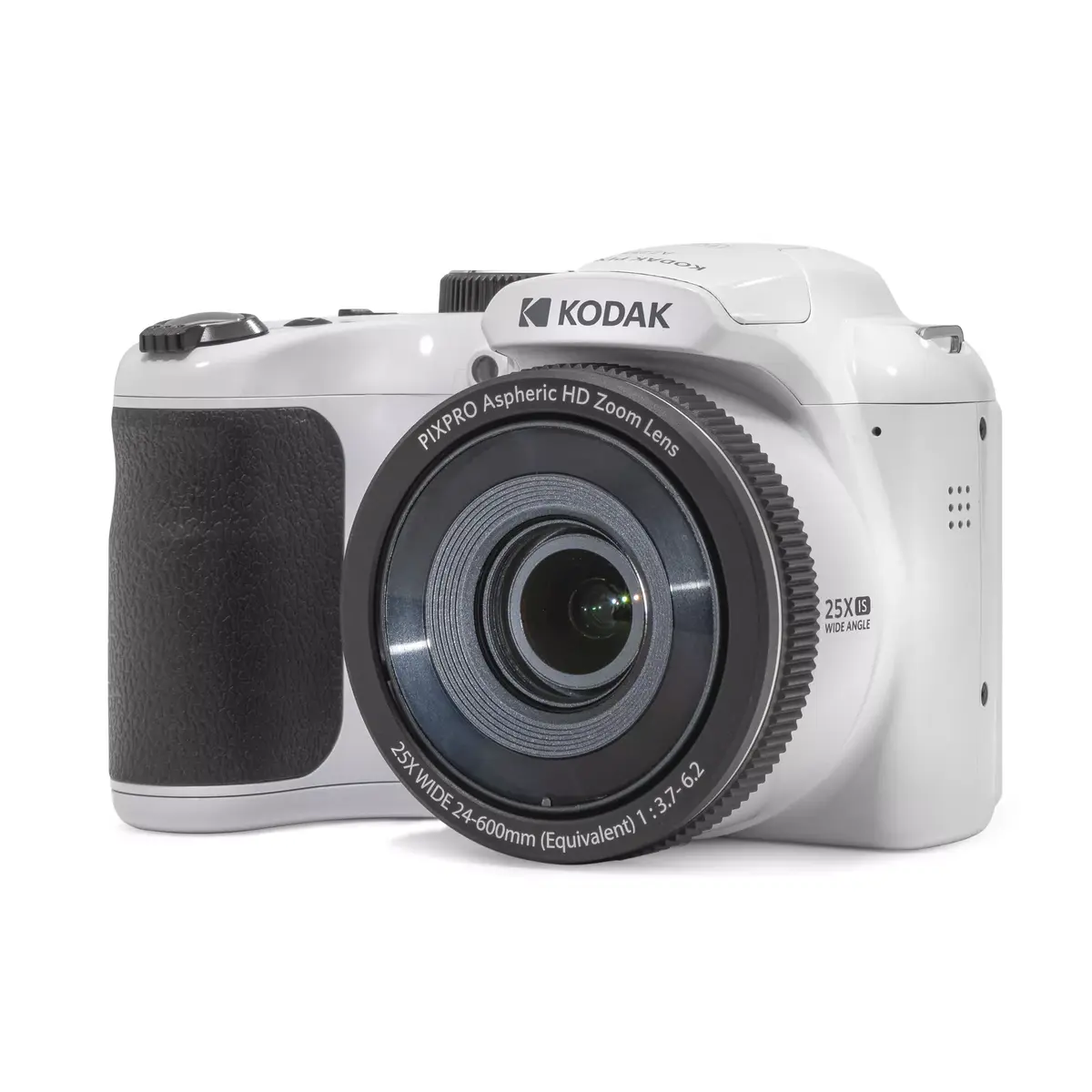
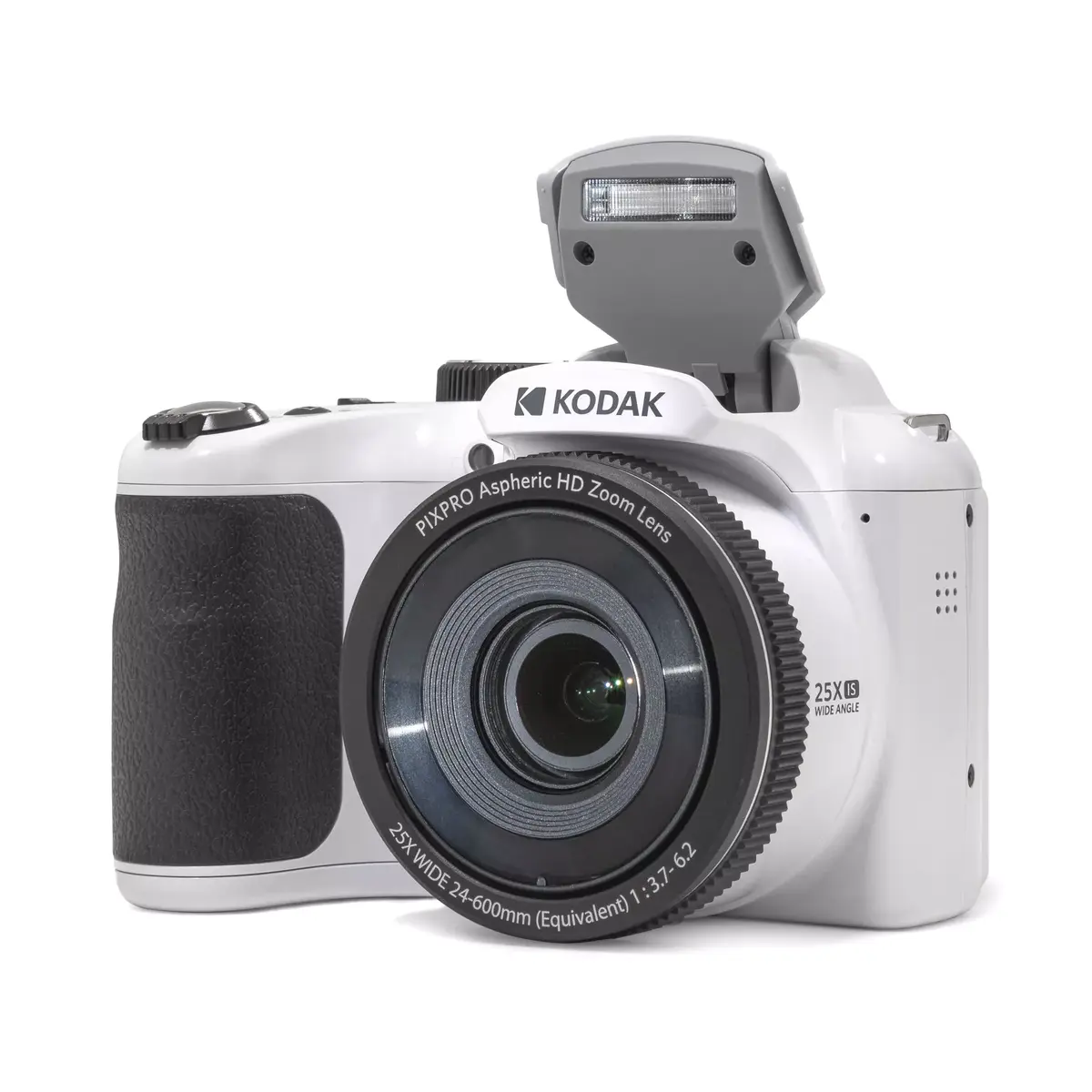
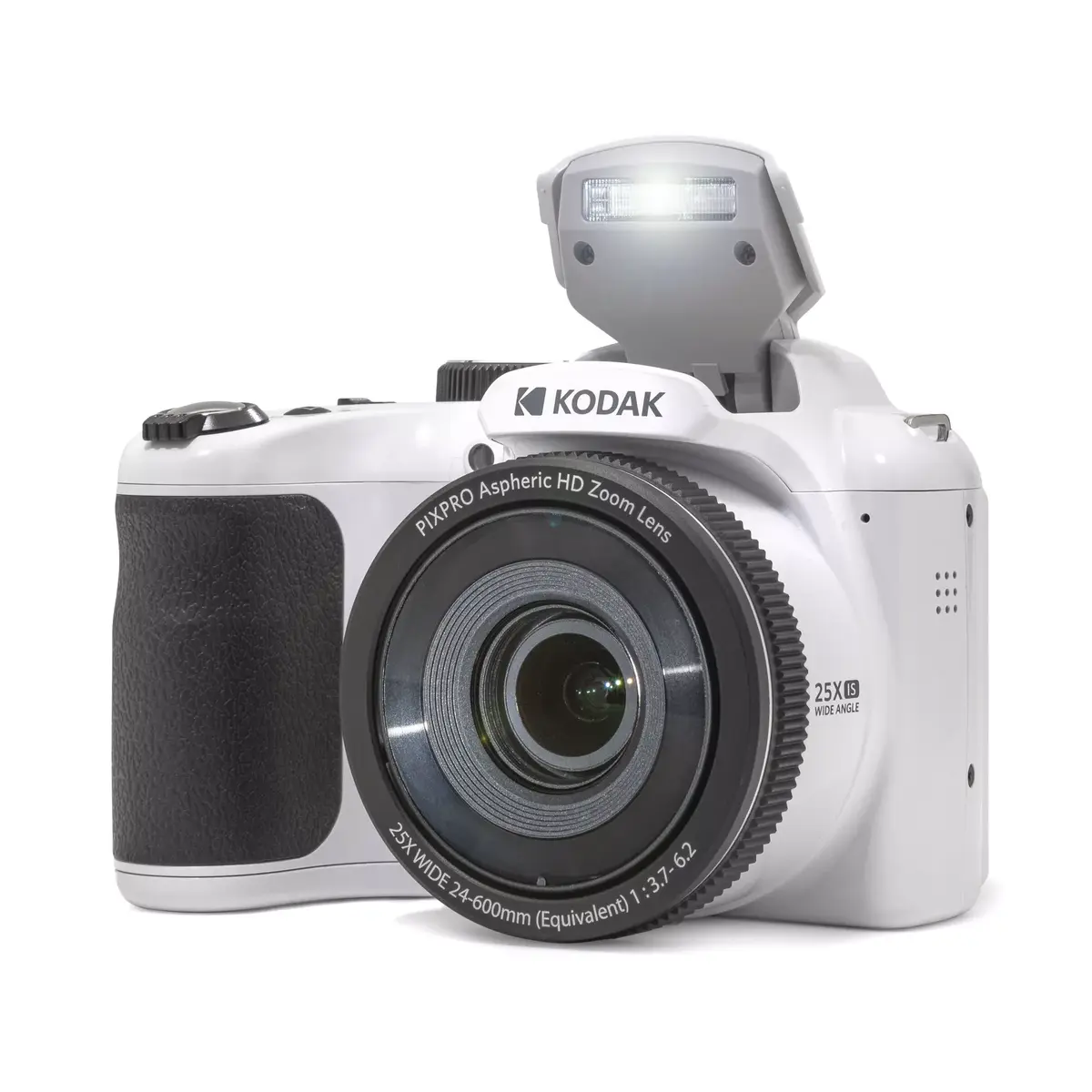
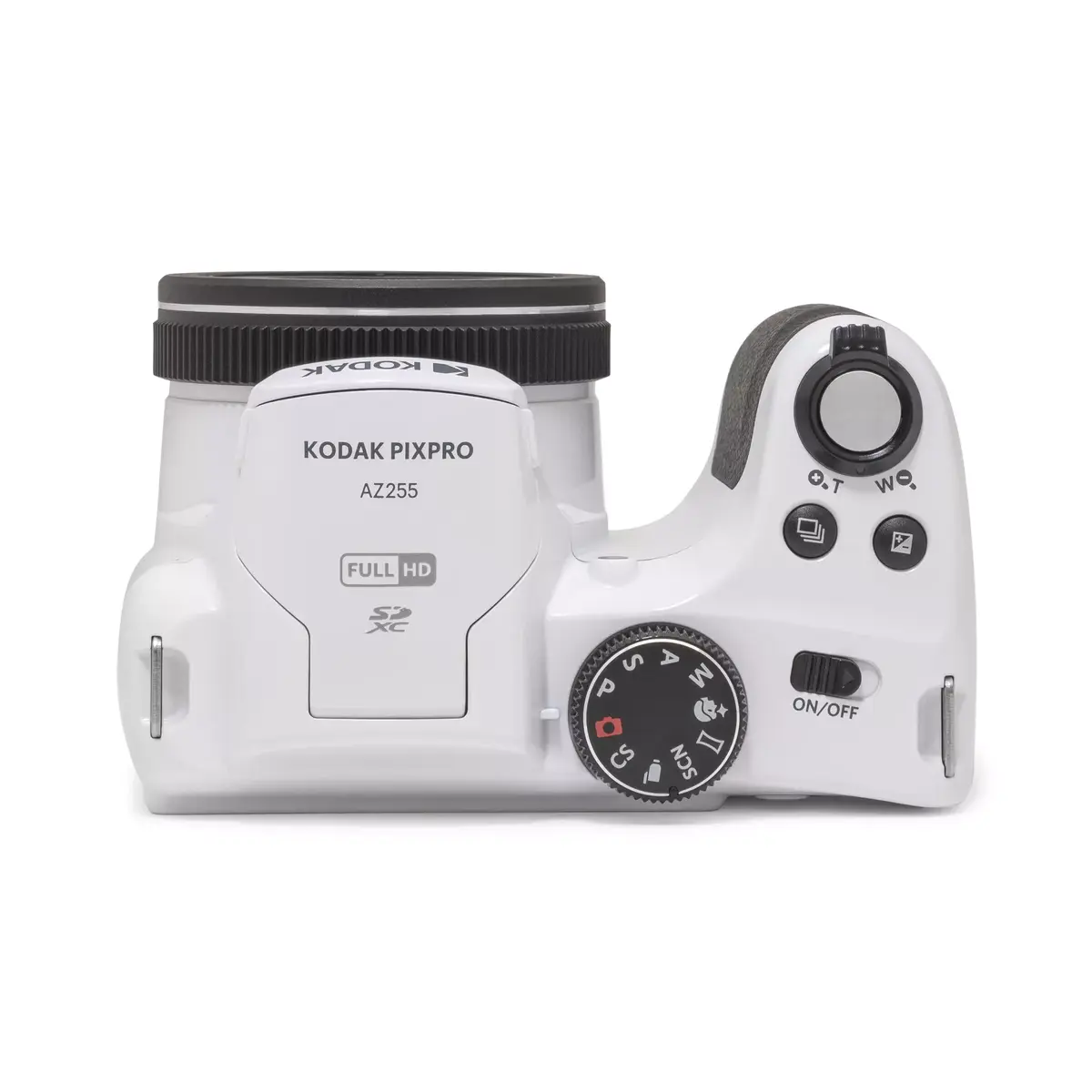
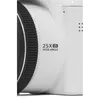
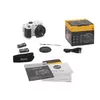
-
Battery technology:
The type of battery in the device, e.g. nickel–cadmium (NiCd).
-
Alkaline
-
Tripod mounting supported:
-
Yes
-
Near Field Communication (NFC):
-
No
-
Wi-Fi:
Popular technology that allows an electronic device to exchange data or connect to the internet wirelessly using radio waves.
-
No
-
Bluetooth:
Bluetooth is a low-power radio technology developed to replace the cables and wires currently used to link or connect electronic devices such as personal computers, printers, and a wide variety of handheld devices including mobile phones. Because it uses radio-wave connectivity, a Bluetooth-enabled device has a constant, established connection to whatever browser it uses. This saves the user the trouble of logging on to check for emails or news updates, for example.
-
No
-
HDMI:
HDMI (High-Definition Multimedia Interface) is a compact audio/video interface for transferring uncompressed video data and compressed/uncompressed digital audio data from a HDMI-compliant device ("the source device") to a compatible computer monitor, video projector, digital television, or digital audio device. HDMI is a digital replacement for existing analog video standards.
-
No
-
USB version:
Universal Serial Bus (USB) is an industry standard developed in the mid-1990s that defines the interface used for connection, communication and power supply between computers and electronic devices. Every new version - for example 1.1, 2.0, 3.0 - is much faster than the previous one.
-
2.0
-
PictBridge:
PictBridge is an industry standard introduced in 2003 from the Camera & Imaging Products Association (CIPA) for direct printing. It allows images to be printed directly from digital cameras to a printer, without having to connect the camera to a computer using common connectivity like USB or Bluetooth.
-
No
-
Display diagonal:
Size of the display for this product, measured diagonally, usually in inches.
-
3 "
-
Touchscreen:
A screen of a laptop, smartphone, etc., that responds to touch so you can control the interface using your fingers.
-
No
-
Display:
The description of display that can includes display type, resolution, size etc.
-
LCD
-
Built-in microphone:
Microphone that is found inside the product.
-
Yes
-
HD type:
Type of supported High Definition (e.g. Full HD, 4K Ultra HD).
-
Full HD
-
Maximum video resolution:
This is the maximum resolution of video images. Resolution is a measure of the degree of detail visible.
-
1920 x 1080
-
Video recording:
Recording moving visual images.
-
Yes
-
Slowest camera shutter speed:
The maximum time which the camera shutter is open when taking a photo.
-
30 s
-
Fastest camera shutter speed:
The minimum time which the camera shutter is open when taking a photo.
-
1/2000
-
Light exposure correction:
-
± 3EV (1/3EV step)
-
ISO sensitivity (max):
-
3200
-
ISO sensitivity (min):
-
100
-
Focus adjustment:
-
Auto
-
Focus:
-
TTL
-
Digital zoom:
Indicates the digital zoom capacity, the number of times that the picture is enlarged thanks to digital technology.
-
4 x
-
Optical zoom:
Indicates the optical zoom capacity, which is the number of times that the picture can be enlarged with the optics of the camera.
-
25 x
-
Image stabilizer:
This camera function compensates for slight shaking movements caused by an unstable position and ensures smooth footage even in suboptimal conditions.
-
Yes
-
Still image resolution(s):
List of image resolutions that supported by device.
-
(4:3) 16MP: 4608x3456, 10MP: 3648x2736, 5MP: 2592x1944, 3MP: 2048x1536, 0.3MP: 640x480, (3:2) 14MP: 4608x3072, (16:9) 12MP: 4608x2592, 2MP: 1920x1080
-
Maximum image resolution:
Resolution is the amount of detail held by an image. The higher the resolution, the better (sharper) the image. The maximum image resolution produces the best image.
-
4608 x 3456
-
Sensor type:
A sensor is a convertor than measures a physical quality (light, temperature etc.) and displays this electronically on a device.
-
BSI CMOS
-
Image sensor size:
The total dimensions of the sensor within the camera, given in inches ('').
-
1/2.3
-
Megapixel (approx.):
The number (in millions) of light-sensitive picture elements known as pixels actually used by the camera's image sensor (CCD) to record light, and which are reflected to the final number of recorded pixels stored on the memory card.
-
16.35 MP
-
Camera type:
There are a number of common types of digital cameras: compact cameras, bridge cameras, mirrorless interchangeable-lens cameras (MILC) and single lens reflex (SLR) cameras. Bridge cameras 'bridge the gap' between the low-end compact and high-end professional (SLR) cameras. Also MILCs populate this mid-segment by combining the larger sensors and interchangeable lenses of DSLRs with the live-preview viewing system of compact cameras.
-
Compact camera
-
Product colour:
The colour e.g. red, blue, green, black, white.
-
White
-
Self-timer delay:
Duration of self-timer, that's a camera device that gives a delay between pressing the shutter release and the shutter's firing. It is most commonly used to let photographers to take a photo of themselves (often with the family), hence the name.
-
2, 10
-
Photo effects:
Different effects that you can use to modify photos after they have been taken, such as colour filters.
-
Black&White, Sepia, Vivid
-
Shooting modes:
-
Auto, Manual, Movie, Program, Scene, Shutter priority
-
Scene modes:
Scenery mode', 'Portrait mode' and other modes which are manually/automatically activated on a camera and change the settings (e.g. exposure time) accordingly.
-
Beach, Children, Fireworks, Landscape (scenery), Night landscape, Night portrait, Panorama, Party (indoor), Pet, Portrait, Snow, Sports, Sunset
-
White balance:
Technique in photography and image processing, which involves a global adjustment of the intensities of the colors (typically red, green, and blue primary colors). An important goal of this adjustment is to render specific colors – particularly neutral colors including white – correctly.
-
Auto, Cloudy, Daylight, Fluorescent, Incandescent, Manual
-
Compatible memory cards:
Types of memory cards which can be used with this product.
-
SD, SDHC, SDXC
-
Flash modes:
Different modes for a camera flash which are manually/automatically activated e.g. auto-flash mode, flash on with red eye reduction.
-
Auto, Flash off, Flash on, Red-eye reduction, Slow synchronization, Soft
-
Light metering:
Light metering mode refers to the way in which a device determines the exposure. Multi-pattern and evaluative metering: the camera measures the light intensity in several points in the scene. Centre-weighted metering: the meter concentrates between 60 to 80 percent of the sensitivity towards the central part of the viewfinder. Spot metering: the camera will only measure a very small area of the scene (between 1-5% of the viewfinder area).
-
Centre-weighted, Spot
-
Light exposure modes:
The different lengths of time for the exposure for a camera e.g. longer exposure for low light.
-
Aperture priority AE, Shutter priority AE
-
Auto focusing (AF) modes:
Modes on the camera for auto-focusing, including continuous focusing and one shop focusing.
-
Centre weighted Auto Focus, Spot Auto Focus
-
Image formats supported:
The type of image files that the device can use/display e.g. gif, JPEG (jpg).
-
EXIF, JPEG