
Dreame vacuums for fast and efficient cleaning!
In cart {{totalProductsCount}} item(s)
Your cart is empty
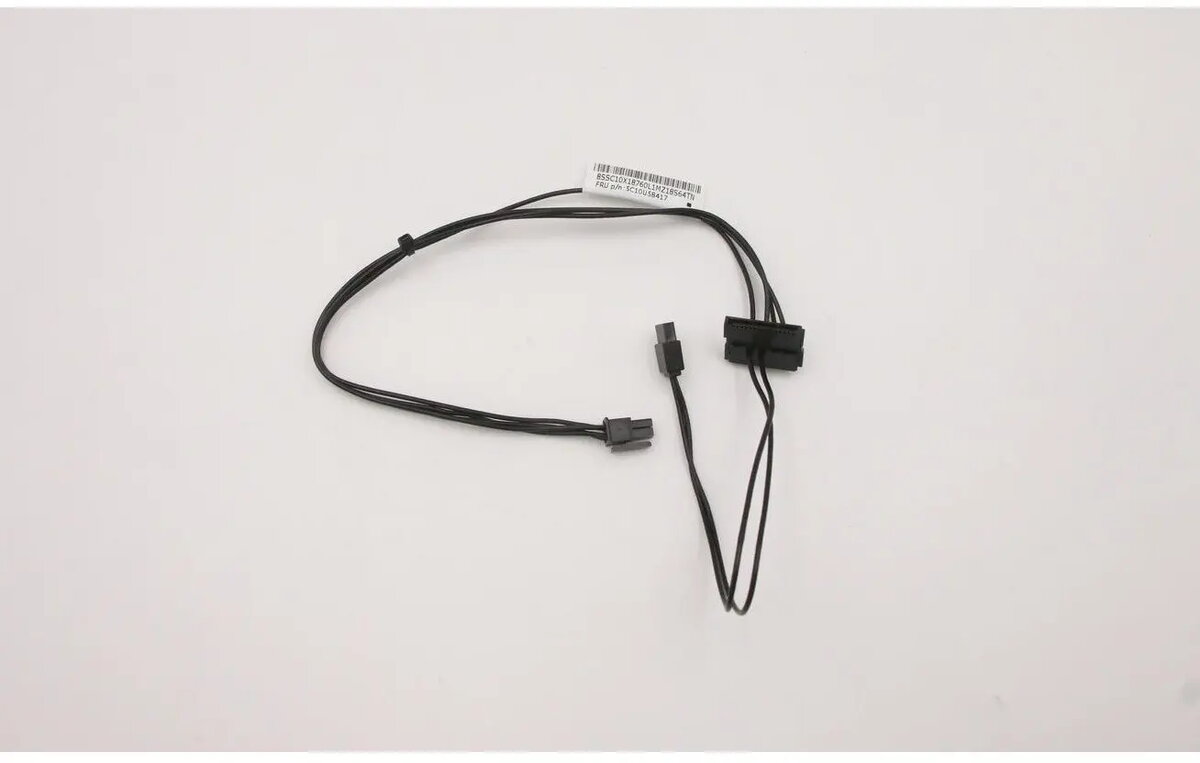
Power cable assembly for SATA drives, Lenovo
Lenovo SATA power cable assembly for SATA drives is a dedicated power lead designed to deliver the standard 15-pin SATA power connection required by modern hard disk drives (HDD) and solid-state drives (SSD). It provides a reliable electrical connection between a computer power supply and SATA storage devices, suitable for repairs, replacements and system upgrades where an original-style SATA power cable is needed.
This power cable assembly follows the SATA power interface standard, ensuring compatibility with a wide range of HDDs and SSDs. The cable is designed for stable power delivery to storage devices, reducing the risk of intermittent power loss during operation. Its form factor and connector orientation match typical system installations, which simplifies replacement and integration into existing desktops and servers.
Power off the computer and disconnect it from mains power before installing the cable. Identify the SATA power connector on the cable and align the 15-pin connector with the socket on the drive, ensuring correct orientation of the keyed plug. Firmly insert the connector until it seats; avoid excessive force. Connect the other end to an available SATA power output from the computer power supply. After connections are made, restore mains power and power on the system to verify that the drive receives power and is detected by the operating system.
Use the cable only with compatible SATA drives and a power supply that meets the system's current and voltage requirements. Inspect connectors for damage before installation and route the cable to avoid sharp bends or contact with moving parts such as cooling fans. For systems with multiple drives, ensure the power supply has sufficient capacity to support all connected devices.
{{highlightedFeature.featureTitle}}:
{{getProductFeatureValueById(product, highlightedFeature.featureId)}}
{{ productComparisonGenerationError }}