
Hurry and order now – up to 50% off!
In cart {{totalProductsCount}} item(s)
Your cart is empty
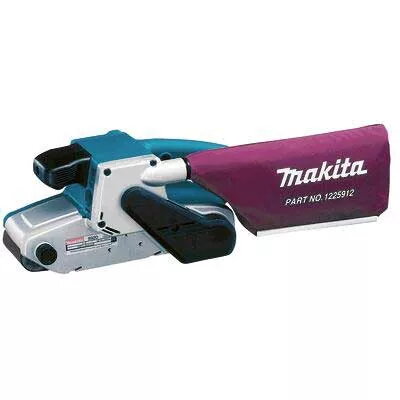
Belt sander Makita 9920
The Makita 9920 is a 1010 W belt sander designed for efficient material removal on wood and metal surfaces. It features an 8.8 AMP motor with electronic speed control and a variable speed dial to match sanding speed to the task. The tool includes an auto-tracking belt system, a front grip for comfortable two-handed operation, and a dust bag for cleaner work. With a compact depth of 330 mm and a weight of 4.5 kg, the sander balances power and portability for professional and DIY use.
The Makita 9920 combines strong motor performance with electronic speed regulation to maintain consistent sanding under varying load. Its auto-tracking belt system reduces the need for manual adjustments, while the front grip and lightweight construction improve user control and reduce fatigue. The tool is double insulated for added electrical safety and includes a long 16.4 ft power cord to increase maneuverability on site. A dust bag helps contain debris for a tidier workspace.
Install the appropriate sanding belt according to the required grit and ensure the belt is seated correctly on the rollers. Plug the sander into a 120 V AC outlet, set the variable speed dial to a suitable setting for the material, and switch the tool on. Use the front grip and rear handle to guide the sander evenly across the surface, applying light, consistent pressure. Monitor belt tracking during initial use; the auto-tracking system minimizes adjustment but check alignment before extended runs. Empty or replace the dust bag periodically to maintain airflow and dust collection performance.
For best results on wood, start with a coarser grit to remove material quickly and finish with finer grits to achieve a smooth surface. When working on metal or paint removal, use appropriate abrasive types and personal protective equipment, including eye and respiratory protection. Consider the optional sanding shoe for tasks that require consistent sanding depth or edge control. Allow the motor to reach operating speed before engaging the surface, and avoid excessive pressure to prevent premature belt wear and motor overload.
{{highlightedFeature.featureTitle}}:
{{getProductFeatureValueById(product, highlightedFeature.featureId)}}
{{ productComparisonGenerationError }}