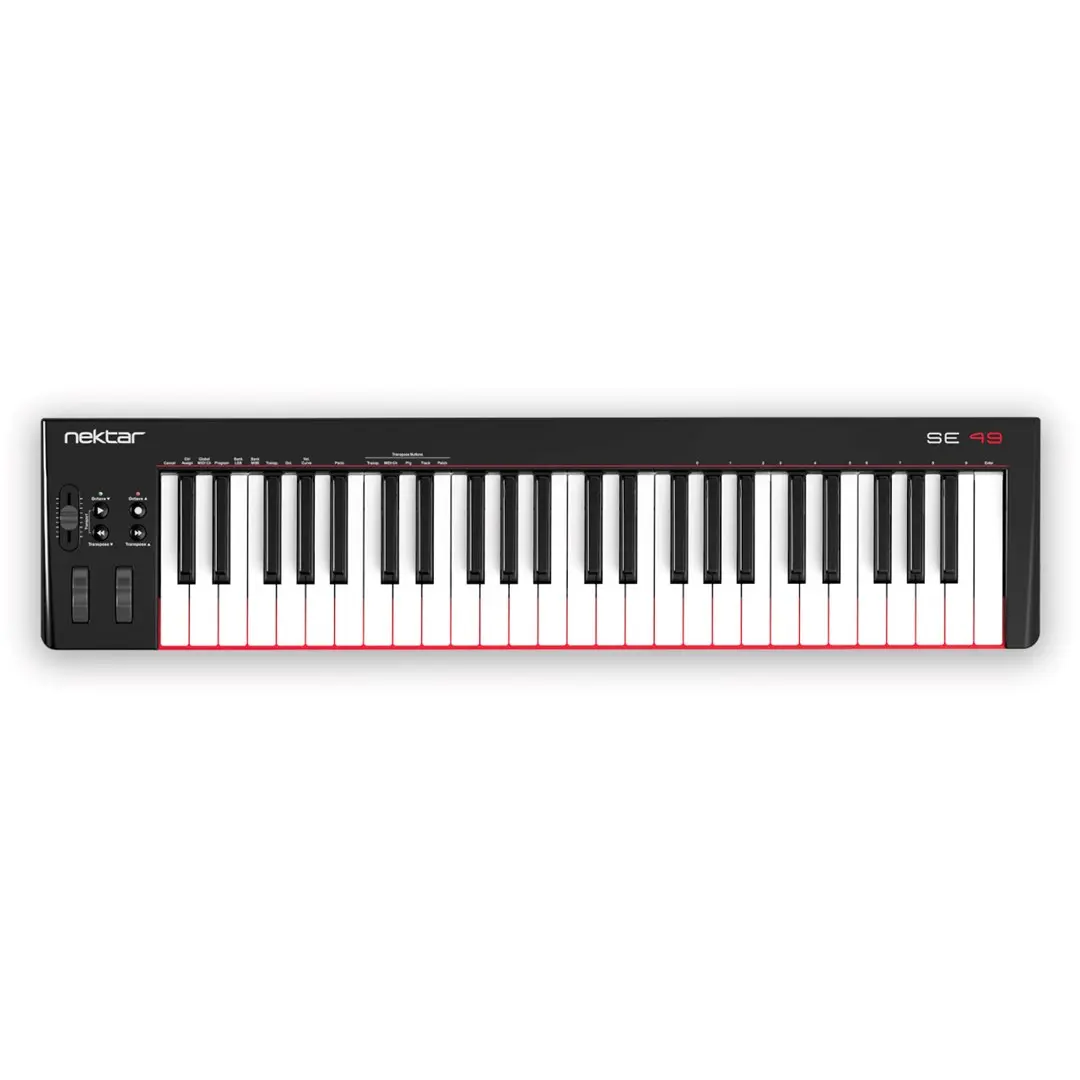
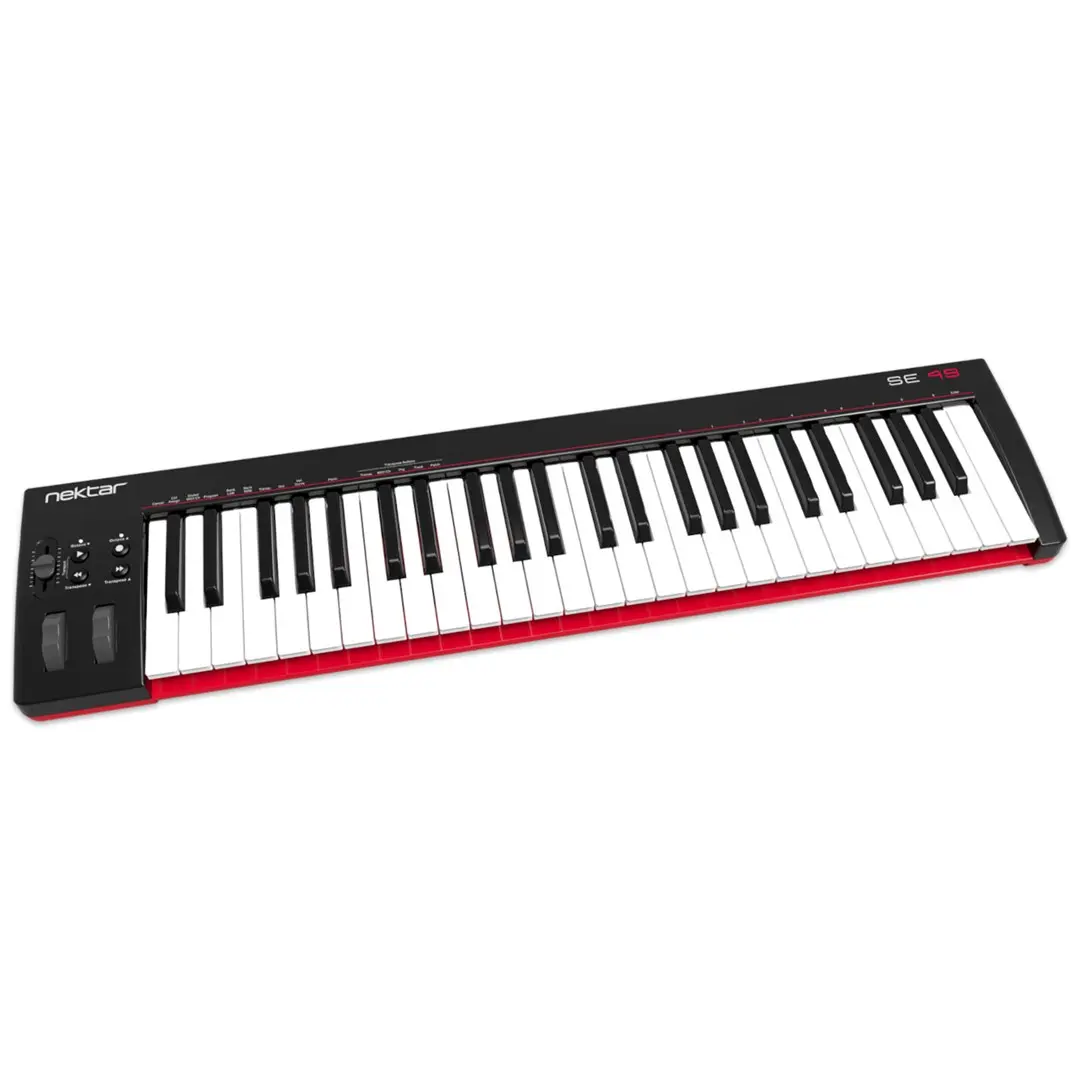
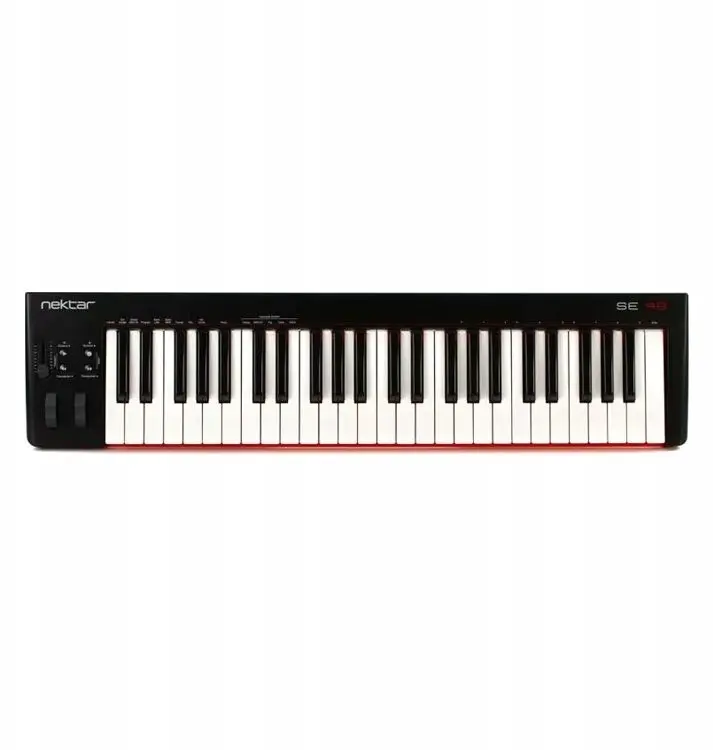
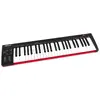
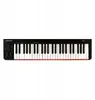
This product page features the NEKTAR SE 49 MIDI control keyboard, which is compared against similar controller alternatives from NEKTAR, M-Audio, and Behringer. All these devices are designed for music production and software instrument control, yet they differ significantly in key count, presence of extra performance pads or faders, and overall footprint.
⚙️ The specifications comparison table below outlines key differences and similarities regarding key count and type, interface connectivity, extra controllers such as pitch bend and modulation wheels, pads, and encoders, as well as system compatibility.
| Comparison parameter | NEKTAR SE 49 | NEKTAR SE61 | M-Audio Oxygen Pro Mini | M-Audio Keystation 49 MK3 | Behringer SWING | NEKTAR Impact LX 25 mkIII | Practical significance of differences |
|---|
| Key count | 49 keys | 61 keys | 32 mini keys | 49 keys | 32 mini keys | 25 keys | More keys allow for comfortable two-handed playing without constant octave switching, while compact models suit portable setups. |
| Connectivity and power | USB bus-powered | USB bus-powered | USB bus-powered | USB bus-powered | USB bus-powered, CV/Gate | USB bus-powered | All units utilize USB power, but hardware CV/Gate connections enable integration with external analog gear. |
| Additional controls | Pitch bend and modulation wheels | Pitch bend and modulation wheels | RGB pads, faders, encoders, OLED display | Octave shift buttons | Pitch bend and modulation wheels, arpeggiator, sequencer | Pads, pitch bend and modulation wheels, LED display | Models equipped with pads and encoders offer better live beat-making and mixing control, whereas basic units focus on traditional playing. |
| Compatibility | Windows, Mac, iOS, Linux | Windows, Mac, iOS, Linux | Studio-oriented software compatibility | Windows, Mac | USB MIDI, CV/Gate | Windows, Mac | Broad cross-platform compatibility ensures seamless integration with various desktop and mobile music environments. |
◎ The suitability table below evaluates how well each product matches specific use cases, experience levels, and workflow requirements to guide your final choice.
| Use case | Recommended product | Why this product is suitable |
|---|
| Classic home melody recording with 49 keys | NEKTAR SE 49 | Provides a balanced key range for two-handed performance in a streamlined design without cluttering controls. |
| Music production requiring an extended keyboard range | NEKTAR SE61 | Offers 61 keys for playing wider musical ranges comfortably without frequent octave transposition. |
| Mobile beat-making and electronic music creation | M-Audio Oxygen Pro Mini | Features a compact footprint packed with performance pads, faders, and encoders for portable DAW control. |
| Straightforward 49-key studio production | M-Audio Keystation 49 MK3 | Focuses strictly on essential full-sized 49-key playability for traditional software instrument control. |
| Integration with analog and modular synthesizers | Behringer SWING | Includes dedicated CV/Gate outputs, an arpeggiator, and a step sequencer for experimental hardware setups. |
| Compact studio setup with integrated drum pads | NEKTAR Impact LX 25 mkIII | Combines 25 keys with built-in pads and a display for rapid rhythm input within a smaller desk space. |
The NEKTAR SE 49 MIDI control keyboard differentiates itself from alternatives by combining 49 standard keys with a straightforward, clutter-free control set, avoiding unnecessary pads and encoders. It is most suitable for musicians seeking a reliable, full-sized playing experience for two-handed performance without paying for advanced production controls they do not need. Buyers should prefer this model when looking for simple plug-and-play operation, wide cross-platform compatibility, and a dedicated focus on traditional keyboard performance.