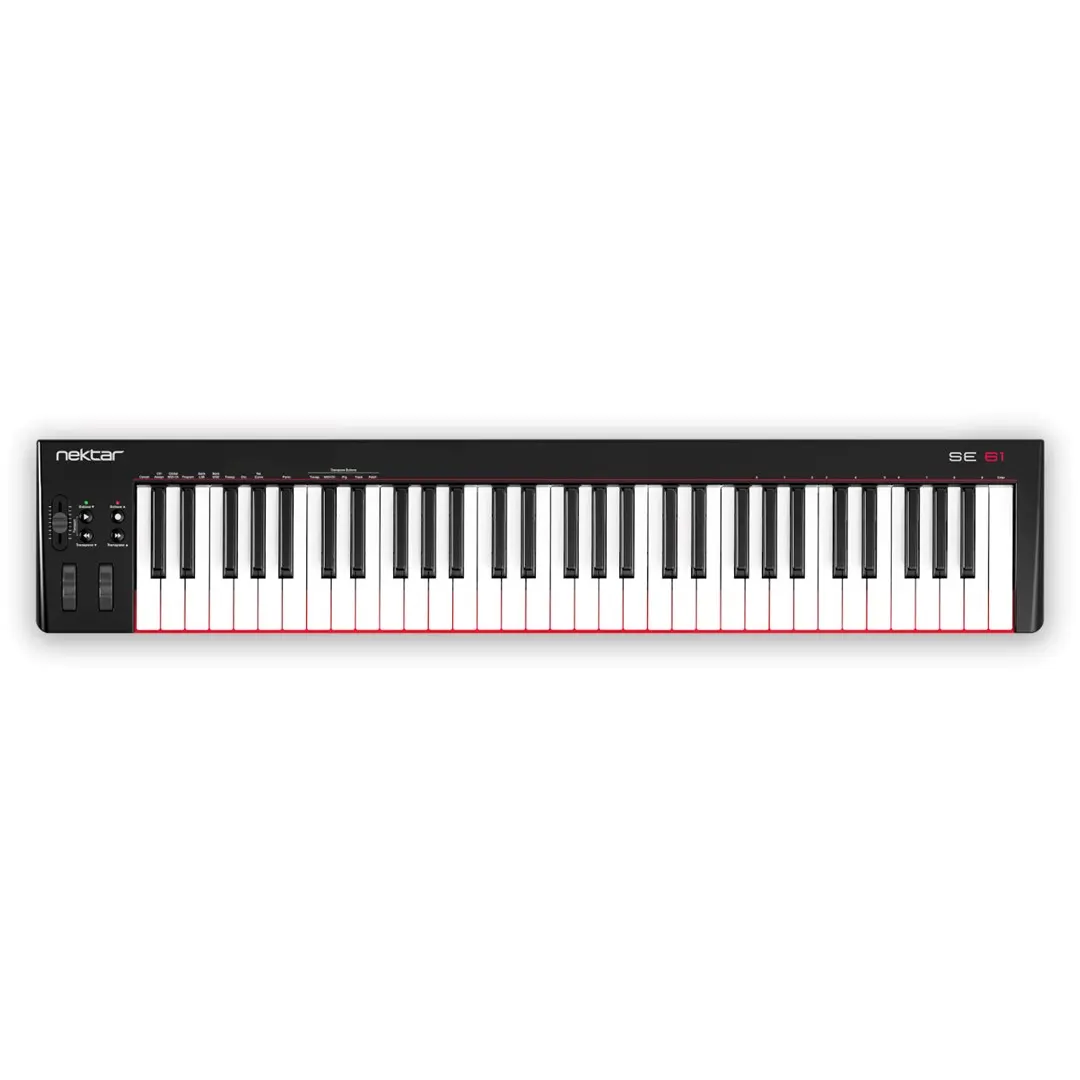
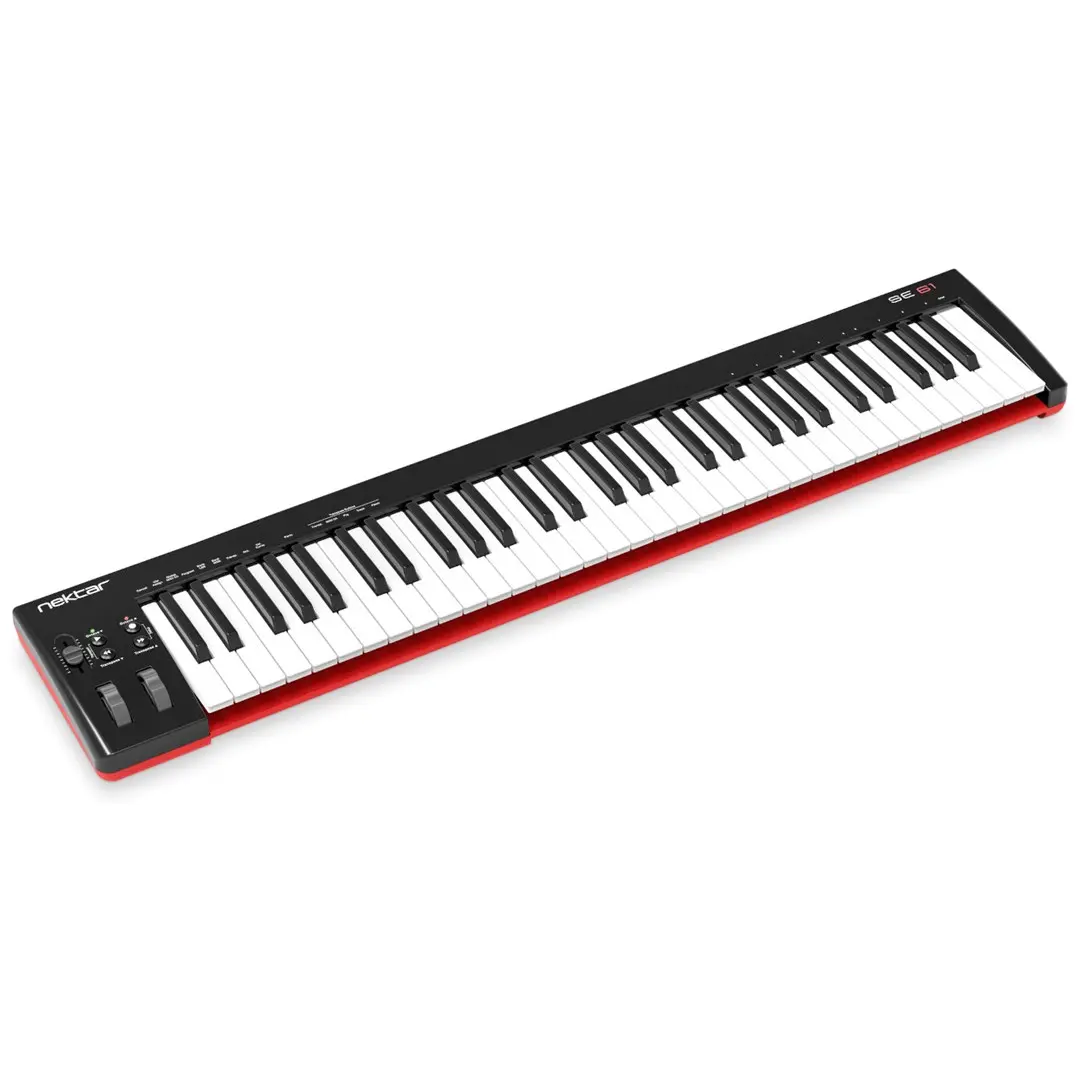
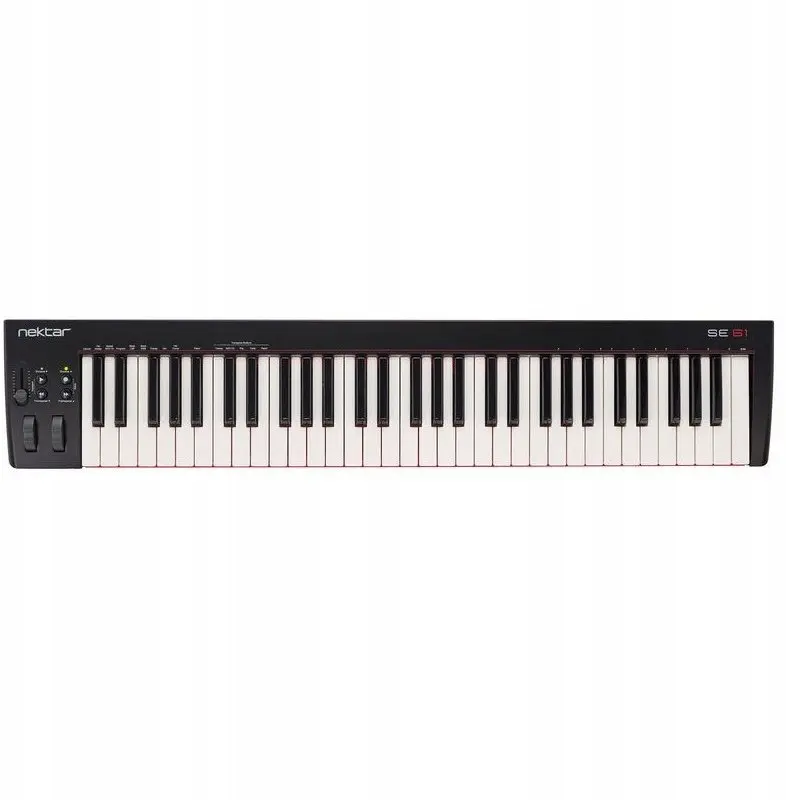
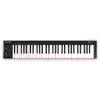
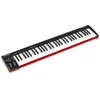
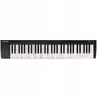
Comparing the NEKTAR SE61 Control Keyboard MIDI Controller 61 Keys USB Red Black with alternative models highlights differences in key counts, physical dimensions, and secondary controls such as performance pads, faders, and built-in sequencers. All options connect via USB and serve music production purposes, but they differ significantly in portability and feature sets.
⚙️ The specifications comparison table below evaluates key counts, key types, auxiliary controllers, interface connections, and physical traits.
| Parameter | NEKTAR SE61 Control Keyboard MIDI Controller 61 Keys USB Red Black | NEKTAR SE 49 MIDI Control Keyboard 49 Keys USB Black Red Pitch Bend Modulation Wheel | NEKTAR Impact LX 25 mkIII MIDI Keyboard 25 Keys USB Black | MIDI keyboard controller Behringer SWING 32 keys USB-powered — 32 mini keys, USB MIDI, arpeggiator, CV/Gate, MIDI In/Out | MIDI keyboard M-Audio Oxygen Pro Mini — 32-key USB controller, RGB backlight, OLED display, 8 pads, 4 faders, 4 encoders | Nektar Impact GX61 MIDI Keyboard 61 Keys USB Black | Practical significance |
|---|
| Key count | 61 keys | 49 keys | 25 keys | 32 mini keys | 32 keys | 61 keys | Determines playable note range without requiring constant octave shifting |
| Key type | Full-size keys | Full-size keys | Not specified | Mini keys | Velocity-sensitive keys | Not specified | Affects two-handed playing comfort and tactile feedback |
| Additional controls | Pitch bend and modulation wheels, octave buttons | Pitch bend and modulation wheels, octave buttons | 8 pads, pitch bend and modulation wheels, LED display | Pitch bend and modulation wheels, arpeggiator, sequencer | 8 pads, 4 faders, 4 encoders, OLED display, RGB backlight | Button controls | Pads and faders assist with beat-making and mixing, while wheels and full-size keys suit traditional playing |
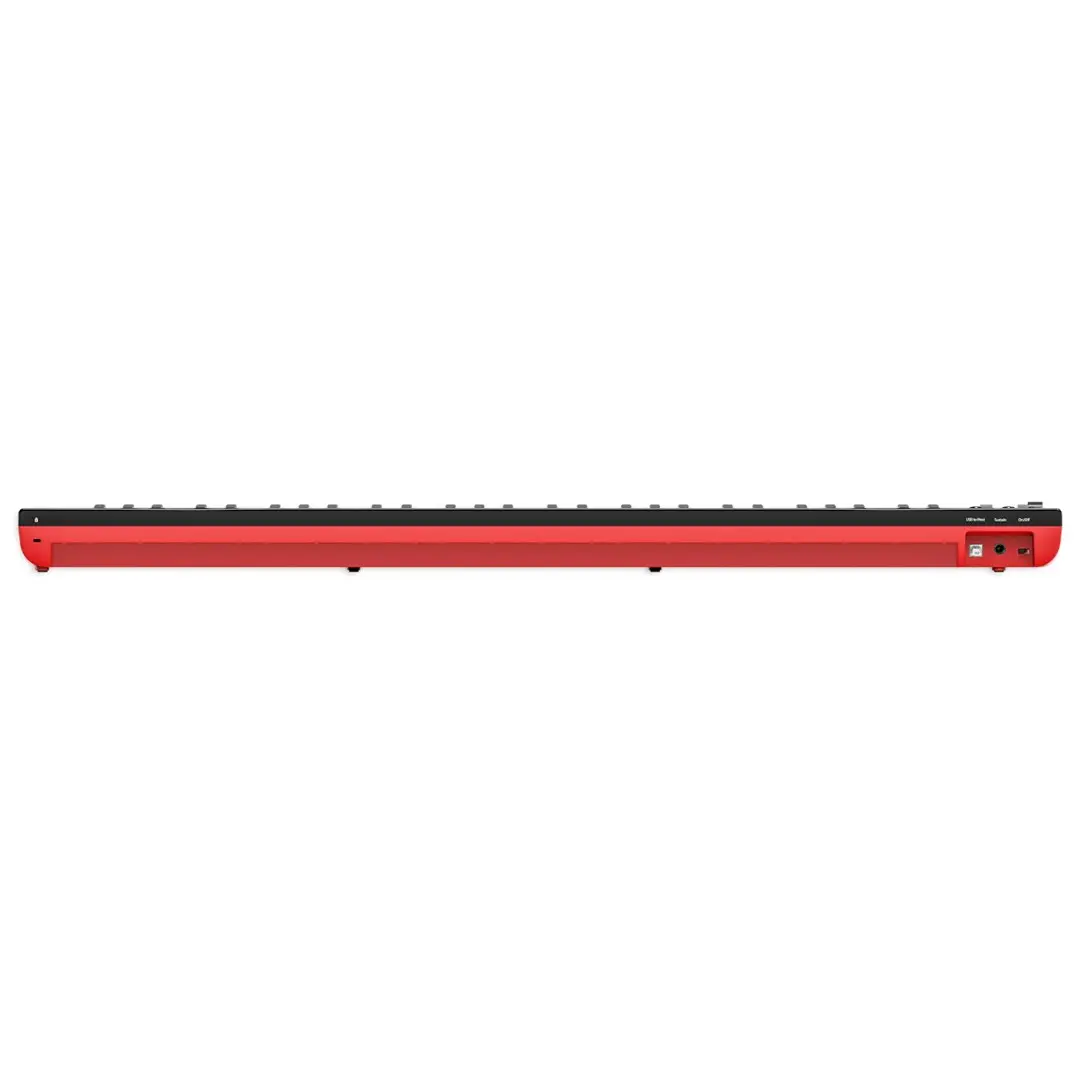
| Connectivity | USB, sustain pedal input | USB, sustain pedal input | USB, pedal input | USB MIDI, MIDI In/Out, CV/Gate, sync | USB, 5-pin MIDI out, pedal input | USB | Hardware MIDI and CV/Gate ports expand integration options with external synthesizers |
◎ The suitability table below helps match user needs and use cases with the most appropriate product option.
| Use case | Recommended product | Why |
|---|
| Traditional two-handed performance | NEKTAR SE61 Control Keyboard MIDI Controller 61 Keys USB Red Black | Offers a broad 61-key range with full-size keys for comfortable unconstrained playing. |
| Basic input in restricted spaces | NEKTAR SE 49 MIDI Control Keyboard 49 Keys USB Black Red Pitch Bend Modulation Wheel | Provides 49 keys while maintaining straightforward wheel control. |
| Mobile beat-making | NEKTAR Impact LX 25 mkIII MIDI Keyboard 25 Keys USB Black | Combines compact format with drum pads and a display. |
| Hardware and modular synthesizer setup | MIDI keyboard controller Behringer SWING 32 keys USB-powered — 32 mini keys, USB MIDI, arpeggiator, CV/Gate, MIDI In/Out | Equipped with CV/Gate outputs and traditional hardware MIDI connections. |
| Detailed parameter manipulation | MIDI keyboard M-Audio Oxygen Pro Mini — 32-key USB controller, RGB backlight, OLED display, 8 pads, 4 faders, 4 encoders | Includes physical faders, encoders, and pads for hands-on software control. |
| Straightforward 61-key entry | Nektar Impact GX61 MIDI Keyboard 61 Keys USB Black | Delivers 61 keys with simplified button controls. |
The primary difference between the NEKTAR SE61 Control Keyboard MIDI Controller 61 Keys USB Red Black and the compact alternatives is its full 61-key range, making it the superior choice for players who need an extended keyboard layout without constant octave shifting. It is best suited for home studio setups and practice scenarios where drum pads or complex hardware CV connections are not required. A buyer should prefer this option over smaller or heavily featured alternatives if simplicity, full-size keys, and a larger note range are the main priorities.