
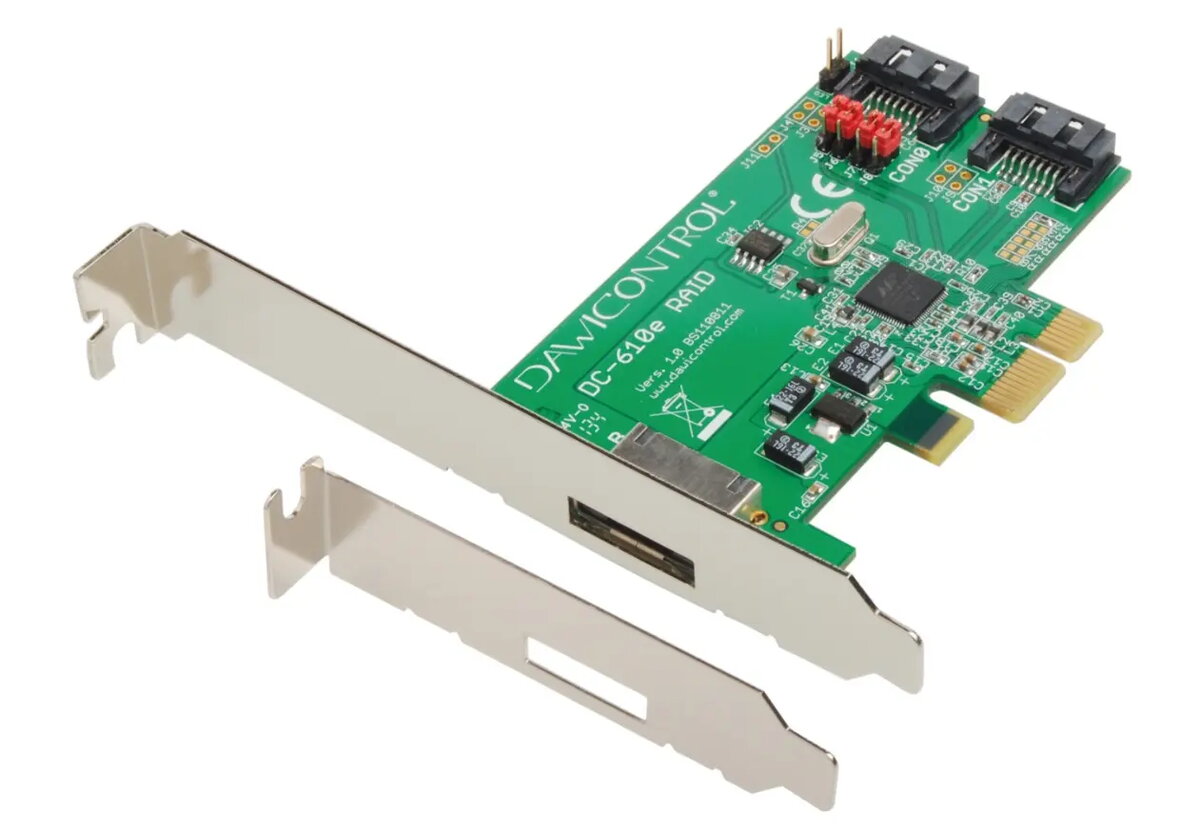
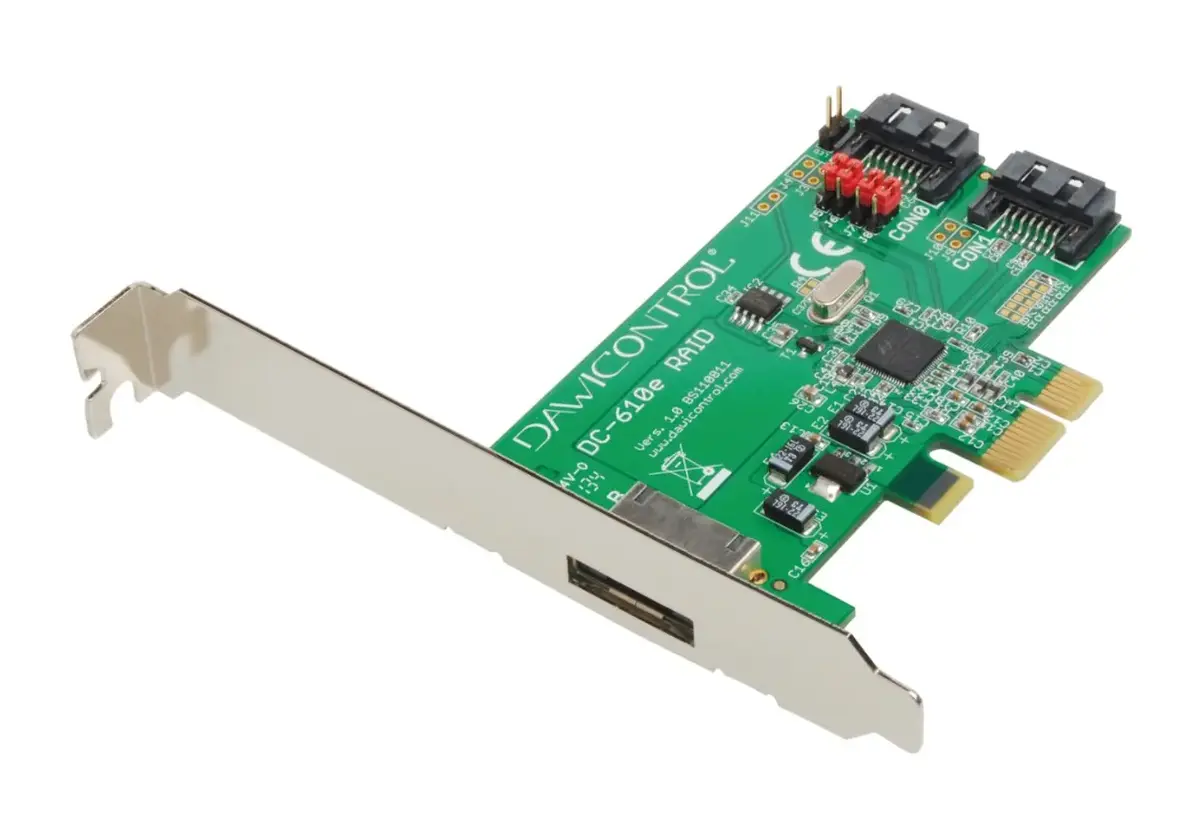
Dawicontrol DC-610E RAID Controller PCI Express 2.0 SATA 6 Gbit/s
52.99 €
Keep track of price changes
You keep track of price changes
Watch the price drop
Leave your address - as soon as the price of the product goes down, you'll know about it right away
You keep track of price changes
Dawicontrol DC-610E RAID Controller PCI Express 2.0 SATA 6 Gbit/s
{{email}}
You keep track of price changes
Dawicontrol DC-610E RAID Controller PCI Express 2.0 SATA 6 Gbit/s
{{email}}
{{selectedOffer && selectedOffer.price | formatAmount}}
Short description
The Dawicontrol DC-610E is a high-performance RAID controller featuring a PCI Express interface and SATA 6 Gbit/s support. Designed for reliable data management, it supports RAID levels 0, 1, JBOD, and SPAN with a maximum storage capacity of 512 TB. This low-profile card is compatible with a wide range of Windows, Linux, and Server operating systems, making it an ideal solution for professional storage expansion and data redundancy in desktop and server environments.
Deliver the order:
to the Customer Service Center at Kengaraga 2b, Riga
01.07.2026
{{selectedOffer.officeDeliveryString}}
free
Customer service center
2b. Kengaraga str., Riga, Latvia, LV-1063
01.07.2026
{{selectedOffer.officeDeliveryString}}
free
Courier Delivery
Please note that in case of a large parcel additional delivery costs may apply!
From 4.99 € (Weight: 0.03 kg)
Parcel couriers
Latvijas Pasts pakomāts / Unisend LV / DPD Paku skapis / Omniva LV / Venipak Pickup LV / Venipak Locker LV / Latvijas Pasts nodaļa
06.07.2026
{{selectedOffer.parcelStationDeliveryString}}
From 1.99 €

Payment Methods:
Bank transfer, Bank cards on-line, Apple Pay, Google Pay


